Sim Moon Evolution 860A Power Amp Boxed with Remote
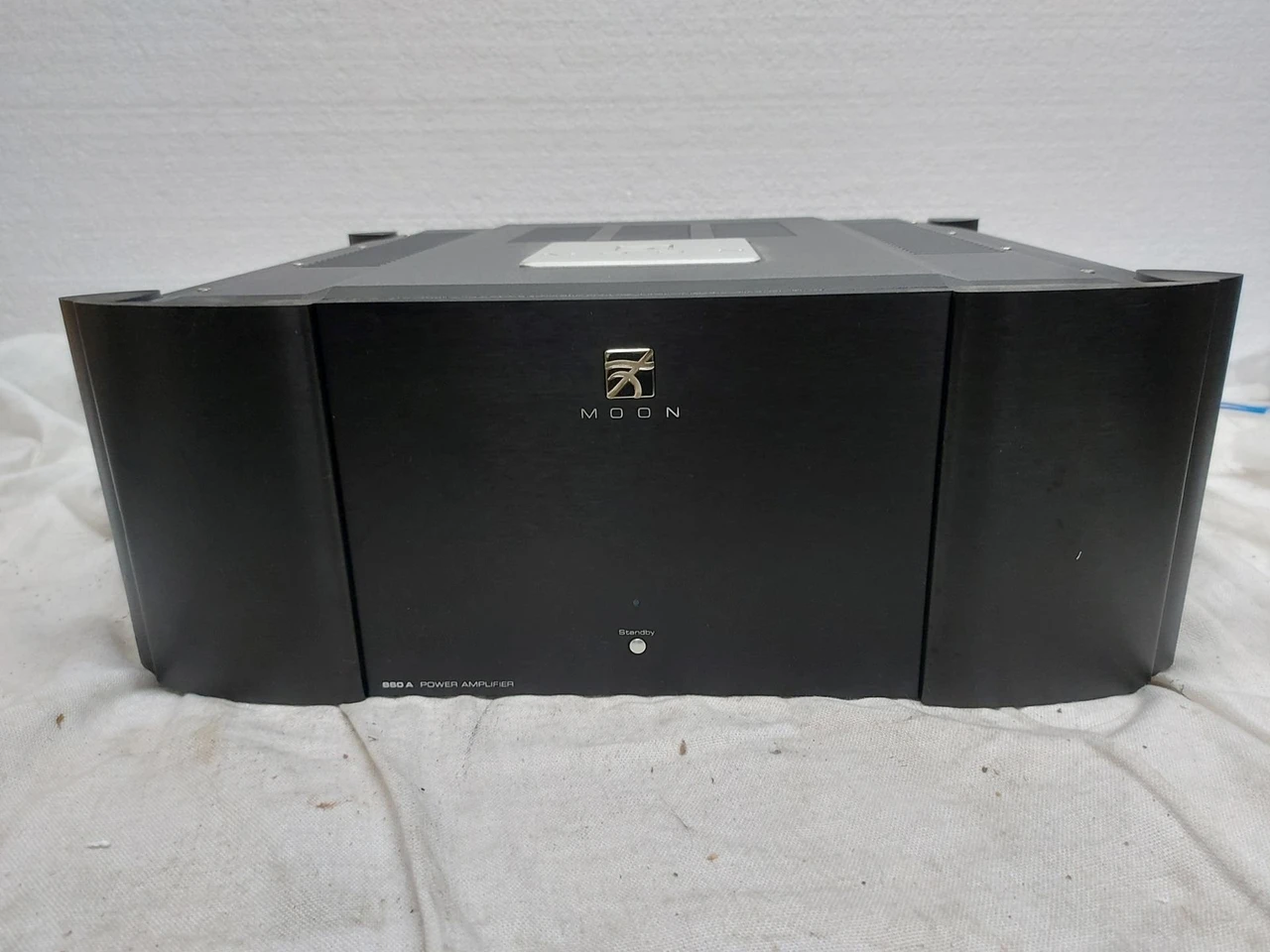
Sim Moon Evolution 860A
 70 aufrufe im letzten monat, 46
 aufrufe in diesem monat
Letztes Update
10.05.2026
 Erläuterung
Ursprüngliche Beschreibung
Englisch, anderssprachige Texte sind Übersetzungen und können Fehler enthalten.
EnglischDeutschSpanischTürkisch
Excellent.The Moon Evolution 860A is specified as producing 200Wpc into 8 ohms, and sure enough, it doubles its rated power output as the impedance is halved, generating 400Wpc into 4 ohms. Simaudio doesn’t quote power ratings for lower impedances, instead stating that the 860A produces “Output stable to any known speaker impedance.” That didn’t quite satisfy my inner doubling-down nerd, so I asked for clarification.According to Costa Koulisakis, VP of Simaudio’s Customer Experience department, the 860A’s output section has a 3kW capacity per channel. Theoretically, it can double down again into 2 ohms, and squeeze out even more watts into 1 ohm. However, the amp’s physical size and its production of heat to some degree limit its real-world power output into extremely low impedances.In a home audio system, the 860A would have few, if any, opportunities to actually confront a speaker load as extreme as those I’ve discussed earlier. So it really is enough for Simaudio to say that the 860A produces “Output stable to any known speaker impedance.”The chunky 860A is the second model from the bottom of Simaudio’s Moon Evolution line. Above it is the 870A, followed by the 880M monoblock; and looming ominously over all of them is the beastly new 888 monoblock. But, unboxing and setting it up, you wouldn’t know that the 860A is quite far down the Moon Evolution line. At 18.8”W x 7.4”H x 17.5”D and a shipping weight of 90 pounds, it’s one heavy, unwieldy son of a bitch. Its substantial double carton probably accounts for 15 pounds of that weight, and the decanted 860A is just about manageable by one person -- but if the house was on fire, I don’t think I could save it.The 860A’s case and chassis are entirely made of CNC’d aluminum, which no doubt is responsible for much of the amp’s mass. Further increasing its density are two separate power transformers, one for each channel: the 860A is dual-mono from the power cord in -- and out.“Never trust a solid-state amp that runs cold,” my father used to say. Actually, he didn’t say that. The aphorism of his that stuck with me was “Carburetor is French for leave it alone.” But in my head, I hear the adage about amps spoken in his voice.System and setupThe Moon Evolution 860A ran very cool. Given that its warp coils are armed with bipolar transistors running in class-A up through the first 5W, I would have expected it to run at least somewhat warm. But in retrospect, the huge mass of heatsink that is the entire 860A chassis likely dissipates heat far more quickly than it’s generated.There were no tricks involved in operating the 860A. Its inputs are balanced XLR and single-ended RCA. Outputs are one set of speaker binding posts per channel. There’s an IEC power inlet. An RS-232 input and a set of 12V in and out triggers are present for use with other Simaudio products, and for integrated control of an entire audio systemI powered the 860A with a Nordost Quantum QBase QB8 Mk.II power conditioner via a Nordost Vishnu power cord. From ice-cold, it took about 15 minutes for the 860A to rub the sleepy dust out of its eyes. For that first 15 minutes, it sounded a little closed in and muffled. But after one LP side, it opened right up.The 860A was cautious, which I mean in the best possible way: Any sort of static snap, cable tomfoolery, or line fault triggered its protection circuit, which shut it down. This happened only three times during the listening period, and each was because of something I’d done -- such as unplug an interconnect without powering down the amp. Each time, the 860A quietly removed itself from potential harm by crossing its arms and refusing to answer my questions, its power indicator blinking stoically. All it took to recall it to duty was a press of the power button on the front panel.Other than those three faults, all of my own making, operating the 860A was a non-event. It sat there quietly and worked. And as it generated no heat, I rationalized that it was environmentally kosher to leave it powered up at all times.ListeningI’m a tube guy down to the tips of my toes, but that bias (sorry) didn’t stop me from having my world turned upside down by Anthem’s Statement M1 mono amps a few years back, when I borrowed them to better evaluate a power-hungry speaker that was giving my Audio Research VT100 tube amp grief. The Anthem M1s stunned me with their sound: rich, involving, utterly smooth, they had all the best attributes of tubes while exerting a dictatorial grip on every speaker I tried them with.Since then I’ve often looked askance at my ARC VT100 (which is getting long in the tooth), and wondered why I don’t just move it on down the road and replace it with a decent solid-state amp. The Anthems showed me that solid-state really is getting better these days.Then along came the Simaudio Moon Evolution 860A. Nervous, I gingerly inserted it in my system. Would this big, heavy, Canadian amp replicate my prior experience with those slim, fairly light, other Canadian amps?Why, yes. Yes, it would.Simaudio Moon Evolution 860ATwo or three albums in, my shoulders dropped. I slouched down into my couch with an audible sigh of relaxation. Expectation bias? Hardly. I’d anticipated a neutral, crisp sound, a python-tight grip on the bass, and superb resolution of detail. In short, I thought I’d hear all of those clichés about the sound of big, expensive solid-state amps.Instead, I heard something I’ve always desired but, before the Anthem M1s, had always thought unobtainable: jet-“black” backgrounds and infinite resolution of detail and smooth, sweet, delicate highs.If you’ve read any of my past reviews, you may have noted that I tend to harp on about how, for me, musicality trumps detail. I would far prefer to listen to a euphonic, rolled-off-sounding system with mushy bass and a recessed upper midrange than suffer through a crisp, bright, hi-fi presentation. I don’t want to hear a stereo system.But really, that’s me taking it to an extreme -- I’m always happy listening to the middle ground. But there’s no room in my listening room for tipped-up treble masquerading as detail, and any form of glare in the midrange will draw my ire.Back to the Moon Evolution 860A. This amp was the middle ground, the baby bear’s bed that was just right. With my first listen to any new component, I’ve noticed that I unconsciously reach for an album that will flatter my system. This time it was an out-of-the-park home-run vinyl reissue of Miles Davis’s A Tribute to Jack Johnson (LP, Columbia/Legacy/Mobile Fidelity Sound Lab MFSL1-440). While the CD version of this album is damn good, the MoFi biscuit is utterly magnificent. This is crisp, dynamic, rockin’ music -- jazz possessed by Led Zeppelin. With Miles Davis. On acid. Just because the 860A is so bloody heavy, I first focused on the low end -- Michael Henderson’s bass and Billy Cobham’s kick drum had noticeably more physical presence, along with a roundness and body that my ARC VT100 could never hope to match.Bass that was full and weighty, chock-full of richness and chocolate, all bundled up with just the right amount of control -- that’s what I got in my first five minutes with the Moon Evolution 860A.Audiophiles, stop reading right now -- I’m going to listen to Tom Waits, and you know how you get when some [ahem] roughneck plays him at an audio show.Simaudio Moon Evolution 860AStill there? Good. Waits’s Real Gone (LP, Anti- 86678) is just full of difficult, angular music and it’s been an essential weapon in my reviewing arsenal since its release in 2004. Listening to “Shake It” via the 860A was instructive. That’s Les Claypool of Primus on bass, which is odd, but then Waits runs with a rough crowd. The sound is loose and sloppy, and Claypool’s bass has to fight for air against Marc Ribot’s slurred buzz-saw guitar. What was really nifty was how I could switch my aural focus between the bass and the guitar -- kind of like closing one eye, then the other -- and hear my focus point shift position.This exercise showed me two things. First, “Shake it” -- heck, the whole album -- is abrasive as hell, and if the 860A’s sound were bright or etched in any way, it would have driven me out of the room. But after I’d sat there listening for a moment, I walked over to my preamp and throttled it up a couple notches. Now it was Loud. My Focus Audio FP60 BE speakers are fairly large stand-mounted monitors, and they’ve taken some serious abuse from me in the last few years, so I wasn’t worried about smoking them. Yeah, it was Loud, but with no sense of strain from speakers or amp. Another couple rungs up the volume ladder and the woofers looked as if they were being beaten with a stick. Still no strain -- and still I could clearly delineate guitar from bass, in a way that either a) I’d never really tried to do, or b) I’d never been able to do. I’m betting on b) -- the 860A felt to me as if it was overtly controlling the musical signal in a most complimentary way.More complicated, more dense music: Charles Mingus’s Mingus Mingus Mingus Mingus Mingus (LP, Impulse! IMP-170) has a whole lot of thrashing going on. Through a shitty system, “Better Get Hit In Yo’ Soul” degenerates into amusical noise, but when the planets align, it’s spiritual. My arms were raised and my head was back listening -- yes, again -- really Loud. I’ve often found that Mingus’s double bass fades into a general mush of instruments with this album, but not via the Moon Evolution 860A. Without straining, I could easily distinguish every one of the 11 instruments played.I’ve spent a while just talking about bass instruments, and I hope I’m not giving the impression that the 860A was heavy-handed down low. Far from it. Letting Mingus Mingus Mingus Mingus Mingus play on: “Theme for Lester Young” (which is essentially “Goodbye Pork Pie Hat”) showed just how incredibly musical this honkin’ great amplifier could be, just how delicate it could be when it felt the need: the slowly pulsing reeds in this track, the gentle counterpoint of the piano, rendered just so by an integrated circuit. Before hearing this track played by this amp, I’d have been certain that it would take tubes to satisfy me to this extent.Why so effusive, Jason? Well, “Theme for Lester Young” is redolent with sadness -- a slinky, sinuous melody played over a plodding bass line plucked straight out of a New Orleans funeral parade. There’s so much that can go wrong in the sound -- the mix of horns and reeds can be steely, and I’ve heard them cross the line into glare. Not so with the 860A, which kept them just this side of silky while adding no molasses to the upper mids and highs.And I don’t think I’d ever heard this track image like this. I could easily pick out each instrument, hear its position in space. I could “see” it. The Moon Evolution 860A excelled at depth, setting up vibrant images way behind the speakers. In fact, it felt as if the 860A was pushing images just a tiny bit behind the plane of the speakers, but really, it was more that there was just so much depth of image that soundstages felt as if they’d grown another room.An extended and silky treble -- that’s my gatekeeper for musical enjoyment. All other planets can align, but the upper range must walk to heel, or else an audio system is just pissing into the wind. For a couple years now I’ve been listening to Shallow Grave, the first album of The Tallest Man on Earth, aka Kristian Matsson (45rpm LP, Gravitation gra028), and it never fails to energize me. Think a Swedish Bob Dylan, but with boundless energy. Matsson’s English is reportedly not that good, so his lyrics receive odd translations -- as in “Pistol Dreams,” in which he sings “and I will boil the curtains to extract the drugs of springtime.”Isn’t that wonderful? The sound on this 45rpm LP does wonderful justice to the rapidly strummed guitars and nimbly picked banjo. Both instruments were rendered by the 860A with tons of air and believable harmonics. The strings floated in space between my speakers like a lacy nightdress pierced by sudden bolts of electricity. It’d be really easy to overcook the highs on this album, but the 860A did a perfect tightrope walk, keeping all the life and sparkle in the overtones while never adding the slightest hint of glare or artificial enhancement.Despite all of my earlier ravings about the Moon Evolution 860A’s bass, to me, the Simaudio amp’s biggest selling point was how well it walked that treble line. It steadfastly refused to sound like an amplifier, and that, I say -- as I short-circuit my logic module -- is how the ideal amplifier should sound.ConclusionLooking back, I think that maybe I’ve been a bit too effusive in my praise of Simaudio’s Moon Evolution 860A. But I’ve listened to more music in the last few months than I have in maybe the last year. The last few additions to my system have been fortuitous: JE Audio’s HP10 phono stage, the Moon 860A, and now Pro-Ject’s RPM 10 Carbon turntable (review forthcoming) are working together so very well that, down here in my basement, I’m experiencing a bit of an audio renaissance.Then again, the Moon Evolution 860A damn well should sound good. In the dollars-per-watt steeplechase, this $15,000, 200Wpc amplifier lags far behind a value-for-money brand. But there’s no doubt in my mind that in this case you get what you pay for. The Simaudio is a solid, heavy amp that in no way was built to a price point. It looks and feels like a luxury product, and does it ever sound like one. It’s a solid-state power amplifier that I could easily and happily live with for the long term. Coming from Jason the Tube Guy, that is praise indeed.
Ausgezeichnet.
Der Moon Evolution 860A liefert laut Spezifikation 200 W pro Kanal an 8 Ohm, und tatsächlich verdoppelt er seine Nennleistung bei Halbierung der Impedanz und erzeugt 400 W pro Kanal an 4 Ohm. Simaudio gibt keine Leistungswerte für niedrigere Impedanzen an, sondern erklärt lediglich, dass der 860A „eine für jede bekannte Lautsprecherimpedanz stabile Ausgangsleistung“ liefert. Das befriedigte meinen inneren Perfektionisten nicht ganz, daher bat ich um eine genauere Erklärung.
Laut Costa Koulisakis, Vizepräsident der Kundendienstabteilung von Simaudio, verfügt die Ausgangsstufe des 860A über eine Kapazität von 3 kW pro Kanal. Theoretisch kann sie die Leistung an 2 Ohm erneut verdoppeln und an 1 Ohm sogar noch mehr Watt herausholen. Die Größe des Verstärkers und seine Wärmeentwicklung begrenzen jedoch seine tatsächliche Ausgangsleistung bei extrem niedrigen Impedanzen.
In einer Heimanlage hätte der 860A kaum Gelegenheit, mit so extremen Lautsprecherlasten wie den zuvor beschriebenen konfrontiert zu werden. Daher genügt es von Simaudio, anzugeben, dass der 860A „eine stabile Ausgangsleistung für jede bekannte Lautsprecherimpedanz“ liefert.
Der wuchtige 860A ist das zweitgünstigste Modell der Moon Evolution-Serie von Simaudio. Darüber rangiert der 870A, gefolgt vom Monoblock 880M; und bedrohlich über allen anderen thront der neue, gewaltige Monoblock 888. Doch beim Auspacken und Aufstellen merkt man dem 860A nicht an, dass er in der Moon Evolution-Serie so weit unten angesiedelt ist. Mit Abmessungen von 47,8 cm (B) x 18,8 cm (H) x 44,5 cm (T) und einem Versandgewicht von 40,8 kg ist das Ding ein ganz schöner Brocken. Allein der massive Doppelkarton macht wahrscheinlich 7 kg davon aus, und der ausgepackte 860A ist gerade noch von einer Person zu tragen – aber wenn das Haus brennen würde, könnte ich ihn wohl nicht retten. Gehäuse und Chassis des 860A sind komplett aus CNC-gefrästem Aluminium gefertigt, was zweifellos einen Großteil des Gewichts ausmacht. Zusätzlich tragen zwei separate Netztransformatoren, einer für jeden Kanal, zur Dichte bei: Der 860A ist vom Netzanschluss bis zum Ausgang dual-mono.
„Trau niemals einem Transistorverstärker, der kalt läuft“, pflegte mein Vater zu sagen. Eigentlich hat er das nicht gesagt. Sein Aphorismus, der mir im Gedächtnis geblieben ist, lautete: „Carburetor ist Französisch für: Lass es in Ruhe.“ Aber in meinem Kopf höre ich die Redewendung über Verstärker in seiner Stimme.
System und Aufbau
Der Moon Evolution 860A blieb sehr kühl. Angesichts der Tatsache, dass seine Spulen mit Bipolartransistoren bestückt sind, die bis zu den ersten 5 W im Class-A-Betrieb laufen, hätte ich erwartet, dass er zumindest etwas warm wird. Im Nachhinein betrachtet, leitet die massive Kühlkörperkonstruktion des 860A-Gehäuses die Wärme aber wahrscheinlich viel schneller ab, als sie erzeugt wird.
Die Bedienung des 860A war unkompliziert. Seine Eingänge sind symmetrische XLR- und unsymmetrische Cinch-Buchsen. Die Ausgänge bestehen aus je einem Satz Lautsprecherklemmen pro Kanal. Es gibt eine IEC-Netzbuchse. Ein RS-232-Eingang und 12-V-Ein- und Ausgänge sind vorhanden, um den Verstärker mit anderen Simaudio-Produkten zu verwenden und ein komplettes Audiosystem zu steuern. Ich habe den 860A über ein Nordost Vishnu-Netzkabel mit einem Nordost Quantum QBase QB8 Mk.II Netzfilter betrieben. Von eiskalt bis kühl. Es dauerte etwa 15 Minuten, bis der 860A richtig in Fahrt kam. In den ersten 15 Minuten klang er etwas gedämpft und zurückhaltend. Doch nach einer LP-Seite entfaltete er sein volles Potenzial.
Der 860A war sehr umsichtig, und das meine ich im besten Sinne: Jede Art von statischer Aufladung, Kabelbruch oder Leitungsfehler löste seine Schutzschaltung aus und schaltete ihn ab. Das passierte während des Hörtests nur dreimal, und jedes Mal lag es an einem Fehler meinerseits – zum Beispiel daran, dass ich ein Verbindungskabel abgezogen hatte, ohne den Verstärker auszuschalten. Jedes Mal zog sich der 860A stillschweigend aus der Gefahrenzone zurück, indem er die Arme verschränkte und meine Fragen ignorierte, während seine Betriebsanzeige stoisch blinkte. Ein Druck auf den Netzschalter an der Vorderseite genügte, um ihn wieder in Betrieb zu nehmen. Abgesehen von diesen drei Fehlern, die ich alle selbst verursacht hatte, verlief der Betrieb des 860A völlig problemlos. Er lief ruhig und zuverlässig. Und da er keine Wärme entwickelte, schloss ich daraus, dass… Es war umweltverträglich, das Gerät dauerhaft eingeschaltet zu lassen.
Hören
Ich bin durch und durch ein Röhrenverstärker-Fan, aber diese Vorliebe (Entschuldigung!) hielt mich vor einigen Jahren nicht davon ab, von den Anthem Statement M1 Mono-Endstufen völlig begeistert zu sein. Ich hatte sie mir damals ausgeliehen, um einen leistungshungrigen Lautsprecher besser beurteilen zu können, der meinem Audio Research VT100 Röhrenverstärker Probleme bereitete. Die Anthem M1s haben mich mit ihrem Klang umgehauen: satt, mitreißend, absolut sanft – sie vereinten alle Vorzüge von Röhren und dominierten gleichzeitig jeden Lautsprecher, den ich mit ihnen ausprobierte. Seitdem habe ich meinen ARC VT100 (der schon etwas in die Jahre gekommen ist) oft mit Argwohn betrachtet und mich gefragt, warum ich ihn nicht einfach irgendwann verkaufe und durch einen ordentlichen Transistorverstärker ersetze. Die Anthems haben mir gezeigt, dass Transistorverstärker heutzutage wirklich immer besser werden.
Dann kam der Simaudio Moon Evolution 860A. Nervös schloss ich ihn vorsichtig an meine Anlage an. Würde dieser große, schwere kanadische Verstärker meine bisherigen Erfahrungen mit den schlanken, relativ leichten anderen kanadischen Verstärkern bestätigen?
Und ob!
Simaudio Moon Evolution 860A
Nach zwei, drei Alben entspannte ich mich. Ich sank mit einem hörbaren Seufzer der Erleichterung in mein Sofa. Voreingenommene Erwartungen? Wohl kaum. Ich hatte einen neutralen, klaren Klang, einen druckvollen Bass und eine hervorragende Detailauflösung erwartet. Kurz gesagt, ich dachte, ich würde all die Klischees über den Klang großer, teurer Transistorverstärker hören.
Stattdessen hörte ich etwas, das ich mir immer gewünscht, aber vor den Anthem M1s für unerreichbar gehalten hatte: tiefschwarze Klangfarben, unendliche Detailauflösung und sanfte, süße, zarte Höhen.
Wer meine früheren Rezensionen gelesen hat, weiß vielleicht, dass ich immer wieder betone, wie wichtig mir Musikalität wichtiger ist als Detailtreue. Ich höre viel lieber ein wohlklingendes, etwas zurückhaltendes System mit weichen Bässen und zurückhaltenden oberen Mitten, als mich mit einer messerscharfen, hellen HiFi-Wiedergabe herumzuquälen. Ich will kein Stereosystem hören.
Aber ehrlich gesagt, das ist etwas übertrieben – ich bin immer zufrieden mit dem Mittelweg. In meinem Hörraum ist jedoch kein Platz für überbetonte Höhen, die sich als Detailtreue tarnen, und jede Art von Schärfe in den Mitten reizt mich.
Zurück zum Moon Evolution 860A. Dieser Verstärker war der perfekte Mittelweg, genau das Richtige. Beim ersten Hören einer neuen Komponente greife ich unbewusst zu einem Album, das meinem System schmeichelt. Diesmal handelte es sich um eine absolute Traum-Vinyl-Wiederveröffentlichung von Miles Davis’ „A Tribute to Jack Johnson“ (LP, Columbia/Legacy/Mobile Fidelity Sound Lab MFSL1-440). Die CD-Version des Albums ist zwar schon verdammt gut, aber die MoFi-Version ist schlichtweg grandios. Das ist knackige, dynamische, rockige Musik – Jazz, der von Led Zeppelin besessen ist. Mit Miles Davis. Auf Acid. Da der 860A so verdammt schwer ist, konzentrierte ich mich zunächst auf den Bassbereich – Michael Hendersons Bass und Billy Cobhams Bassdrum hatten deutlich mehr Präsenz, dazu eine Fülle und einen Körper, die mein ARC VT100 nie erreichen konnte.
Ein voller, druckvoller Bass, randvoll mit sattem, warmem Klang, perfekt kontrolliert – das war mein Eindruck in den ersten fünf Minuten mit dem Moon Evolution 860A.
Audiophile, hört jetzt auf zu lesen – ich höre mir jetzt Tom Waits an, und ihr wisst ja, wie ihr reagiert, wenn so ein [ähm] Grobian ihn auf einer Audio-Messe spielt.
Simaudio Moon Evolution 860A
Immer noch da? Gut. Waits’ „Real Gone“ (LP, Anti-86678) ist voll von schwieriger, kantiger Musik und seit seiner Veröffentlichung 2004 ein unverzichtbares Werkzeug in meinem Testarsenal. „Shake It“ über den 860A zu hören, war aufschlussreich. Les Claypool von Primus spielt Bass, was ungewöhnlich ist, aber Waits verkehrt eben in rauen Kreisen. Der Sound ist locker und unpräzise, und Claypools Bass muss sich gegen Marc Ribots verzerrte Gitarre behaupten. Besonders raffiniert war, wie ich meinen Fokus zwischen Bass und Gitarre hin und her lenken konnte – so ähnlich wie abwechselnd ein Auge zukneifen – und die Verschiebung meines Fokuspunkts hören konnte.
Diese Übung hat mir zwei Dinge gezeigt. Erstens: „Shake it“ – ach, das ganze Album – ist verdammt schrill, und wenn der Klang der 860A irgendwie schrill oder spitz gewesen wäre, hätte er mich aus dem Zimmer getrieben. Nachdem ich aber einen Moment zugehört hatte, ging ich zu meinem Vorverstärker und drehte ihn ein paar Stufen auf. Jetzt war es laut. Meine Focus Audio FP60 BE-Lautsprecher sind ziemlich große Standlautsprecher, und sie haben in den letzten Jahren einiges mitgemacht, also machte ich mir keine Sorgen, sie zu beschädigen. Ja, es war laut, aber ohne dass die Lautsprecher oder der Verstärker an ihre Grenzen stießen. Noch ein paar Stufen lauter, und die Tieftöner klangen, als würde man sie mit einem Stock bearbeiten. Immer noch keine Verzerrung – und ich konnte Gitarre und Bass immer noch klar unterscheiden, auf eine Weise, die ich entweder a) nie wirklich versucht oder b) nie geschafft hatte. Ich tippe auf b) – der 860A wirkte auf mich so, als würde er das Musiksignal auf eine äußerst angenehme Weise steuern.
Komplexere, dichtere Musik: Charles Mingus’ Album „Mingus Mingus Mingus Mingus Mingus“ (LP, Impulse! IMP-170) ist ein wahres Klangspektakel. Über eine schlechte Anlage verkommt „Better Get Hit In Yo’ Soul“ zu unmusikalischem Lärm, aber wenn alles passt, ist es ein spirituelles Erlebnis. Ich riss die Arme hoch und legte den Kopf in den Nacken – ja, schon wieder – und drehte die Lautstärke richtig auf. Oftmals geht Mingus’ Kontrabass auf diesem Album im allgemeinen Instrumentenbrei unter, aber nicht über den Moon Evolution 860A. Ohne Anstrengung konnte ich jedes der elf gespielten Instrumente klar heraushören.
Ich habe mich jetzt eine Weile nur mit Bassinstrumenten beschäftigt und hoffe, ich erwecke nicht den Eindruck, der 860A sei im Bassbereich zu wuchtig. Ganz im Gegenteil. Als ich Mingus Mingus Mingus Mingus Mingus „Theme for Lester Young“ (im Grunde „Goodbye Pork Pie Hat“) spielen ließ, wurde mir erst richtig bewusst, wie unglaublich musikalisch dieser großartige Verstärker klingen kann, wie feinfühlig er sein kann, wenn es nötig ist: die langsam pulsierenden Blasinstrumente in diesem Stück, der sanfte Kontrapunkt des Klaviers, perfekt wiedergegeben von einem integrierten Schaltkreis. Bevor ich dieses Stück von diesem Verstärker gehört habe, wäre ich mir sicher gewesen, dass mich nur Röhrenverstärker so zufriedenstellen könnten.
Warum so überschwänglich, Jason? Nun, „Theme for Lester Young“ ist von einer tiefen Traurigkeit durchdrungen – eine geschmeidige, geschwungene Melodie über einer schleppenden Basslinie, die direkt aus einer Trauerprozession in New Orleans stammen könnte. Beim Klang kann so viel schiefgehen – die Mischung aus Hörnern und Holzblasinstrumenten kann schrill klingen, und ich habe schon erlebt, wie sie ins Schrille abdriftete. Nicht so beim 860A, der den Klang seidenweich hielt und den oberen Mitten und Höhen keinerlei Schmalz hinzufügte.
Und ich glaube, ich habe diese Klangabbildung noch nie so gehört. Ich konnte jedes Instrument mühelos heraushören, seine Position im Raum orten. Ich konnte es förmlich „sehen“. Der Moon Evolution 860A glänzte mit seiner Tiefenstaffelung und erzeugte lebendige Klangbilder weit hinter den Lautsprechern. Tatsächlich wirkte es so, als würde der 860A die Klangbilder minimal hinter die Lautsprecherebene verschieben, aber in Wirklichkeit war die Tiefenstaffelung einfach so enorm, dass sich die Klangbühne wie ein zusätzlicher Raum anfühlte. Ein ausgedehnter und seidiger Hochtonbereich – das ist für mich der Garant für Musikgenuss. Alle anderen Faktoren können stimmen, aber der Hochtonbereich muss mithalten können, sonst ist ein Audiosystem nutzlos. Seit ein paar Jahren höre ich nun schon „Shallow Grave“, das Debütalbum von The Tallest Man on Earth, alias Kristian Matsson (45er-LP, Gravitation gra028), und es begeistert mich jedes Mal aufs Neue. Man könnte es als schwedischen Bob Dylan bezeichnen, nur mit unbändiger Energie. Matssons Englisch ist angeblich nicht so gut, daher haben seine Texte manchmal etwas ungewöhnliche Übersetzungen – wie zum Beispiel in „Pistol Dreams“, wo er singt: „and I will boil the curtains to extract the drugs of springtime.“
Ist das nicht wunderbar? Der Klang dieser 45er-LP wird den schnell angeschlagenen Gitarren und dem virtuos gezupften Banjo absolut gerecht. Beide Instrumente wurden vom 860A mit viel Luft und glaubwürdigen Obertönen wiedergegeben. Die Saiten schwebten zwischen meinen Lautsprechern wie ein zartes Nachthemd, das von plötzlichen Blitzen durchbohrt wird. Es wäre ein Leichtes gewesen, die Höhen dieses Albums zu überbetonen, doch der 860A meisterte den Spagat perfekt: Er bewahrte die Lebendigkeit und Brillanz der Obertöne, ohne auch nur den geringsten Anflug von Schärfe oder künstlicher Verstärkung hinzuzufügen.
Trotz meines früheren Lobgesangs auf den Bass des Moon Evolution 860A war für mich das größte Verkaufsargument des Simaudio-Verstärkers seine makellose Höhenwiedergabe. Er weigerte sich beharrlich, wie ein Verstärker zu klingen, und genau so – und ich behaupte es kurz – sollte ein idealer Verstärker klingen.
Fazit
Rückblickend denke ich, dass ich den Simaudio Moon Evolution 860A vielleicht etwas zu überschwänglich gelobt habe. Aber ich habe in den letzten Monaten mehr Musik gehört als im gesamten letzten Jahr. Die letzten Ergänzungen meiner Anlage waren ein echter Glücksgriff: Die Phonovorstufe HP10 von JE Audio, der Moon Evolution 860A und jetzt auch noch der Plattenspieler RPM 10 Carbon von Pro-Ject (Testbericht folgt) harmonieren so perfekt, dass ich hier unten in meinem Keller eine regelrechte Audio-Renaissance erlebe.
Andererseits sollte der Moon Evolution 860A verdammt gut klingen. Im Wettlauf um das beste Preis-Leistungs-Verhältnis hinkt dieser 15.000 Dollar teure 200-Watt-Verstärker einer Marke mit einem hervorragenden Preis-Leistungs-Verhältnis weit hinterher. Aber ich bin fest davon überzeugt, dass man in diesem Fall bekommt, wofür man bezahlt. Der Simaudio ist ein solider, schwerer Verstärker, der ganz sicher nicht auf einen niedrigen Preis ausgelegt ist. Er sieht aus und fühlt sich an wie ein Luxusprodukt – und klingt auch so. Es ist ein Transistorverstärker, mit dem ich problemlos und gerne lange leben könnte. Das ist ein großes Lob von Jason, dem Röhrenexperten.
Excelente.
El Moon Evolution 860A tiene una potencia especificada de 200 W por canal a 8 ohmios, y efectivamente, duplica su potencia nominal al reducir la impedancia a la mitad, generando 400 W por canal a 4 ohmios. Simaudio no proporciona información sobre la potencia para impedancias más bajas, sino que afirma que el 860A ofrece una "salida estable para cualquier impedancia de altavoz conocida". Esto no me convenció del todo, así que pedí una aclaración.
Según Costa Koulisakis, vicepresidente del departamento de Experiencia del Cliente de Simaudio, la sección de salida del 860A tiene una capacidad de 3 kW por canal. Teóricamente, puede duplicar su potencia a 2 ohmios e incluso obtener más vatios a 1 ohmio. Sin embargo, el tamaño del amplificador y la generación de calor limitan, en cierta medida, su potencia real a impedancias extremadamente bajas.
En un sistema de audio doméstico, el 860A tendría pocas, o ninguna, oportunidad de enfrentarse a una carga de altavoces tan extrema como las que he mencionado anteriormente. Por lo tanto, a Simaudio le basta con afirmar que el 860A ofrece una "salida estable para cualquier impedancia de altavoz conocida".
El robusto 860A es el segundo modelo desde abajo en la línea Moon Evolution de Simaudio. Por encima se encuentra el 870A, seguido del monobloque 880M; y, dominando la gama, se alza imponente el nuevo y potente monobloque 888. Sin embargo, al desempaquetarlo y configurarlo, no se diría que el 860A se encuentra bastante abajo en la línea Moon Evolution. Con sus 47,8 cm de ancho x 18,8 cm de alto x 44,5 cm de profundidad y un peso de envío de 40 kg, es un armatoste pesado y aparatoso. Su robusta caja doble probablemente representa unos 7 kg de ese peso, y el 860A, sin caja, apenas puede ser manejado por una sola persona; pero si la casa se incendiara, no creo que pudiera salvarlo. La carcasa y el chasis del 860A están fabricados completamente en aluminio mecanizado por CNC, lo que sin duda es responsable de gran parte de la masa del amplificador. Para aumentar aún más su densidad, cuenta con dos transformadores de potencia independientes, uno para cada canal: el 860A es dual-mono desde la entrada hasta la salida del cable de alimentación.
«Nunca confíes en un amplificador de estado sólido que se enfría», solía decir mi padre. En realidad, no dijo eso. El aforismo suyo que se me quedó grabado fue: «Carburador significa "déjalo en paz" en francés». Pero en mi cabeza, escucho el dicho sobre amplificadores dicho con su voz.
Sistema y configuración
El Moon Evolution 860A funcionó a una temperatura muy baja. Dado que sus bobinas de deformación están equipadas con transistores bipolares que operan en clase A hasta los primeros 5 W, habría esperado que se calentara al menos un poco. Pero, en retrospectiva, la enorme masa de disipador de calor que constituye todo el chasis del 860A probablemente disipa el calor mucho más rápido de lo que lo genera.
No hubo trucos para operar el 860A. Sus entradas son XLR balanceadas y RCA no balanceadas. Las salidas son un juego de bornes de altavoz por canal. Tiene una entrada de alimentación IEC. Dispone de una entrada RS-232 y un juego de disparadores de entrada y salida de 12 V para usar con otros productos Simaudio y para el control integrado de todo un sistema de audio. Alimenté el 860A con un acondicionador de potencia Nordost Quantum QBase QB8 Mk.II mediante un cable de alimentación Nordost Vishnu. Enfriado como el hielo, el 860A tardó unos 15 minutos en espabilarse. Durante esos primeros 15 minutos, sonaba un poco apagado y con el sonido algo apagado. Pero tras reproducir un lado del LP, se abrió por completo.
El 860A era precavido, en el mejor sentido posible: cualquier interferencia, chasquido de cables o fallo en la línea activaba su circuito de protección, que lo apagaba. Esto solo ocurrió tres veces durante el periodo de escucha, y en cada ocasión fue por algo que yo había hecho, como desconectar un cable de interconexión sin apagar el amplificador. Cada vez, el 860A se mantenía a salvo, sin hacer ruido, con el indicador de encendido parpadeando impasible. Para volver a encenderlo, bastaba con pulsar el botón de encendido del panel frontal.
Aparte de esos tres fallos, todos por mi culpa, el funcionamiento del 860A fue impecable. Se quedó ahí, en silencio, funcionando. Y como no generaba calor, Justifiqué que era ecológico dejarlo siempre encendido.
Escuchando
Soy un apasionado de los amplificadores de válvulas, pero esa predilección (perdón por el juego de palabras) no impidió que los amplificadores monofónicos Statement M1 de Anthem me revolucionaran hace unos años, cuando los tomé prestados para evaluar mejor un altavoz que requería mucha potencia y que estaba dando problemas a mi amplificador de válvulas Audio Research VT100. Los Anthem M1 me asombraron con su sonido: rico, envolvente, increíblemente suave; tenían todas las mejores cualidades de las válvulas, pero con un dominio absoluto sobre cualquier altavoz con el que los probé.
Desde entonces, a menudo he mirado con recelo mi ARC VT100 (que ya tiene sus años) y me he preguntado por qué no lo vendo y lo reemplazo por un buen amplificador de estado sólido. Los Anthem me demostraron que los amplificadores de estado sólido realmente están mejorando hoy en día.
Entonces llegó el Simaudio Moon Evolution 860A. Nervioso, lo conecté con cuidado a mi sistema. ¿Lograría este amplificador canadiense, grande y pesado, replicar mi experiencia previa con aquellos otros amplificadores canadienses, delgados y bastante ligeros?
Pues sí. Sin duda.
Simaudio Moon Evolution 860A
Tras escuchar dos o tres álbumes, me relajé por completo. Me dejé caer en el sofá con un suspiro de alivio. ¿Expectativas equivocadas? Para nada. Había anticipado un sonido neutro y nítido, unos graves potentes y una resolución de detalles excepcional. En resumen, pensé que escucharía todos esos clichés sobre el sonido de los amplificadores de estado sólido grandes y caros.
En cambio, escuché algo que siempre había deseado, pero que, antes de los Anthem M1, siempre había creído inalcanzable: un fondo sonoro completamente silencioso, una resolución de detalles infinita y unos agudos suaves, dulces y delicados.
Si han leído alguna de mis reseñas anteriores, habrán notado que suelo insistir en que, para mí, la musicalidad prima sobre el detalle. Prefiero mil veces escuchar un sistema con un sonido eufónico y suave, con graves poco definidos y medios-altos atenuados, que sufrir con una presentación nítida y brillante de alta fidelidad. No quiero escuchar un sistema estéreo.
Pero en realidad, estoy llevando esto al extremo; siempre me conformo con un punto intermedio. Sin embargo, en mi sala de escucha no hay lugar para agudos exagerados que se hacen pasar por detalle, y cualquier brillo excesivo en los medios me irrita.
Volviendo al Moon Evolution 860A. Este amplificador fue el punto intermedio perfecto, el punto medio ideal. Al escuchar por primera vez cualquier componente nuevo, he notado que inconscientemente busco un álbum que favorezca mi sistema. Esta vez se trató de una reedición en vinilo espectacular de A Tribute to Jack Johnson de Miles Davis (LP, Columbia/Legacy/Mobile Fidelity Sound Lab MFSL1-440). Si bien la versión en CD de este álbum es buenísima, la de MoFi es sencillamente magnífica. Es música nítida, dinámica y con mucho ritmo: jazz con la influencia de Led Zeppelin. Con Miles Davis. Y todo un poco. Como el 860A es tan pesado, me centré primero en los graves: el bajo de Michael Henderson y el bombo de Billy Cobham tenían una presencia física notablemente mayor, con una redondez y un cuerpo que mi ARC VT100 jamás podría igualar.
Unos graves plenos y contundentes, rebosantes de riqueza y profundidad, todo ello con el control justo: eso fue lo que obtuve en mis primeros cinco minutos con el Moon Evolution 860A.
Audiófilos, dejen de leer ahora mismo: voy a escuchar a Tom Waits, y ya saben cómo se ponen cuando algún [ejem] rudo lo pone en una feria de audio.
Simaudio Moon Evolution 860A
¿Siguen ahí? Bien. Real Gone de Waits (LP, Anti-86678) está repleto de música compleja y angulosa, y ha sido una herramienta esencial en mi arsenal de análisis desde su lanzamiento en 2004. Escuchar "Shake It" con el 860A fue instructivo. Les Claypool de Primus está al bajo, lo cual es curioso, pero Waits se junta con gente de lo más peculiar. El sonido es suelto y descuidado, y el bajo de Claypool tiene que luchar por hacerse oír contra la guitarra distorsionada y estridente de Marc Ribot. Lo realmente ingenioso fue cómo podía cambiar mi enfoque auditivo entre el bajo y la guitarra —como si cerrara un ojo y luego el otro— y oír cómo cambiaba mi punto de atención.
Este ejercicio me enseñó dos cosas. Primero, "Shake it" —bueno, todo el álbum— es tremendamente agresivo, y si el sonido de los 860A fuera brillante o definido de alguna manera, me habría echado de la habitación. Pero después de haberme sentado allí escuchando un momento, me acerqué a mi preamplificador y lo subí un par de puntos. Ahora sí que sonaba fuerte. Mis altavoces Focus Audio FP60 BE son monitores de estantería bastante grandes, y les he dado bastante caña en los últimos años, así que no me preocupaba que se estropearan. Sí, sonaba fuerte, pero sin ninguna sensación de tensión en los altavoces ni en el amplificador. Un par de niveles más arriba en la escala de volumen y los woofers parecían como si les estuvieran dando una paliza. Seguía sin tensión, y aún podía distinguir claramente la guitarra del bajo, de una forma que o bien a) nunca había intentado hacer, o bien b) nunca había sido capaz de hacer. Apuesto por la opción b) —el 860A me dio la sensación de controlar la señal musical de una manera sumamente armoniosa—.
Música más compleja y densa: el álbum Mingus Mingus Mingus Mingus Mingus de Charles Mingus (LP, Impulse! IMP-170) tiene una intensidad arrolladora. Con un sistema de sonido deficiente, «Better Get Hit In Yo’ Soul» se convierte en un ruido ininteligible, pero cuando se dan las condiciones ideales, es una experiencia espiritual. Levanté los brazos y volví a escuchar con atención —sí, otra vez— a todo volumen. A menudo he notado que el contrabajo de Mingus se pierde entre la multitud de instrumentos en este álbum, pero no con el Moon Evolution 860A. Sin esfuerzo, pude distinguir fácilmente cada uno de los 11 instrumentos.
He estado hablando un buen rato sobre instrumentos de bajo, y espero no estar dando la impresión de que el 860A fuera demasiado pesado en los graves. Todo lo contrario. Al dejar que Mingus Mingus Mingus Mingus sonara: "Theme for Lester Young" (que es esencialmente "Goodbye Pork Pie Hat") demostró lo increíblemente musical que podía ser este magnífico amplificador, lo delicado que podía ser cuando lo necesitaba: las lengüetas que pulsaban lentamente en esta pista, el suave contrapunto del piano, reproducido a la perfección por un circuito integrado. Antes de escuchar esta pista con este amplificador, habría estado seguro de que necesitaría válvulas para satisfacerme a este nivel.
¿Por qué tanta efusividad, Jason? Bueno, "Theme for Lester Young" está impregnada de tristeza: una melodía sinuosa y sensual sobre una línea de bajo pesada, sacada directamente de un desfile fúnebre de Nueva Orleans. Hay muchas cosas que pueden fallar en el sonido: la mezcla de metales y lengüetas puede resultar metálica, e incluso he oído casos en los que el sonido se vuelve estridente. No fue el caso con el 860A, que mantuvo un sonido suave y sedoso, sin añadir distorsión a los medios-altos y agudos.
Y creo que nunca antes había escuchado esta pista con esta imagen sonora. Podía distinguir fácilmente cada instrumento, percibir su posición en el espacio. Podía "verlo". El Moon Evolution 860A destacaba por su profundidad, creando imágenes vibrantes muy por detrás de los altavoces. De hecho, daba la sensación de que el 860A desplazaba las imágenes ligeramente por detrás del plano de los altavoces, pero en realidad, se debía a la enorme profundidad de la imagen, que hacía que los escenarios sonoros parecieran extenderse a otra habitación. Unos agudos extendidos y suaves son imprescindibles para disfrutar de la música. Todo lo demás puede estar en perfecta sintonía, pero los agudos deben estar a la altura, o el sistema de audio es un completo fracaso. Desde hace un par de años escucho Shallow Grave, el primer álbum de The Tallest Man on Earth, también conocido como Kristian Matsson (LP de 45 rpm, Gravitation gra028), y siempre me llena de energía. Imaginen a un Bob Dylan sueco, pero con una energía inagotable. Al parecer, el inglés de Matsson no es muy bueno, por lo que sus letras tienen traducciones extrañas, como en «Pistol Dreams», donde canta «y herviré las cortinas para extraer las drogas de la primavera».
¿No es maravilloso? El sonido de este LP de 45 rpm le hace justicia a las guitarras rasgueadas con rapidez y al banjo tocado con destreza. Ambos instrumentos fueron reproducidos por el 860A con una gran amplitud y armónicos creíbles. Las cuerdas flotaban en el espacio entre mis altavoces como un camisón de encaje atravesado por repentinos rayos de electricidad. Sería muy fácil saturar los agudos en este álbum, pero el 860A logró un equilibrio perfecto, conservando toda la vitalidad y el brillo de los armónicos sin añadir ni el más mínimo rastro de brillo excesivo o mejora artificial.
A pesar de mis elogios anteriores sobre los graves del Moon Evolution 860A, para mí, el mayor atractivo del amplificador Simaudio fue su excelente manejo de los agudos. Se negó rotundamente a sonar como un amplificador, y eso, digo yo —mientras cortocircuito mi módulo lógico— es como debería sonar el amplificador ideal.
Conclusión
En retrospectiva, creo que quizás he sido un poco demasiado efusivo en mis elogios al Simaudio Moon Evolution 860A. Pero he escuchado más música en los últimos meses que en todo el último año. Las últimas incorporaciones a mi sistema han sido una suerte: el preamplificador de fono HP10 de JE Audio, el Moon 860A y ahora el tocadiscos RPM 10 Carbon de Pro-Ject (próximamente publicaré la reseña) funcionan tan bien juntos que, aquí en mi sótano, estoy viviendo un auténtico renacimiento del audio.
Claro que, el Moon Evolution 860A debería sonar de maravilla. En la competencia por la relación precio-potencia, este amplificador de 15.000 dólares y 200 W por canal se queda muy atrás de una marca con una buena relación calidad-precio. Pero no me cabe duda de que, en este caso, la calidad se paga. El Simaudio es un amplificador robusto y pesado, diseñado para ser económico. Tiene el aspecto y la sensación de un producto de lujo, y suena como tal. Es un amplificador de potencia de estado sólido con el que podría convivir felizmente a largo plazo. Viniendo de Jason, el experto en válvulas, eso es un gran elogio.
Mükemmel.
Moon Evolution 860A, 8 ohm'a 200Wpc güç üretecek şekilde belirtiliyor ve gerçekten de empedans yarıya indiğinde nominal güç çıkışını ikiye katlayarak 4 ohm'a 400Wpc güç üretiyor. Simaudio, daha düşük empedanslar için güç değerleri belirtmiyor, bunun yerine 860A'nın "Bilinen herhangi bir hoparlör empedansına karşı kararlı çıkış" ürettiğini belirtiyor. Bu, içimdeki ikiye katlama meraklısını tam olarak tatmin etmedi, bu yüzden açıklama istedim.
Simaudio'nun Müşteri Deneyimi departmanının Başkan Yardımcısı Costa Koulisakis'e göre, 860A'nın çıkış bölümü kanal başına 3kW kapasiteye sahip. Teorik olarak, 2 ohm'a tekrar ikiye katlayabilir ve 1 ohm'a daha da fazla watt çıkarabilir. Bununla birlikte, amplifikatörün fiziksel boyutu ve bir dereceye kadar ısı üretmesi, gerçek dünyadaki güç çıkışını son derece düşük empedanslarda sınırlandırıyor.
Bir ev ses sisteminde, 860A'nın daha önce bahsettiğim kadar aşırı bir hoparlör yüküyle karşılaşma olasılığı çok azdır, hatta hiç yoktur. Bu nedenle Simaudio'nun 860A'nın "Bilinen herhangi bir hoparlör empedansına karşı kararlı çıkış" ürettiğini söylemesi gerçekten yeterlidir.
Kalın yapılı 860A, Simaudio'nun Moon Evolution serisinin en alt seviyesindeki ikinci modelidir. Bunun üzerinde 870A, ardından 880M monoblok gelir; ve hepsinin üzerinde de yeni ve güçlü 888 monoblok tehditkar bir şekilde yükselmektedir. Ancak, kutusundan çıkarıp kurduğunuzda, 860A'nın Moon Evolution serisinin oldukça alt seviyelerinde olduğunu anlamazsınız. 18,8” genişlik x 7,4” yükseklik x 17,5” derinlik ölçülerine ve 90 poundluk nakliye ağırlığına sahip olan bu cihaz, oldukça ağır ve hantal bir alet. Ağırlığının yaklaşık 15 poundunu oluşturan şey muhtemelen çift karton kutusu ve boşaltılmış 860A'yı tek başına taşımak mümkün olsa da, ev yanıyorsa kurtarabileceğimi sanmıyorum. 860A'nın kasası ve şasisi tamamen CNC işlenmiş alüminyumdan yapılmış olup, bu da amfinin kütlesinin büyük bir kısmından şüphesiz sorumludur. Yoğunluğunu daha da artıran iki ayrı güç transformatörü de bulunmaktadır; her kanal için bir tane: 860A, güç kablosundan giriş ve çıkışta çift mono'dur.
"Soğuk çalışan bir katı hal amfiye asla güvenme," derdi babam. Aslında bunu söylemedi. Aklımda kalan özdeyişi şuydu: "Karbüratör, Fransızca'da 'dokunma' demektir." Ama kafamda, amfilerle ilgili atasözünü onun sesiyle duyuyorum.
Sistem ve kurulum
Moon Evolution 860A çok serin çalıştı. İlk 5W'a kadar A sınıfında çalışan bipolar transistörlerle donatılmış bobinleri göz önüne alındığında, en azından biraz ısınmasını beklerdim. Ancak geriye dönüp baktığımda, tüm 860A şasisini oluşturan devasa soğutucu kütlesi, ısıyı üretildiğinden çok daha hızlı dağıtıyor.
860A'yı çalıştırmak için herhangi bir hileye gerek yoktu. Girişleri dengeli XLR ve tek uçlu RCA'dır. Çıkışlar, kanal başına bir hoparlör bağlantı terminali setidir. Bir IEC güç girişi vardır. Diğer Simaudio ürünleriyle kullanım ve tüm ses sisteminin entegre kontrolü için bir RS-232 girişi ve bir dizi 12V giriş ve çıkış tetikleyicisi mevcuttur. 860A'yı Nordost Quantum QBase QB8 Mk.II güç düzenleyici ile Nordost Vishnu güç kablosu aracılığıyla çalıştırdım. Buz gibi soğuktu, 860A'nın gözlerindeki uykulu tozu temizlemesi yaklaşık 15 dakika sürdü. İlk 15 dakika boyunca biraz kapalı ve boğuk bir ses çıkardı. Ama bir LP yüzü dinledikten sonra, tamamen açıldı.
860A temkinliydi, ki bunu en iyi anlamda söylüyorum: Herhangi bir statik elektrik çarpması, kablo karışıklığı veya hat arızası koruma devresini tetikledi ve cihazı kapattı. Bu, dinleme süresi boyunca sadece üç kez oldu ve her biri benim yaptığım bir şeyden kaynaklanıyordu - örneğin, amfiyi kapatmadan bir ara bağlantı kablosunu çıkarmak gibi. Her seferinde, 860A sessizce kollarını kavuşturarak ve sorularımı yanıtlamayı reddederek, güç göstergesi metanetle yanıp sönerek potansiyel zarardan kendini uzaklaştırdı. Onu tekrar göreve çağırmak için tek gereken ön paneldeki güç düğmesine basmaktı.
Kendi hatamdan kaynaklanan bu üç arıza dışında, 860A'yı çalıştırmak sorunsuzdu. Sessizce orada durdu ve çalıştı. Ve ısı üretmediği için, Her zaman açık bırakmanın çevresel açıdan uygun olduğunu mantıklı buldum.
Dinleme
Ben tam anlamıyla bir lambalı amfi hayranıyım, ancak bu önyargı (kusura bakmayın) birkaç yıl önce, Audio Research VT100 lambalı amfime sorun çıkaran, güç tüketen bir hoparlörü daha iyi değerlendirmek için ödünç aldığım Anthem'in Statement M1 mono amfilerinin dünyamı alt üst etmesine engel olmadı. Anthem M1'ler sesleriyle beni şaşırttı: zengin, etkileyici, tamamen pürüzsüz, lambaların en iyi özelliklerine sahipken, denediğim her hoparlör üzerinde diktatörce bir kontrol uyguladılar.
O zamandan beri, (eskimeye başlayan) ARC VT100'üme sık sık şüpheyle baktım ve neden onu elden çıkarıp yerine düzgün bir katı hal amfisi almadığımı merak ettim. Anthem'ler bana katı hal amfilerinin gerçekten de günümüzde daha iyi hale geldiğini gösterdi.
Sonra Simaudio Moon Evolution 860A geldi. Gergin bir şekilde, onu dikkatlice sistemime yerleştirdim. Bu büyük, ağır, Kanadalı amfi, daha önce kullandığım ince, nispeten hafif diğer Kanadalı amfilerle yaşadığım deneyimi tekrarlayacak mıydı?
Evet, evet, tekrarlayacaktı.
Simaudio Moon Evolution 860A
İki veya üç albüm dinledikten sonra omuzlarım düştü. Rahatlamanın duyulabilir bir nefesiyle kanepeme çöktüm. Beklenti önyargısı mı? Pek sayılmaz. Nötr, net bir ses, baslarda yılan gibi sıkı bir tutuş ve mükemmel detay çözünürlüğü bekliyordum. Kısacası, büyük, pahalı katı hal amfilerinin sesiyle ilgili tüm klişeleri duyacağımı düşünmüştüm.
Bunun yerine, her zaman arzuladığım ama Anthem M1'lerden önce her zaman elde edilemez olduğunu düşündüğüm bir şey duydum: simsiyah arka planlar ve sonsuz detay çözünürlüğü ve pürüzsüz, tatlı, hassas tizler.
Önceki incelemelerimi okuduysanız, müzikalitenin benim için detaydan daha önemli olduğunu ne kadar vurguladığımı fark etmiş olabilirsiniz. Yumuşak baslı ve üst orta frekansları geri planda kalan, kulağa hoş gelen, yumuşak sesli bir sistemi, net, parlak, yüksek kaliteli bir sunumdan çok daha fazla tercih ederim. Stereo bir sistem dinlemek istemiyorum.
Ama aslında bu benim aşırıya kaçmam – her zaman orta yolu dinlemekten mutluluk duyarım. Ancak dinleme odamda detay gibi görünen aşırı tizlere yer yok ve orta frekanslardaki herhangi bir parlaklık öfkemi çekecektir.
Moon Evolution 860A'ya geri dönelim. Bu amfi, tam da olması gerektiği gibi, orta yoldu, yavru ayının yatağı gibiydi. Yeni bir bileşeni ilk dinlediğimde, bilinçsizce sistemime uygun bir albüm seçtiğimi fark ettim. Bu sefer, Miles Davis'in A Tribute to Jack Johnson albümünün (LP, Columbia/Legacy/Mobile Fidelity Sound Lab MFSL1-440) muhteşem bir vinil yeniden basımıydı. Bu albümün CD versiyonu da oldukça iyi olsa da, MoFi versiyonu tam anlamıyla muhteşem. Bu, net, dinamik, rock dolu bir müzik; Led Zeppelin'in ele geçirdiği caz. Miles Davis ile. Asit etkisi altında. 860A'nın çok ağır olması nedeniyle, öncelikle baslara odaklandım - Michael Henderson'ın bası ve Billy Cobham'ın kick davulu, ARC VT100'ümün asla ulaşamayacağı bir yuvarlaklık ve dolgunlukla birlikte, belirgin şekilde daha fiziksel bir varlığa sahipti.
Dolu ve ağırlıklı, zenginlik ve çikolata dolu, doğru miktarda kontrolle bir araya getirilmiş bas - Moon Evolution 860A ile ilk beş dakikada elde ettiğim şey buydu.
Ses tutkunları, okumayı hemen bırakın -- Tom Waits dinleyeceğim ve bir ses fuarında [öhöm] kaba saba birinin onu çalmasıyla nasıl bir tepki verdiğinizi biliyorsunuzdur.
Simaudio Moon Evolution 860A
Hala burada mısınız? Güzel. Waits'in Real Gone (LP, Anti- 86678) albümü, zorlu, köşeli müzikle dolu ve 2004'teki çıkışından beri inceleme cephaneliğimde vazgeçilmez bir silah oldu. 860A üzerinden "Shake It"i dinlemek öğreticiydi. Bas gitarda Primus'tan Les Claypool var, bu garip ama Waits kaba saba bir grupla çalışıyor. Ses gevşek ve dağınık, Claypool'un bası Marc Ribot'un bulanık, testere gibi gitarıyla nefes almak için mücadele ediyor. Gerçekten harika olan şey, işitsel odağımı bas ve gitar arasında nasıl değiştirebildiğimdi - bir gözümü kapatıp sonra diğerini açar gibi - ve odak noktamın konum değiştirdiğini duyabiliyordum.
Bu egzersiz bana iki şey gösterdi. Birincisi, "Shake it" - hatta tüm albüm - son derece sert ve gürültülüydü ve 860A'nın sesi parlak veya keskin olsaydı, beni odadan kovardı. Ama orada bir süre dinledikten sonra, preamplifikatörüme gittim ve sesini birkaç kademe yükselttim. Şimdi çok yüksek sesliydi. Focus Audio FP60 BE hoparlörlerim oldukça büyük, ayaklı monitörler ve son birkaç yıldır benden ciddi bir hırpalama gördüler, bu yüzden onları yakmaktan endişe etmedim. Evet, çok yüksek sesliydi, ama hoparlörlerden veya amfiden herhangi bir zorlanma hissi yoktu. Ses seviyesini birkaç kademe daha yükselttiğimde, woofer'lar sanki bir sopayla dövülüyormuş gibi görünüyordu. Hala zorlanma yoktu - ve hala gitarı bastan net bir şekilde ayırt edebiliyordum, bu da ya a) daha önce hiç denemediğim ya da b) daha önce hiç yapamadığım bir şeydi. b şıkkına bahse giriyorum -- 860A bana, müzik sinyalini son derece tamamlayıcı bir şekilde açıkça kontrol ediyormuş gibi geldi.
Daha karmaşık, daha yoğun müzik: Charles Mingus'un Mingus Mingus Mingus Mingus Mingus (LP, Impulse! IMP-170) albümünde bolca sertlik var. Kötü bir sistemde, "Better Get Hit In Yo' Soul" müzik dışı bir gürültüye dönüşüyor, ancak gezegenler hizalandığında, ruhani bir hal alıyor. Kollarım havada ve başım geriye dönük, gerçekten yüksek sesle dinliyordum. Mingus'un kontrbasının bu albümde genellikle enstrümanların genel bir karmaşasına karıştığını fark ettim, ancak Moon Evolution 860A ile durum böyle değildi. Zorlanmadan, çalınan 11 enstrümanın her birini kolayca ayırt edebildim.
Uzun zamandır sadece bas enstrümanlarından bahsediyorum ve 860A'nın baslarda çok sert bir ses çıkardığı izlenimini vermediğimi umuyorum. Tam tersine. Mingus Mingus Mingus Mingus Mingus'un "Theme for Lester Young" (ki aslında "Goodbye Pork Pie Hat") adlı parçasını çalmasına izin vermek, bu muhteşem amplifikatörün ne kadar inanılmaz derecede müzikal olabileceğini, gerektiğinde ne kadar hassas olabileceğini gösterdi: bu parçadaki yavaşça titreşen nefesli çalgılar, piyanonun nazik kontrpuanı, entegre bir devre tarafından tam olarak böyle işlenmişti. Bu parçayı bu amplifikatörden duymadan önce, beni bu ölçüde tatmin etmek için lambalı bir amplifikatöre ihtiyaç duyacağımdan emindim.
Neden bu kadar coşkulusun Jason? Çünkü "Theme for Lester Young" hüzünle dolu - New Orleans cenaze alayından fırlamış gibi duran ağır bir bas çizgisi üzerinde çalınan kıvrak, dolambaçlı bir melodi. Ses konusunda birçok şey ters gidebilir; korno ve nefesli çalgıların karışımı sert olabilir ve hatta göz kamaştırıcı bir parlaklığa dönüşebilir. Ancak 860A'da durum böyle değil; üst orta ve yüksek frekanslara hiçbir şekilde aşırı sertlik katmadan, sesi ipeksi bir yumuşaklığın sınırında tuttu.
Ve sanırım daha önce hiç böyle bir ses sahnesi duymamıştım. Her bir enstrümanı kolayca ayırt edebiliyor, uzaydaki konumunu duyabiliyordum. Onu "görebiliyordum". Moon Evolution 860A, derinlik konusunda mükemmeldi ve hoparlörlerin çok gerisinde canlı görüntüler oluşturdu. Aslında, 860A'nın görüntüleri hoparlörlerin düzleminin biraz gerisine ittiği hissi uyandırdı, ancak gerçekte, ses sahnelerinin sanki başka bir oda daha büyümüş gibi hissettirmesi, görüntünün derinliğinin çok fazla olmasından kaynaklanıyordu. Genişletilmiş ve ipeksi bir tiz - bu benim müzik zevkimin kapı bekçisidir. Diğer tüm gezegenler hizalanabilir, ancak üst frekans aralığı itaatkar olmalıdır, aksi takdirde bir ses sistemi sadece rüzgara karşı işemek gibidir. Birkaç yıldır The Tallest Man on Earth, yani Kristian Matsson'ın ilk albümü Shallow Grave'i (45rpm LP, Gravitation gra028) dinliyorum ve beni her zaman enerjilendiriyor. İsveçli bir Bob Dylan gibi düşünün, ama sınırsız bir enerjiyle. Matsson'ın İngilizcesinin çok iyi olmadığı söyleniyor, bu yüzden şarkı sözleri garip çevirilere sahip oluyor - örneğin "Pistol Dreams" şarkısında "ve baharın uyuşturucularını çıkarmak için perdeleri kaynatacağım" diye söylüyor.
Bu harika değil mi? Bu 45rpm LP'deki ses, hızla çalınan gitarlara ve çevikçe çalınan banjoya harika bir şekilde hakkını veriyor. Her iki enstrüman da 860A tarafından bol hava ve inandırıcı armonilerle işlendi. Teller, hoparlörlerim arasında, aniden gelen elektrik çarpmalarıyla delinmiş dantelli bir gecelik gibi havada süzülüyordu. Bu albümde tizleri aşırıya kaçırmak gerçekten kolay olurdu, ancak 860A mükemmel bir denge kurarak, üst tonlardaki tüm canlılığı ve ışıltıyı korurken, en ufak bir parlama veya yapay geliştirme ipucu bile eklemedi.
Moon Evolution 860A'nın bas performansı hakkındaki önceki övgülerime rağmen, bana göre Simaudio amfisinin en büyük satış noktası tiz çizgisinde ne kadar iyi yürüdüğüydü. Kesinlikle bir amfi gibi ses çıkarmayı reddetti ve -mantık modülümü kısa devre yaparken- ideal bir amfinin böyle ses çıkarması gerektiğini söylüyorum.
Sonuç
Geriye baktığımda, Simaudio'nun Moon Evolution 860A'sına olan övgülerimde belki biraz fazla coşkulu davrandığımı düşünüyorum. Ama son birkaç ayda belki de son bir yılda dinlediğimden daha fazla müzik dinledim. Sistemime yaptığım son birkaç ekleme şans eseri oldu: JE Audio'nun HP10 fono preamplifikatörü, Moon 860A ve şimdi de Pro-Ject'in RPM 10 Carbon pikapı (incelemesi yakında gelecek) o kadar iyi bir şekilde birlikte çalışıyorlar ki, bodrum katımda bir tür ses rönesansı yaşıyorum.
Öte yandan, Moon Evolution 860A'nın gerçekten de iyi ses vermesi gerekiyor. Watt başına dolar yarışında, bu 15.000 dolarlık, 200Wpc'lik amplifikatör, fiyat-performans açısından iyi bir markanın çok gerisinde kalıyor. Ama bu durumda, ödediğinizin karşılığını aldığınızdan hiç şüphem yok. Simaudio, kesinlikle fiyat odaklı üretilmemiş, sağlam ve ağır bir amplifikatör. Lüks bir ürün gibi görünüyor ve hissettiriyor ve gerçekten de öyle ses veriyor. Uzun vadede rahatlıkla ve mutlulukla kullanabileceğim bir katı hal güç amplifikatörü. Jason the Tube Guy'dan gelen bu övgü gerçekten de büyük bir övgü.