First Watt F8
First Watt,
April 8, 2020
Originally created almost 6 years ago, the F8 is a stereo two-stage single-ended Class A amplifier using the NOS Toshiba 2SJ74 P channel Jfets and SemiSouth R100 SiC power Jfets for signal gain, plus IRFP240 Mosfet mu-follower current sources, for a total of three devices per channel.

It is similar to the J2 amplifier, but has only one front end transistor instead of six, operated as a current feedback amplifier (CFA) as opposed to the J2’s voltage feedback (VFA) differential input. This front end is more consistent with the single-ended approach to amplifier design and yields a purer second harmonic character, less distortion with lower negative feedback, greater bandwidth and higher damping factor.
Press Release Documents
Website Address
https://www.firstwatt.com/
More Press Releases
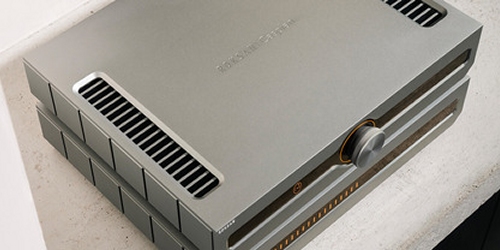
September 24, 2024
Roksan
Caspian 4G Integrated Amplifier
The Caspian Integrated Amplifier delivers total performance through its innovative Euphoria amplification architecture and advanced analogue connections, offering a flawless presentation of music via any source.
Read more
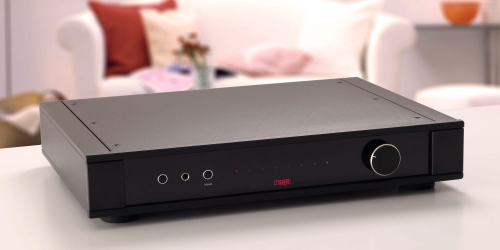
November 21, 2022
Rega
The All New Elex MK4 Integrated Amplifier Announced
The Elex MK4 is a high performance stereo integrated amplifier designed to deliver the purest musical performance. Housed in a brand new case to match the rest of the Rega range, the MK4 builds on previous Rega designs using our multi-award winning class A/B power amplifier circuit which delivers an impressive 72W per channel into 8Ω loads (90W into 6Ω).
Read more
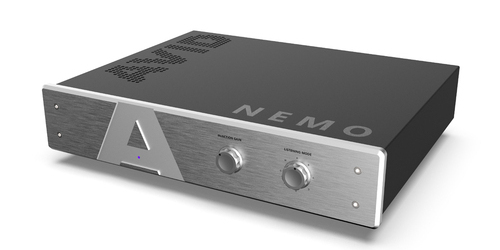
April 1, 2026
Avid
AVID NEMO™ — Noise Enhancement Module ‘Obviously’
For decades, we’ve pursued absolute silence… lower noise floors, quieter bearings, purer signal paths. But in doing so, have we lost something?
Read more