Top Wing Sparrow MC Cartridge Factory Rebuilt Boxed
Top Wing Sparrow MC
 111 views last month, 48
 views this month
Last Update On
27.01.2026
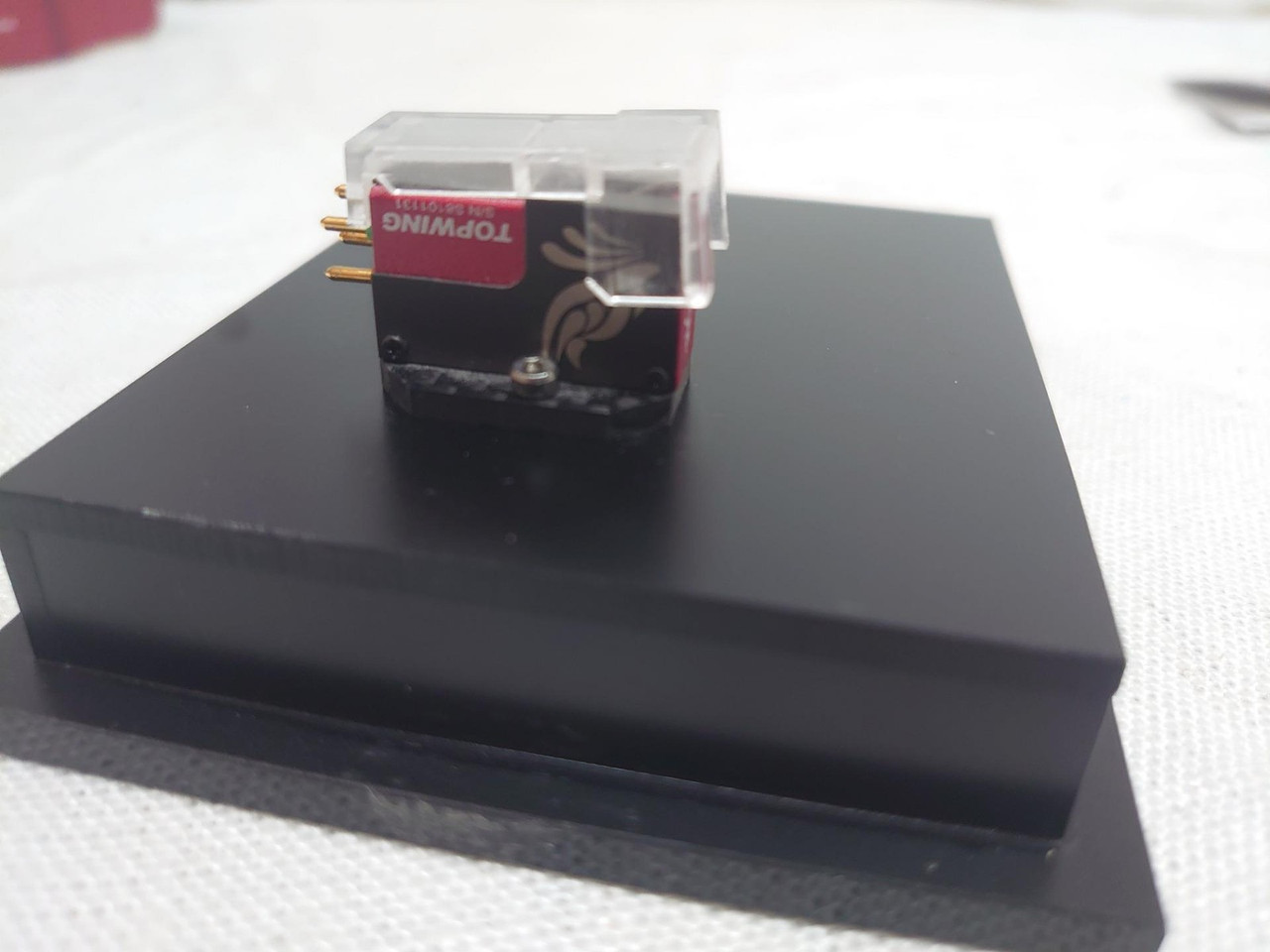 Description
Original Description is in
English, other language texts are translations and can contain errors.
EnglishDeutschSpanishTurkish
Factory rebuilt.The Top Wing Suzaku – Red Sparrow, like most every other phono cartridge, is a fragile device. But with experience comes the ability to be able to use a cartridge without destroying it. Still, accidents happen. The trick is to minimize accidents to a level of zero. Despite this, cartridges will eventually wear out. This is unavoidable.However, the Red Sparrow has a stylus, with its associated tip, cantilever, and magnets, plus coil, damper, and all the other materials that make up the stylus that is made of interchangeable designs. This makes it possible to replace the Red Sparrow's stylus at 1/10th its' original price. The price of the Top Wing Suzaku – Red Sparrow is $16,500. Yes. That price is not a typo. The good news is that the comparatively low price to replace the stylus is only $1650. Which is admittedly not a lot of money for a repair for any high-end phono cartridge, especially a $16,500 phono cartridge. The adage "there is no such thing as a free lunch" quickly comes to mind.Top-NotchReviewing this top-notch cartridge reminds me of the time when I reviewed the almost $50,000 Venture Audio Encore speakers. At first, I felt a little guilty reviewing something that was priced out of the reach of most audiophiles, including myself at the time. And so, to make myself feel a little better, I compared my reviewing experience to the writers at Car And Driver and the Automobile section of the Sunday issue of The New York Times that is often lent a car such as a Ferrari or Rolls Royce to drive through the streets and open roads of America. Whether or not these reviewers can afford one of these cars is not the point, it is whether or not they are qualified to review these automobiles. I am sure they are. It seems as if people who like to read about cars also like to read about very expensive cars.Now I feel the same way when reviewing a component for Enjoy the Music.com that I might not be able to afford. That is unless I take out a second mortgage on my life. Writing high-end audio reviews for over 25 years allows me the privilege of once in a while being assigned reviews of pricey audio components. I also review many high-end audio components that are either affordable or are budget components. This review is not one of those. But I always review equipment in the same way regardless of price – whether or not this audio components can make music. And if it can make music, I'll describe how this component makes music in my system.There is no denying that I like to read reviews of top-of-the-line high-end audio equipment. I have a feeling that many readers of high-end audio equipment magazines like to read about top-of-the-line high-end audio equipment, too. The Ferraris of audio, in a sense, if you will. The Top Wind Suzaku – Red Sparrow is one of them. I know, it's a dirty job, but someone has to do it.NameI still have a bit of a problem figuring out this cartridge's name is, as "Suzaku" translates to "Red Sparrow", and so the cartridge is either called the Top Wing Suzaku or the Top Wing Red Sparrow, but in lots of the literature and advertisements, the cartridge appears as it does at the beginning of this review. For most of the review, I'll simply call this cartridge a Red Sparrow, and sometimes the Top Wing Red Sparrow.May 2020Enjoy the Music.com Review MagazineSuperior Audio Equipment ReviewTop Wing Suzaku - Red Sparrow MC Phono CartridgePerhaps the last cartridge you will ever need.Review By Tom LyleTop Wing Suzaku - Red Sparrow MC Phono Cartridge ReviewA few years ago I reviewed the Van Den Hul Crimson Stradivarius phono cartridge. I began that review by expressing my love-hate relationship with phono cartridges. The love stems from my love of music, and the fact that I prefer music reproduced by vinyl, and that the phono cartridge converts vibrational energy from the grooves of the records into an electric signal and then this electrical signal is somehow converted into the music that comes forth from our speakers.The hate arises not from the fact that a very good phono cartridge can be quite expensive because it is a given that most great high-end audio gear is going to be expensive. But I hate that this expensive phono cartridge comes with a fragile stylus, and the components of this stylus are prone to breakage. Even if they aren't broken by accident, the stylus, and then the cantilever will eventually wear out. And then my only choice will be to return the cartridge to the manufacturer, where they will either replace it or repair it. For a price, of course. Or I can buy another expensive cartridge to replace the expensive broken one.The Top Wing Suzaku – Red Sparrow, like most every other phono cartridge, is a fragile device. But with experience comes the ability to be able to use a cartridge without destroying it. Still, accidents happen. The trick is to minimize accidents to a level of zero. Despite this, cartridges will eventually wear out. This is unavoidable.However, the Red Sparrow has a stylus, with its associated tip, cantilever, and magnets, plus coil, damper, and all the other materials that make up the stylus that is made of interchangeable designs. This makes it possible to replace the Red Sparrow's stylus at 1/10th its' original price. The price of the Top Wing Suzaku – Red Sparrow is $16,500. Yes. That price is not a typo. The good news is that the comparatively low price to replace the stylus is only $1650. Which is admittedly not a lot of money for a repair for any high-end phono cartridge, especially a $16,500 phono cartridge. The adage "there is no such thing as a free lunch" quickly comes to mind.Top-NotchReviewing this top-notch cartridge reminds me of the time when I reviewed the almost $50,000 Venture Audio Encore speakers. At first, I felt a little guilty reviewing something that was priced out of the reach of most audiophiles, including myself at the time. And so, to make myself feel a little better, I compared my reviewing experience to the writers at Car And Driver and the Automobile section of the Sunday issue of The New York Times that is often lent a car such as a Ferrari or Rolls Royce to drive through the streets and open roads of America. Whether or not these reviewers can afford one of these cars is not the point, it is whether or not they are qualified to review these automobiles. I am sure they are. It seems as if people who like to read about cars also like to read about very expensive cars.Now I feel the same way when reviewing a component for Enjoy the Music.com that I might not be able to afford. That is unless I take out a second mortgage on my life. Writing high-end audio reviews for over 25 years allows me the privilege of once in a while being assigned reviews of pricey audio components. I also review many high-end audio components that are either affordable or are budget components. This review is not one of those. But I always review equipment in the same way regardless of price – whether or not this audio components can make music. And if it can make music, I'll describe how this component makes music in my system.There is no denying that I like to read reviews of top-of-the-line high-end audio equipment. I have a feeling that many readers of high-end audio equipment magazines like to read about top-of-the-line high-end audio equipment, too. The Ferraris of audio, in a sense, if you will. The Top Wind Suzaku – Red Sparrow is one of them. I know, it's a dirty job, but someone has to do it.NameI still have a bit of a problem figuring out this cartridge's name is, as "Suzaku" translates to "Red Sparrow", and so the cartridge is either called the Top Wing Suzaku or the Top Wing Red Sparrow, but in lots of the literature and advertisements, the cartridge appears as it does at the beginning of this review. For most of the review, I'll simply call this cartridge a Red Sparrow, and sometimes the Top Wing Red Sparrow.Top Wing Suzaku - Red Sparrow MC Phono Cartridge ReviewCorelessThe Red Sparrow is a "coreless straight-flux cartridge", so it has no core material. The left and right coils are arranged in a V-shape, directly above its magnet. The stylus tip is then able to pick up fluctuations in magnetic flux made by the grooves of the record, producing sound directly, which makes the sound much more accurate.In their literature and on-line, Top Wing says that this type of system in the Red Sparrow does not generate any of the issues that are typical of Moving Coil (MC) cartridges, such as an irregularly moving coil output dictated by magnetic flux, which produces distortion and other anomalies. Nor does it act like a Moving Magnet (MM) cartridge, which has a long magnetic path and so its responsiveness deteriorates while on this path.But the Red Sparrow has the level of maintainability of MM cartridges. That is what I was outlining when explaining how the owner of this cartridge will be able to replace a broken stylus for only a fraction of its original retail price. This coreless straight-flux system is a remarkable design feature that is not only able to retain the advantages of both MC and MM cartridges, but also does away with their disadvantages.Top Wing's first cartridge, their "Blue Dragon", used a very ridged housing to eliminate any resonances that might interfere with the sound of the cartridge as it was passing over the grooves of a record. This new Red Sparrow cartridge weighs much more than the Blue Dragon, and so it had to be designed with a much lighter housing to deal with this weightier cartridge.These lighter materials led to the body having resonant points that were audible. And so, Top Wing designed the Red Sparrow using different vibration frequencies to disburse these resonances. The materials used include titanium, dry carbon, and a "high-performance" resin that is in the category of "super-engineering plastics". The use of these materials not only reduced the weight of the cartridge, yet also made it so it was able to be used with a wider range of tonearms.Top Wing claims that by using the combination of the coreless straight-flux system plus "advanced technologies and innovative materials", the Red Sparrow has a "natural sound unique to analog and soundstage reproduction never before possible". Because of the asking price of the Red Sparrow, the only response to that claim that I could think of is, "It better".ReferenceI mounted the Red Sparrow on my reference Tri-Planar 6 tonearm without any drama whatsoever. This tonearm was built especially for me and was one of the last built by Herb Papier, Tri-Planar's original owner, designer and builder in his Wheaton, Maryland workshop. The Tri-Planar has an integrated cable that is terminated with Cardas RCA connectors, which was at first paired with an Allnic H-7000 vacuum tube powered phono preamplifier, which I reviewed in the December 2019 issue.The main reason for attaining the Top Wing Red Sparrow phono cartridge was to have a cartridge that would suit this $15,000 phono preamp. When reading the review, you will realize that the marriage was a perfect one. After the Allnic phono preamplifier was returned to the manufacturer (I cried, but then) I connected the cartridge to the unbalanced inputs of the very capable Pass Laboratories XP-17 phono preamplifier that occupies the third hanging acrylic shelf of an Arcici Suspense equipment rack.The Tri-Planar tonearm in which the Red Sparrow is coupled to a Basis Audio Debut V. The turntable came from the factory as a model Debut Gold, but was later modified by the late Basis Audio owner A.J. Conti. The ‘table's plinth and other mechanisms had to be re-machined for it to accept an AC synchronous motor. Now that this Debut turntable had an AC motor, I was able to connect the turntable's AC cord to an outboard speed controller and an AC regenerator used as a speed controller. Not only did it provide the turntable's motor with a perfect AC sine wave, the frequency of this sine wave could be changed, which in turn changes the speed of its motor, and thus its platter. 60Hz spins the platter a 33.3 rpm, 81 Hz spins it at 45 rpm.The Allnic phono preamplifier or the Pass Labs phono preamp was connected to a vacuum tube-powered Nagra Audio Classic Preamplifier, and the preamp to my reference solid-state Pass Laboratories X250.8 power amplifier. This combination of solid-state power amplifier and the tubed preamplifier is a set-up that I've been using for many years. The power amplifier was connected via 12' of speaker cable to a pair of full-range electrostatic speakers, the Sound Lab Majestic 545. Despite the manufacturer's claim of these large electrostatic speakers being full-range, their published specs rate them down to 32Hz. This is a decent specification, but for as long as I had them, I've augmented their bass frequencies with a pair of subwoofers. I currently use two SVSound SB16-Ultra subwoofers which have a frequency response in the bass down to 16Hz.The in interconnects, speaker, and power cable in the review system was made by Kimber Kable, which I reviewed at the end of last year, their Carbon 8 interconnects, Carbon 18 XL speaker cables, and Ascent power cables.The system is I auditioned the Red Sparrow in is a dedicated listening room. It is provided with two power lines that are fed directly from the circuit box in our basement. The wall receptacles were made by Virtual Dynamics. Even though there was decent power supplied to the listening room, the majority of the equipment was connected to Goal Zero battery power supplies. The front-end was powered by a Goal Zero Yeti 400, and the Pass Laboratories power amp had its' own power supply, the Goal Zero Yeti 1000. At night I often plugged the Pass Labs 250-Watt power amp directly into the wall, and all the other equipment, including the subwoofers and the speakers' AC was connected to a Chang Lightspeed ISO 9300 power conditioner. The listening room has acoustic treatment panels, and the superfluous sound is absorbed somewhat by shelves filled with LPs lining most of the walls.I loath to apologize for using so much space describing the system in which I auditioned the Top Wing Red Sparrow. My excuse is that this cartridge will likely sound different in the system in which it is used, more than most others, especially those not in the class of this small, but very important component. I feel that my turntable/tonearm system is certainly more than good enough to be able to hear any sonic nuance that this cartridge possesses. My analog front-end might not be a super-premium esoteric design, but there was no time during the review period that I didn't think that I was getting the most out of this cartridge.I could easily hear changes in the sound after making very small changes in the setup, and I mean the setup of the cartridge on the turntable, and any small changes such as VTF, the loading settings on the preamplifier, as well as changes in the system. During the tail end of my audition of the Red Sparrow I was loaned a pair of Raidho Acoustics TD4.2 (review forthcoming), which replaced the Sound Lab Majestic 545 speakers in my system. This should remove anyone's doubts, especially those familiar with these large speakers, whether the review system was "good enough" to hear all of the Red Sparrow's traits.PleasureListing to the Red Sparrow was a pleasure in every sense of the word. LPs that I heard perhaps thousands of times came alive like never before. I also noticed details in these LPs that I've never noticed. The sound reproduced by this cartridge could be very detailed, yet the cartridge's sound never sounded too detailed. It never sounded "too" anything, or lacking in anything I could think of. This small component made the largest change in the sound of my system short of changing the type of speakers I was using at the time.I listened to countless vinyl record LPs, singles, and EPs of many different genres and sub-genres during the time this cartridge was in my system. I had a tough time writing this review because I didn't know which record to choose to discuss to describe what I was hearing and to describe the differences between this cartridge and the previous transducers that have been mounted on my tonearm throughout the last few years. This cartridge is so much better its not a fair fight, as it trounces any that's come before it. The sound it produced was determined by what was pressed into the grooves of the record, not by the phono cartridge. The cartridge simply translated these grooves into electrical signals better than any cartridge that has come before it.And so, I could discuss any trait that analog-loving audiophiles might be looking for in a cartridge and write about how it excelled in this area. Its frequency extension, dynamics, inner resolution, the soundstage, imaging and even the way it looked in its red and black body with the Japanese characters on the front, which is the first thing one sees when facing the turntable, excelled in all areas.I suppose there might be differences in sound between the Red Sparrow, and let's say, the Clearaudio Goldfinger, the Air Tight Opus-1, or a Koetsu Tiger Eye. I doubt I'll even be able to acquire any of these other circa $15,000 phono cartridges to perform a direct comparison. But I suspect the differences between them will be mostly nuance because any deviation from what I'm hearing with the Top Wing Red Sparrow will be a deviation from absolute perfection when it comes to any of the features I listed in the above paragraph.Home | Audio Reviews | Audiophile Shows | Partner Mags | NewsMay 2020Enjoy the Music.com Review MagazineSuperior Audio Equipment ReviewTop Wing Suzaku - Red Sparrow MC Phono CartridgePerhaps the last cartridge you will ever need.Review By Tom LyleTop Wing Suzaku - Red Sparrow MC Phono Cartridge ReviewA few years ago I reviewed the Van Den Hul Crimson Stradivarius phono cartridge. I began that review by expressing my love-hate relationship with phono cartridges. The love stems from my love of music, and the fact that I prefer music reproduced by vinyl, and that the phono cartridge converts vibrational energy from the grooves of the records into an electric signal and then this electrical signal is somehow converted into the music that comes forth from our speakers.The hate arises not from the fact that a very good phono cartridge can be quite expensive because it is a given that most great high-end audio gear is going to be expensive. But I hate that this expensive phono cartridge comes with a fragile stylus, and the components of this stylus are prone to breakage. Even if they aren't broken by accident, the stylus, and then the cantilever will eventually wear out. And then my only choice will be to return the cartridge to the manufacturer, where they will either replace it or repair it. For a price, of course. Or I can buy another expensive cartridge to replace the expensive broken one.The Top Wing Suzaku – Red Sparrow, like most every other phono cartridge, is a fragile device. But with experience comes the ability to be able to use a cartridge without destroying it. Still, accidents happen. The trick is to minimize accidents to a level of zero. Despite this, cartridges will eventually wear out. This is unavoidable.However, the Red Sparrow has a stylus, with its associated tip, cantilever, and magnets, plus coil, damper, and all the other materials that make up the stylus that is made of interchangeable designs. This makes it possible to replace the Red Sparrow's stylus at 1/10th its' original price. The price of the Top Wing Suzaku – Red Sparrow is $16,500. Yes. That price is not a typo. The good news is that the comparatively low price to replace the stylus is only $1650. Which is admittedly not a lot of money for a repair for any high-end phono cartridge, especially a $16,500 phono cartridge. The adage "there is no such thing as a free lunch" quickly comes to mind.Top-NotchReviewing this top-notch cartridge reminds me of the time when I reviewed the almost $50,000 Venture Audio Encore speakers. At first, I felt a little guilty reviewing something that was priced out of the reach of most audiophiles, including myself at the time. And so, to make myself feel a little better, I compared my reviewing experience to the writers at Car And Driver and the Automobile section of the Sunday issue of The New York Times that is often lent a car such as a Ferrari or Rolls Royce to drive through the streets and open roads of America. Whether or not these reviewers can afford one of these cars is not the point, it is whether or not they are qualified to review these automobiles. I am sure they are. It seems as if people who like to read about cars also like to read about very expensive cars.Now I feel the same way when reviewing a component for Enjoy the Music.com that I might not be able to afford. That is unless I take out a second mortgage on my life. Writing high-end audio reviews for over 25 years allows me the privilege of once in a while being assigned reviews of pricey audio components. I also review many high-end audio components that are either affordable or are budget components. This review is not one of those. But I always review equipment in the same way regardless of price – whether or not this audio components can make music. And if it can make music, I'll describe how this component makes music in my system.There is no denying that I like to read reviews of top-of-the-line high-end audio equipment. I have a feeling that many readers of high-end audio equipment magazines like to read about top-of-the-line high-end audio equipment, too. The Ferraris of audio, in a sense, if you will. The Top Wind Suzaku – Red Sparrow is one of them. I know, it's a dirty job, but someone has to do it.NameI still have a bit of a problem figuring out this cartridge's name is, as "Suzaku" translates to "Red Sparrow", and so the cartridge is either called the Top Wing Suzaku or the Top Wing Red Sparrow, but in lots of the literature and advertisements, the cartridge appears as it does at the beginning of this review. For most of the review, I'll simply call this cartridge a Red Sparrow, and sometimes the Top Wing Red Sparrow.Top Wing Suzaku - Red Sparrow MC Phono Cartridge ReviewCorelessThe Red Sparrow is a "coreless straight-flux cartridge", so it has no core material. The left and right coils are arranged in a V-shape, directly above its magnet. The stylus tip is then able to pick up fluctuations in magnetic flux made by the grooves of the record, producing sound directly, which makes the sound much more accurate.In their literature and on-line, Top Wing says that this type of system in the Red Sparrow does not generate any of the issues that are typical of Moving Coil (MC) cartridges, such as an irregularly moving coil output dictated by magnetic flux, which produces distortion and other anomalies. Nor does it act like a Moving Magnet (MM) cartridge, which has a long magnetic path and so its responsiveness deteriorates while on this path.But the Red Sparrow has the level of maintainability of MM cartridges. That is what I was outlining when explaining how the owner of this cartridge will be able to replace a broken stylus for only a fraction of its original retail price. This coreless straight-flux system is a remarkable design feature that is not only able to retain the advantages of both MC and MM cartridges, but also does away with their disadvantages.Top Wing's first cartridge, their "Blue Dragon", used a very ridged housing to eliminate any resonances that might interfere with the sound of the cartridge as it was passing over the grooves of a record. This new Red Sparrow cartridge weighs much more than the Blue Dragon, and so it had to be designed with a much lighter housing to deal with this weightier cartridge.These lighter materials led to the body having resonant points that were audible. And so, Top Wing designed the Red Sparrow using different vibration frequencies to disburse these resonances. The materials used include titanium, dry carbon, and a "high-performance" resin that is in the category of "super-engineering plastics". The use of these materials not only reduced the weight of the cartridge, yet also made it so it was able to be used with a wider range of tonearms.Top Wing claims that by using the combination of the coreless straight-flux system plus "advanced technologies and innovative materials", the Red Sparrow has a "natural sound unique to analog and soundstage reproduction never before possible". Because of the asking price of the Red Sparrow, the only response to that claim that I could think of is, "It better".Top Wing Suzaku - Red Sparrow MC Phono Cartridge ReviewReferenceI mounted the Red Sparrow on my reference Tri-Planar 6 tonearm without any drama whatsoever. This tonearm was built especially for me and was one of the last built by Herb Papier, Tri-Planar's original owner, designer and builder in his Wheaton, Maryland workshop. The Tri-Planar has an integrated cable that is terminated with Cardas RCA connectors, which was at first paired with an Allnic H-7000 vacuum tube powered phono preamplifier, which I reviewed in the December 2019 issue.The main reason for attaining the Top Wing Red Sparrow phono cartridge was to have a cartridge that would suit this $15,000 phono preamp. When reading the review, you will realize that the marriage was a perfect one. After the Allnic phono preamplifier was returned to the manufacturer (I cried, but then) I connected the cartridge to the unbalanced inputs of the very capable Pass Laboratories XP-17 phono preamplifier that occupies the third hanging acrylic shelf of an Arcici Suspense equipment rack.The Tri-Planar tonearm in which the Red Sparrow is coupled to a Basis Audio Debut V. The turntable came from the factory as a model Debut Gold, but was later modified by the late Basis Audio owner A.J. Conti. The ‘table's plinth and other mechanisms had to be re-machined for it to accept an AC synchronous motor. Now that this Debut turntable had an AC motor, I was able to connect the turntable's AC cord to an outboard speed controller and an AC regenerator used as a speed controller. Not only did it provide the turntable's motor with a perfect AC sine wave, the frequency of this sine wave could be changed, which in turn changes the speed of its motor, and thus its platter. 60Hz spins the platter a 33.3 rpm, 81 Hz spins it at 45 rpm.The Allnic phono preamplifier or the Pass Labs phono preamp was connected to a vacuum tube-powered Nagra Audio Classic Preamplifier, and the preamp to my reference solid-state Pass Laboratories X250.8 power amplifier. This combination of solid-state power amplifier and the tubed preamplifier is a set-up that I've been using for many years. The power amplifier was connected via 12' of speaker cable to a pair of full-range electrostatic speakers, the Sound Lab Majestic 545. Despite the manufacturer's claim of these large electrostatic speakers being full-range, their published specs rate them down to 32Hz. This is a decent specification, but for as long as I had them, I've augmented their bass frequencies with a pair of subwoofers. I currently use two SVSound SB16-Ultra subwoofers which have a frequency response in the bass down to 16Hz.Top Wing Suzaku - Red Sparrow MC Phono Cartridge ReviewThe in interconnects, speaker, and power cable in the review system was made by Kimber Kable, which I reviewed at the end of last year, their Carbon 8 interconnects, Carbon 18 XL speaker cables, and Ascent power cables.The system is I auditioned the Red Sparrow in is a dedicated listening room. It is provided with two power lines that are fed directly from the circuit box in our basement. The wall receptacles were made by Virtual Dynamics. Even though there was decent power supplied to the listening room, the majority of the equipment was connected to Goal Zero battery power supplies. The front-end was powered by a Goal Zero Yeti 400, and the Pass Laboratories power amp had its' own power supply, the Goal Zero Yeti 1000. At night I often plugged the Pass Labs 250-Watt power amp directly into the wall, and all the other equipment, including the subwoofers and the speakers' AC was connected to a Chang Lightspeed ISO 9300 power conditioner. The listening room has acoustic treatment panels, and the superfluous sound is absorbed somewhat by shelves filled with LPs lining most of the walls.I loath to apologize for using so much space describing the system in which I auditioned the Top Wing Red Sparrow. My excuse is that this cartridge will likely sound different in the system in which it is used, more than most others, especially those not in the class of this small, but very important component. I feel that my turntable/tonearm system is certainly more than good enough to be able to hear any sonic nuance that this cartridge possesses. My analog front-end might not be a super-premium esoteric design, but there was no time during the review period that I didn't think that I was getting the most out of this cartridge.I could easily hear changes in the sound after making very small changes in the setup, and I mean the setup of the cartridge on the turntable, and any small changes such as VTF, the loading settings on the preamplifier, as well as changes in the system. During the tail end of my audition of the Red Sparrow I was loaned a pair of Raidho Acoustics TD4.2 (review forthcoming), which replaced the Sound Lab Majestic 545 speakers in my system. This should remove anyone's doubts, especially those familiar with these large speakers, whether the review system was "good enough" to hear all of the Red Sparrow's traits.Top Wing Suzaku - Red Sparrow MC Phono Cartridge ReviewPleasureListing to the Red Sparrow was a pleasure in every sense of the word. LPs that I heard perhaps thousands of times came alive like never before. I also noticed details in these LPs that I've never noticed. The sound reproduced by this cartridge could be very detailed, yet the cartridge's sound never sounded too detailed. It never sounded "too" anything, or lacking in anything I could think of. This small component made the largest change in the sound of my system short of changing the type of speakers I was using at the time.I listened to countless vinyl record LPs, singles, and EPs of many different genres and sub-genres during the time this cartridge was in my system. I had a tough time writing this review because I didn't know which record to choose to discuss to describe what I was hearing and to describe the differences between this cartridge and the previous transducers that have been mounted on my tonearm throughout the last few years. This cartridge is so much better its not a fair fight, as it trounces any that's come before it. The sound it produced was determined by what was pressed into the grooves of the record, not by the phono cartridge. The cartridge simply translated these grooves into electrical signals better than any cartridge that has come before it.And so, I could discuss any trait that analog-loving audiophiles might be looking for in a cartridge and write about how it excelled in this area. Its frequency extension, dynamics, inner resolution, the soundstage, imaging and even the way it looked in its red and black body with the Japanese characters on the front, which is the first thing one sees when facing the turntable, excelled in all areas.I suppose there might be differences in sound between the Red Sparrow, and let's say, the Clearaudio Goldfinger, the Air Tight Opus-1, or a Koetsu Tiger Eye. I doubt I'll even be able to acquire any of these other circa $15,000 phono cartridges to perform a direct comparison. But I suspect the differences between them will be mostly nuance because any deviation from what I'm hearing with the Top Wing Red Sparrow will be a deviation from absolute perfection when it comes to any of the features I listed in the above paragraph.Top Wing Suzaku - Red Sparrow MC Phono Cartridge ReviewUnconditionalOne would expect the conclusion of this review to be an unconditional recommendation of the Top Wing Suzaku-Red Sparrow Phono Cartridge. And with its amazing feature of being able to replace the Red Sparrow's stylus at 1/10th its original price if worn or broken should make this an even easier recommendation. But my recommendation is not unconditional. The times we are living in requires me to demand of the purchaser of this phono cartridge to donate at least 10%, or more if possible, of the cost of this cartridge to a charity that will help those less fortunate than us. If the buyer cannot think of a worthy charity, I will suggest one.After that is done, if the owner of this cartridge is only half as happy as I've been during this audition period, that should be more than satisfactory, and this cartridge will likely end up being the last cartridge they will ever need. And likely one of the best they've ever heard. This is a damn good phono cartridge.
Werksüberholt.
Der Top Wing Suzaku – Red Sparrow ist, wie fast alle Tonabnehmer, ein empfindliches Gerät. Mit etwas Übung lernt man jedoch, ihn zu benutzen, ohne ihn zu beschädigen. Trotzdem passieren Unfälle. Die Kunst besteht darin, diese so gut wie möglich zu vermeiden. Dennoch verschleißen Tonabnehmer mit der Zeit. Das ist unvermeidlich.
Der Red Sparrow verfügt jedoch über eine Nadel mit Spitze, Nadelträger, Magneten, Spule, Dämpfer und allen anderen Komponenten, die in austauschbaren Ausführungen gefertigt sind. Dadurch lässt sich die Nadel des Red Sparrow für ein Zehntel des Originalpreises ersetzen. Der Preis des Top Wing Suzaku – Red Sparrow beträgt 16.500 US-Dollar. Ja, das ist kein Tippfehler. Die gute Nachricht: Der vergleichsweise niedrige Preis für den Austausch der Nadel liegt bei nur 1.650 US-Dollar. Zugegeben, das ist nicht viel Geld für die Reparatur eines High-End-Tonabnehmers, insbesondere eines 16.500-Dollar-Tonabnehmers. Da kommt mir das Sprichwort „Nichts ist umsonst“ in den Sinn.
Erstklassig
Die Rezension dieses erstklassigen Tonabnehmers erinnert mich an die Zeit, als ich die fast 50.000 Dollar teuren Venture Audio Encore-Lautsprecher testete. Anfangs hatte ich ein etwas schlechtes Gewissen, etwas zu testen, das für die meisten Audiophilen, mich eingeschlossen, unerschwinglich war. Um mich etwas besser zu fühlen, verglich ich meine Testerfahrung mit der der Autoren von Car and Driver und der Automobilredaktion der Sonntagsausgabe der New York Times, denen oft ein Auto wie ein Ferrari oder Rolls-Royce zur Verfügung gestellt wird, um durch die Straßen und über die Landstraßen Amerikas zu fahren. Ob sich diese Tester eines dieser Autos leisten können oder nicht, ist nicht der Punkt, sondern ob sie qualifiziert sind, diese Automobile zu testen. Ich bin sicher, dass sie es sind. Es scheint, als würden Menschen, die gerne über Autos lesen, auch gerne über sehr teure Autos lesen.
Mir geht es genauso, wenn ich für Enjoy the Music.com eine Komponente teste, die ich mir vielleicht nicht leisten kann. Es sei denn, ich nehme einen zweiten Kredit auf mein Leben auf. Da ich seit über 25 Jahren High-End-Audio-Tests schreibe, habe ich das Privileg, hin und wieder mit der Bewertung kostspieliger Audiokomponenten beauftragt zu werden. Ich teste aber auch viele High-End-Audiokomponenten, die entweder erschwinglich oder im Budgetbereich angesiedelt sind. Dieser Test gehört nicht dazu. Unabhängig vom Preis bewerte ich Geräte jedoch immer nach demselben Prinzip: Kann die Audiokomponente Musik wiedergeben? Und wenn sie Musik wiedergeben kann, beschreibe ich, wie sie in meiner Anlage klingt.
Ich lese unbestreitbar gerne Testberichte über High-End-Audiogeräte der Spitzenklasse. Ich vermute, dass viele Leser von Fachzeitschriften für High-End-Audiogeräte ebenfalls gerne über solche Geräte lesen. Die Ferraris der Audiowelt, sozusagen. Der Top Wing Suzaku – Red Sparrow ist einer davon. Ich weiß, es ist eine undankbare Aufgabe, aber irgendjemand muss sie ja erledigen.
Name
Ich habe immer noch etwas Schwierigkeiten, den Namen dieses Tonabnehmers herauszufinden, da „Suzaku“ übersetzt „Roter Sperling“ bedeutet. Daher wird der Tonabnehmer entweder Top Wing Suzaku oder Top Wing Red Sparrow genannt. In vielen Publikationen und Werbeanzeigen wird er jedoch so bezeichnet, wie er am Anfang dieses Testberichts genannt wird. Im Großteil dieses Testberichts werde ich ihn einfach Red Sparrow nennen, gelegentlich auch Top Wing Red Sparrow.
Mai 2020
Viel Spaß mit dem Music.com Testmagazin
Testbericht von Superior Audio Equipment
Top Wing Suzaku – Red Sparrow MC-Tonabnehmer
Vielleicht der letzte Tonabnehmer, den Sie jemals brauchen werden.
Testbericht von Tom Lyle
Testbericht zum Top Wing Suzaku – Red Sparrow MC-Tonabnehmer
Vor einigen Jahren habe ich den Van Den Hul Crimson Stradivarius Tonabnehmer getestet. Ich begann diesen Testbericht mit meiner zwiespältigen Beziehung zu Tonabnehmern. Die Liebe rührt von meiner Leidenschaft für Musik her und der Tatsache, dass ich Musik auf Vinyl bevorzuge. Der Tonabnehmer wandelt die Schwingungsenergie der Schallplattenrillen in ein elektrisches Signal um, das dann irgendwie in die Musik umgewandelt wird, die aus unseren Lautsprechern erklingt.
Der Hass entsteht nicht dadurch, dass ein sehr guter Tonabnehmer recht teuer sein kann – schließlich ist es selbstverständlich, dass hochwertige Audiogeräte ihren Preis haben. Mich stört vielmehr, dass dieser teure Tonabnehmer mit einer empfindlichen Nadel ausgestattet ist, deren Komponenten bruchanfällig sind. Selbst wenn sie nicht versehentlich beschädigt werden, verschleißen Nadel und Nadelträger mit der Zeit. Dann bleibt mir nichts anderes übrig, als den Tonabnehmer an den Hersteller zurückzusenden, der ihn entweder ersetzt oder repariert. Natürlich gegen Bezahlung. Oder ich kaufe mir einen weiteren teuren Tonabnehmer, um den kaputten zu ersetzen.
Der Top Wing Suzaku – Red Sparrow ist, wie fast alle Tonabnehmer, ein empfindliches Gerät. Mit etwas Übung lernt man jedoch, ihn zu benutzen, ohne ihn zu beschädigen. Trotzdem passieren Unfälle. Die Kunst besteht darin, diese so gut wie möglich zu vermeiden. Dennoch verschleißen Tonabnehmer mit der Zeit. Das ist unvermeidlich.
Der Red Sparrow verfügt jedoch über eine Nadel mit Spitze, Nadelträger, Magneten, Spule, Dämpfer und allen anderen Komponenten, die austauschbar sind. Dadurch lässt sich die Nadel des Red Sparrow für ein Zehntel des Originalpreises ersetzen. Der Preis des Top Wing Suzaku – Red Sparrow beträgt 16.500 US-Dollar. Ja, das ist kein Tippfehler. Die gute Nachricht: Der vergleichsweise niedrige Preis für den Nadelwechsel liegt bei nur 1.650 US-Dollar. Zugegeben, das ist nicht viel Geld für die Reparatur eines High-End-Tonabnehmers, insbesondere eines 16.500-Dollar-Tonabnehmers. Da kommt mir das Sprichwort „Nichts ist umsonst“ in den Sinn.
Erstklassig
Die Rezension dieses erstklassigen Tonabnehmers erinnert mich an die Zeit, als ich die fast 50.000 Dollar teuren Venture Audio Encore-Lautsprecher testete. Anfangs hatte ich ein etwas schlechtes Gewissen, etwas zu testen, das für die meisten Audiophilen, mich eingeschlossen, unerschwinglich war. Um mich etwas besser zu fühlen, verglich ich meine Testerfahrung mit der der Autoren von Car and Driver und der Automobilredaktion der Sonntagsausgabe der New York Times, denen oft ein Auto wie ein Ferrari oder Rolls-Royce zur Verfügung gestellt wird, um durch die Straßen und über die Landstraßen Amerikas zu fahren. Ob sich diese Tester eines dieser Autos leisten können oder nicht, ist nicht der Punkt, sondern ob sie qualifiziert sind, diese Automobile zu testen. Ich bin sicher, dass sie es sind. Es scheint, als würden Menschen, die gerne über Autos lesen, auch gerne über sehr teure Autos lesen.
Mir geht es genauso, wenn ich für Enjoy the Music.com eine Komponente teste, die ich mir vielleicht nicht leisten kann. Es sei denn, ich nehme einen zweiten Kredit auf mein Leben auf. Da ich seit über 25 Jahren High-End-Audio-Tests schreibe, habe ich das Privileg, hin und wieder mit der Bewertung kostspieliger Audiokomponenten beauftragt zu werden. Ich teste aber auch viele High-End-Audiokomponenten, die entweder erschwinglich oder im Budgetbereich angesiedelt sind. Dieser Test gehört nicht dazu. Unabhängig vom Preis bewerte ich Geräte jedoch immer nach demselben Prinzip: Kann die Audiokomponente Musik wiedergeben? Und wenn sie Musik wiedergeben kann, beschreibe ich, wie sie in meiner Anlage klingt.
Ich lese unbestreitbar gerne Testberichte über High-End-Audiogeräte der Spitzenklasse. Ich vermute, dass viele Leser von Fachzeitschriften für High-End-Audiogeräte ebenfalls gerne über solche Geräte lesen. Die Ferraris der Audiowelt, sozusagen. Der Top Wing Suzaku – Red Sparrow ist einer davon. Ich weiß, es ist eine undankbare Aufgabe, aber irgendjemand muss sie ja erledigen.
Name
Ich habe immer noch etwas Schwierigkeiten, den Namen dieses Tonabnehmers herauszufinden, da „Suzaku“ übersetzt „Roter Sperling“ bedeutet. Daher wird der Tonabnehmer entweder Top Wing Suzaku oder Top Wing Red Sparrow genannt. In vielen Publikationen und Werbeanzeigen wird er jedoch so bezeichnet, wie er auch zu Beginn dieses Testberichts genannt wird. Im Folgenden werde ich den Tonabnehmer einfach Red Sparrow nennen, gelegentlich auch Top Wing Red Sparrow.
Testbericht zum Top Wing Suzaku – Red Sparrow MC-Tonabnehmer
Kernlos
Der Red Sparrow ist ein kernloser Straight-Flux-Tonabnehmer, er besitzt also kein Kernmaterial. Die linke und rechte Spule sind V-förmig direkt über dem Magneten angeordnet. Die Nadelspitze kann so die durch die Rillen der Schallplatte erzeugten Schwankungen des magnetischen Flusses direkt aufnehmen und den Ton erzeugen, was zu einer deutlich präziseren Klangwiedergabe führt.
Top Wing gibt in seinen Unterlagen und online an, dass das System des Red Sparrow keine der typischen Probleme von Moving-Coil-Systemen (MC) verursacht, wie etwa eine durch den magnetischen Fluss bedingte unregelmäßige Spulenbewegung, die zu Verzerrungen und anderen Anomalien führt. Es verhält sich auch nicht wie ein Moving-Magnet-System (MM), dessen Ansprechverhalten aufgrund des langen Magnetwegs abnimmt.
Der Red Sparrow bietet jedoch die Wartungsfreundlichkeit von MM-Systemen. Genau das habe ich bereits erläutert, als ich erklärte, wie der Besitzer dieses Systems eine defekte Nadel für einen Bruchteil des ursprünglichen Verkaufspreises ersetzen kann. Dieses kernlose System mit geradem Magnetfluss ist ein bemerkenswertes Konstruktionsmerkmal, das nicht nur die Vorteile von MC- und MM-Systemen vereint, sondern auch deren Nachteile beseitigt.
Top Wings erstes System, der „Blue Dragon“, verwendete ein sehr steifes Gehäuse, um Resonanzen zu eliminieren, die den Klang beim Abtasten der Schallplattenrillen beeinträchtigen könnten. Die neue Red Sparrow-Patrone wiegt deutlich mehr als die Blue Dragon, daher musste für die Konstruktion ein wesentlich leichteres Gehäuse entwickelt werden, um mit diesem höheren Gewicht der Patrone zurechtzukommen.
Diese leichteren Materialien führten zu hörbaren Resonanzpunkten im Gehäuse. Daher entwickelte Top Wing den Red Sparrow mit unterschiedlichen Schwingungsfrequenzen, um diese Resonanzen zu eliminieren. Zu den verwendeten Materialien gehören Titan, Trockenkohlenstoff und ein Hochleistungsharz, das zu den Hightech-Kunststoffen zählt. Durch den Einsatz dieser Materialien wurde nicht nur das Gewicht des Tonabnehmers reduziert, sondern auch seine Kompatibilität mit einer größeren Auswahl an Tonarmen ermöglicht.
Top Wing behauptet, dass der Red Sparrow durch die Kombination des kernlosen Straight-Flux-Systems mit fortschrittlichen Technologien und innovativen Materialien einen einzigartigen, natürlichen Klang und eine nie dagewesene Klangbühnenwiedergabe bietet. Angesichts des Preises des Red Sparrow kann ich nur sagen: „Das sollte er auch!“
Ich montierte den Red Sparrow problemlos auf meinem Referenztonarm Tri-Planar 6. Dieser Tonarm wurde speziell für mich angefertigt und war einer der letzten, die Herb Papier, der Gründer, Designer und Erbauer von Tri-Planar, in seiner Werkstatt in Wheaton, Maryland, baute. Der Tri-Planar verfügt über ein integriertes Kabel mit Cardas-Cinch-Steckern, das zunächst mit einem Allnic H-7000 Röhren-Phono-Vorverstärker kombiniert wurde, den ich in der Dezemberausgabe 2019 rezensierte.
Der Hauptgrund für die Anschaffung des Top Wing Red Sparrow Tonabnehmers war, einen passenden Tonabnehmer für diesen 15.000 Dollar teuren Phono-Vorverstärker zu haben. Wie Sie im Testbericht lesen werden, war diese Kombination perfekt. Nachdem ich den Allnic Phono-Vorverstärker an den Hersteller zurückgeschickt hatte (ich war etwas traurig), schloss ich den Tonabnehmer an die unsymmetrischen Eingänge des leistungsstarken Pass Laboratories XP-17 Phono-Vorverstärkers an, der sich auf dem dritten Acryl-Hängeregal meines Arcici Suspense HiFi-Racks befindet.
Der Tri-Planar-Tonarm, in dem der Red Sparrow an einen Basis Audio Debut V gekoppelt ist. Der Plattenspieler wurde ursprünglich als Modell Debut Gold ausgeliefert, später jedoch vom verstorbenen Basis Audio-Inhaber A.J. Conti modifiziert. Für den Einbau eines AC-Synchronmotors mussten die Zarge und andere Mechanismen des Plattenspielers neu bearbeitet werden. Nachdem der Debut-Plattenspieler nun über einen Wechselstrommotor verfügte, konnte ich das Netzkabel des Plattenspielers an einen externen Drehzahlregler und einen als Drehzahlregler dienenden Wechselstromregenerator anschließen. Dieser lieferte dem Motor des Plattenspielers nicht nur eine perfekte Wechselstrom-Sinuswelle, sondern ermöglichte auch die Veränderung der Frequenz dieser Sinuswelle, wodurch sich wiederum die Drehzahl des Motors und somit des Plattentellers änderte. 60 Hz ergeben eine Drehzahl von 33,3 U/min, 81 Hz hingegen 45 U/min.
Der Allnic-Phono-Vorverstärker oder der Pass Labs-Phono-Vorverstärker war an einen Röhren-Vorverstärker von Nagra Audio Classic angeschlossen, und dieser wiederum an meine Referenz-Endstufe Pass Laboratories X250.8. Diese Kombination aus Transistor-Endstufe und Röhren-Vorverstärker nutze ich schon seit vielen Jahren. Die Endstufe war über ein 3,65 m langes Lautsprecherkabel mit einem Paar Breitband-Elektrostaten, den Sound Lab Majestic 545, verbunden. Obwohl der Hersteller diese großen Elektrostaten als Breitbandlautsprecher bezeichnet, geben die technischen Daten nur eine Grenzfrequenz von 32 Hz an. Das ist zwar ein ordentlicher Wert, aber seit ich die Lautsprecher besitze, habe ich die Bassfrequenzen mit zwei Subwoofern verstärkt. Aktuell verwende ich zwei SVSound SB16-Ultra Subwoofer mit einem Frequenzgang im Bassbereich bis 16 Hz.
Die Verbindungskabel, Lautsprecherkabel und Netzkabel des Testsystems stammten von Kimber Kable, die ich Ende letzten Jahres getestet hatte: deren Carbon 8 Verbindungskabel, Carbon 18 XL Lautsprecherkabel und Ascent Netzkabel.
Das System, in dem ich den Red Sparrow testete, befindet sich in einem separaten Hörraum. Dieser ist über zwei Stromleitungen direkt mit dem Sicherungskasten im Keller verbunden. Die Wandsteckdosen stammen von Virtual Dynamics. Obwohl der Hörraum ausreichend mit Strom versorgt war, war der Großteil der Geräte an Goal Zero Akku-Netzteile angeschlossen. Die Vorstufe wurde von einem Goal Zero Yeti 400 betrieben, und die Endstufe von Pass Laboratories hatte ihr eigenes Netzteil, das Goal Zero Yeti 1000. Nachts schloss ich die 250-Watt-Endstufe von Pass Labs oft direkt an die Steckdose an, und alle anderen Geräte, einschließlich der Subwoofer und der Lautsprecher, waren an einen Chang Lightspeed ISO 9300 Netzfilter angeschlossen. Der Hörraum verfügt über Akustikpaneele, und der überflüssige Schall wird teilweise durch Regale absorbiert, die mit Schallplatten gefüllt sind und den größten Teil der Wände säumen.
Es tut mir leid, dass ich so viel Platz für die Beschreibung des Systems verwendet habe, in dem ich den Top Wing Red Sparrow getestet habe. Der Grund dafür ist, dass dieser Tonabnehmer in der jeweiligen Anlage anders klingen wird als die meisten anderen, insbesondere solche, die nicht zu dieser kleinen, aber sehr wichtigen Komponente gehören. Ich bin überzeugt, dass mein Plattenspieler-Tonarm-System mehr als ausreichend ist, um jede klangliche Nuance dieses Tonabnehmers wahrzunehmen. Meine analoge Vorstufe mag zwar kein High-End-Gerät sein, aber während des gesamten Testzeitraums hatte ich stets das Gefühl, das Maximum aus diesem Tonabnehmer herauszuholen.
Schon kleinste Änderungen im Setup – also der Positionierung des Tonabnehmers auf dem Plattenspieler, der Auflagekraft (VTF), der Impedanzeinstellungen am Vorverstärker sowie der Systemkonfiguration – waren klanglich deutlich hörbar. Gegen Ende meines Hörtests des Red Sparrow wurde mir ein Paar Raidho Acoustics TD4.2 (Testbericht folgt) leihweise zur Verfügung gestellt, die die Sound Lab Majestic 545 Lautsprecher in meiner Anlage ersetzten. Damit dürften alle Zweifel, insbesondere bei Kennern dieser großen Lautsprecher, ausgeräumt sein, ob die Testanlage „gut genug“ war, um alle Eigenschaften des Red Sparrow wahrzunehmen.
Genuss
Das Hören des Red Sparrow war in jeder Hinsicht ein Genuss. LPs, die ich vielleicht schon tausende Male gehört hatte, klangen so lebendig wie nie zuvor. Ich entdeckte auch Details auf diesen LPs, die mir zuvor nie aufgefallen waren. Der Klang, den dieses Tonabnehmersystem wiedergab, konnte sehr detailliert sein, ohne dabei jemals überladen zu wirken. Er klang nie „zu“ irgendetwas oder es fehlte ihm an irgendetwas. Diese kleine Komponente bewirkte die größte Veränderung im Klang meiner Anlage, abgesehen vom Austausch der Lautsprecher, die ich damals verwendete.
Ich habe unzählige LPs, Singles und EPs verschiedenster Genres und Subgenres gehört, während ich dieses Tonabnehmersystem in meiner Anlage hatte. Es fiel mir schwer, diesen Testbericht zu schreiben, da ich mich nicht entscheiden konnte, welche Platte ich auswählen sollte, um zu beschreiben, was ich hörte und welche Unterschiede es zu den vorherigen Tonabnehmern auf meinem Tonarm der letzten Jahre gab. Dieses Tonabnehmersystem ist so viel besser, dass es ein unfairer Vergleich ist – es übertrifft alle seine Vorgänger bei Weitem. Der Klang wurde durch die in die Rillen der Schallplatte gepressten Daten bestimmt, nicht durch das Tonabnehmersystem selbst. Es übersetzte diese Rillen einfach besser in elektrische Signale als jedes andere System zuvor.
So könnte ich jedes Merkmal beschreiben, das analoge Audiophile von einem Tonabnehmersystem erwarten, und detailliert darlegen, wie es in diesem Bereich herausragend ist. Seine Frequenzwiedergabe, Dynamik, Detailauflösung, Klangbühne, Abbildung und sogar sein Aussehen mit dem rot-schwarzen Gehäuse und den japanischen Schriftzeichen auf der Vorderseite – das Erste, was man beim Blick auf den Plattenspieler sieht – waren in allen Bereichen hervorragend.
Ich vermute, es gäbe klangliche Unterschiede zwischen dem Red Sparrow und beispielsweise dem Clearaudio Goldfinger, dem Air Tight Opus-1 oder einem Koetsu Tiger Eye. Ich bezweifle, dass ich jemals eines dieser anderen Tonabnehmersysteme im Wert von rund 15.000 US-Dollar erwerben kann, um einen direkten Vergleich anzustellen. Ich vermute aber, dass die Unterschiede hauptsächlich subtil sein werden, denn jede Abweichung von dem, was ich mit dem Top Wing Red Sparrow höre, wäre eine Abweichung von der absoluten Perfektion in Bezug auf die oben genannten Merkmale.
Reconstruido en fábrica.
El Top Wing Suzaku – Red Sparrow, como la mayoría de los cartuchos fonográficos, es un dispositivo frágil. Pero con la experiencia se puede usar un cartucho sin dañarlo. Aun así, los accidentes ocurren. La clave está en minimizarlos a cero. A pesar de esto, los cartuchos se desgastan con el tiempo. Esto es inevitable.
Sin embargo, el Red Sparrow cuenta con una aguja, con su punta, voladizo e imanes, además de bobina, amortiguador y todos los demás materiales que la componen, que son intercambiables. Esto permite reemplazar la aguja del Red Sparrow a una décima parte de su precio original. El precio del Top Wing Suzaku – Red Sparrow es de $16,500. Sí. Ese precio no es una errata. La buena noticia es que el precio comparativamente bajo para reemplazar la aguja es de solo $1650. Lo cual, admito, no es mucho dinero para reparar una cápsula fonográfica de alta gama, especialmente una de $16,500. Enseguida me viene a la mente el dicho "nada es gratis".
De Primera
Reseñar esta cápsula de primera me recuerda cuando analicé los altavoces Venture Audio Encore de casi $50,000. Al principio, me sentí un poco culpable por reseñar algo cuyo precio estaba fuera del alcance de la mayoría de los audiófilos, incluyéndome a mí en aquel entonces. Así que, para sentirme un poco mejor, comparé mi experiencia con la de los escritores de Car And Driver y la sección de Automóviles del número dominical de The New York Times, a quienes a menudo se les presta un coche, como un Ferrari o un Rolls Royce, para recorrer las calles y carreteras de Estados Unidos. La cuestión no es si estos críticos pueden permitirse uno de estos coches, sino si están cualificados para reseñarlos. Estoy seguro de que lo están. Parece que a quienes les gusta leer sobre coches también les gusta leer sobre coches muy caros.
Ahora me pasa lo mismo cuando analizo un componente para Enjoy the Music.com que quizá no pueda permitirme. Eso a menos que me arriesgue la vida. Escribir reseñas de audio de alta gama durante más de 25 años me da el privilegio de que, de vez en cuando, me asignen reseñas de componentes de audio caros. También analizo muchos componentes de audio de alta gama, tanto asequibles como económicos. Esta reseña no es una de ellas. Pero siempre analizo los equipos de la misma manera, independientemente del precio: independientemente de si estos componentes de audio pueden reproducir música o no. Y si pueden reproducir música, describiré cómo este componente reproduce música en mi sistema.
Es innegable que me gusta leer reseñas de equipos de audio de alta gama de gama alta. Tengo la sensación de que a muchos lectores de revistas de equipos de audio de alta gama también les gusta leer sobre equipos de audio de alta gama de gama alta. Los Ferrari del audio, en cierto sentido, por así decirlo. El Top Wind Suzaku – Red Sparrow es uno de ellos. Sé que es un trabajo sucio, pero alguien tiene que hacerlo.
Nombre
Todavía me cuesta un poco descifrar el nombre de este cartucho, ya que "Suzaku" se traduce como "Gorrión Rojo", por lo que se le llama Top Wing Suzaku o Top Wing Red Sparrow. Sin embargo, en muchos anuncios y publicaciones, aparece como al principio de esta reseña. Durante la mayor parte de la reseña, simplemente lo llamaré Red Sparrow y, a veces, Top Wing Red Sparrow.
Mayo de 2020
Enjoy the Music.com Review Magazine
Reseña de equipos de audio superiores
Top Wing Suzaku - Red Sparrow MC Phono Cartridge
Quizás el último cartucho que necesites.
Reseña de Tom Lyle
Reseña del Top Wing Suzaku - Red Sparrow MC Phono Cartridge
Hace unos años, analicé el cartucho phono Van Den Hul Crimson Stradivarius. Comencé esa reseña expresando mi relación de amor-odio con las cápsulas fonográficas. Este amor nace de mi pasión por la música y de que prefiero la música reproducida en vinilo, y de que la cápsula fonográfica convierte la energía vibratoria de los surcos de los discos en una señal eléctrica, que de alguna manera se convierte en la música que sale de nuestros altavoces.
El odio no surge de que una buena cápsula fonográfica pueda ser bastante cara, porque es un hecho que la mayoría de los equipos de audio de alta gama van a ser caros. Sino que odio que esta costosa cápsula fonográfica venga con una aguja frágil, y que sus componentes sean propensos a romperse. Incluso si no se rompen por accidente, la aguja y luego el voladizo se desgastarán con el tiempo. Y entonces mi única opción será devolver la cápsula al fabricante, donde la reemplazarán o la repararán. Por un precio, claro. O puedo comprar otra cápsula cara para reemplazar la que está rota.
El Top Wing Suzaku – Red Sparrow, como la mayoría de los cartuchos fonográficos, es un dispositivo frágil. Pero con la experiencia se puede usar un cartucho sin dañarlo. Aun así, los accidentes ocurren. La clave está en minimizarlos. A pesar de esto, los cartuchos se desgastan con el tiempo. Esto es inevitable.
Sin embargo, el Red Sparrow cuenta con una aguja, con su punta, voladizo e imanes, además de bobina, amortiguador y todos los demás materiales que la componen, fabricados con diseños intercambiables. Esto permite reemplazar la aguja del Red Sparrow a una décima parte de su precio original. El precio del Top Wing Suzaku – Red Sparrow es de $16,500. Sí. Ese precio no es una errata. La buena noticia es que el precio comparativamente bajo para reemplazar la aguja es de solo $1650. Lo cual, admito, no es mucho dinero para reparar una cápsula fonográfica de alta gama, especialmente una de $16,500. Enseguida me viene a la mente el dicho "nada es gratis".
De Primera
Reseñar esta cápsula de primera me recuerda cuando analicé los altavoces Venture Audio Encore de casi $50,000. Al principio, me sentí un poco culpable por reseñar algo cuyo precio estaba fuera del alcance de la mayoría de los audiófilos, incluyéndome a mí en aquel entonces. Así que, para sentirme un poco mejor, comparé mi experiencia con la de los escritores de Car And Driver y la sección de Automóviles del número dominical de The New York Times, a quienes a menudo se les presta un coche, como un Ferrari o un Rolls Royce, para recorrer las calles y carreteras de Estados Unidos. La cuestión no es si estos críticos pueden permitirse uno de estos coches, sino si están cualificados para reseñarlos. Estoy seguro de que lo están. Parece que a quienes les gusta leer sobre coches también les gusta leer sobre coches muy caros.
Ahora me pasa lo mismo cuando analizo un componente para Enjoy the Music.com que quizá no pueda permitirme. Eso a menos que me arriesgue la vida. Escribir reseñas de audio de alta gama durante más de 25 años me da el privilegio de que, de vez en cuando, me asignen reseñas de componentes de audio caros. También analizo muchos componentes de audio de alta gama, tanto asequibles como económicos. Esta reseña no es una de ellas. Pero siempre analizo los equipos de la misma manera, independientemente del precio: independientemente de si estos componentes de audio pueden reproducir música o no. Y si pueden reproducir música, describiré cómo este componente reproduce música en mi sistema.
Es innegable que me gusta leer reseñas de equipos de audio de alta gama de gama alta. Tengo la sensación de que a muchos lectores de revistas de equipos de audio de alta gama también les gusta leer sobre equipos de audio de alta gama de gama alta. Los Ferrari del audio, en cierto sentido, por así decirlo. El Top Wind Suzaku – Red Sparrow es uno de ellos. Sé que es un trabajo sucio, pero alguien tiene que hacerlo.
Nombre
Todavía me cuesta un poco descifrar el nombre de este cartucho, ya que "Suzaku" se traduce como "Gorrión Rojo", por lo que se le conoce como Top Wing Suzaku o Top Wing Red Sparrow. Sin embargo, en muchos anuncios y publicaciones, aparece como al principio de esta reseña. Durante la mayor parte de la reseña, simplemente lo llamaré Red Sparrow y, a veces, Top Wing Red Sparrow.
Reseña del cartucho fonográfico Top Wing Suzaku - Red Sparrow MC
Sin núcleo
El Red Sparrow es un cartucho de flujo recto sin núcleo, por lo que no tiene material de núcleo. Las bobinas izquierda y derecha están dispuestas en forma de V, justo encima de su imán. La punta de la aguja capta las fluctuaciones del flujo magnético producidas por los surcos del disco, produciendo un sonido directo, lo que lo hace mucho más preciso.
En su literatura y en línea, Top Wing afirma que este tipo de sistema en el Red Sparrow no genera ninguno de los problemas típicos de los cartuchos de bobina móvil (MC), como una salida de bobina con movimiento irregular dictada por el flujo magnético, que produce distorsión y otras anomalías. Tampoco actúa como un cartucho de imán móvil (MM), que tiene un largo recorrido magnético y, por lo tanto, su capacidad de respuesta se deteriora durante este recorrido.
Pero el Red Sparrow ofrece el mismo nivel de mantenimiento que los cartuchos MM. Esto es lo que describía al explicar cómo el propietario de este cartucho podrá reemplazar una aguja rota por solo una fracción de su precio original. Este sistema de flujo recto sin núcleo es una característica de diseño notable que no solo conserva las ventajas de los cartuchos MC y MM, sino que también elimina sus desventajas.
El primer cartucho de Top Wing, su "Blue Dragon", utilizaba una carcasa muy estriada para eliminar cualquier resonancia que pudiera interferir con el sonido del cartucho al pasar por los surcos de un disco. Este nuevo cartucho Red Sparrow pesa mucho más que el Blue Dragon, por lo que tuvo que diseñarse con una carcasa mucho más liviana para poder soportar este cartucho más pesado.
Estos materiales más ligeros permitieron que el cuerpo tuviera puntos de resonancia audibles. Por ello, Top Wing diseñó el Red Sparrow utilizando diferentes frecuencias de vibración para disipar estas resonancias. Los materiales utilizados incluyen titanio, carbono seco y una resina de "alto rendimiento" que se encuentra en la categoría de "plásticos de superingeniería". El uso de estos materiales no solo redujo el peso del cartucho, sino que también lo hizo compatible con una gama más amplia de brazos.
Top Wing afirma que, al combinar el sistema de flujo recto sin núcleo con "tecnologías avanzadas y materiales innovadores", el Red Sparrow ofrece un "sonido natural único en reproducción analógica y de sonido nunca antes posible". Debido al precio del Red Sparrow, la única respuesta que se me ocurrió fue: "Mejor que mejor".
Referencia
Monté el Red Sparrow en mi brazo de referencia Tri-Planar 6 sin ningún problema. Este brazo fue construido especialmente para mí y fue uno de los últimos que fabricó Herb Papier, propietario, diseñador y constructor original del Tri-Planar, en su taller de Wheaton, Maryland. El Tri-Planar cuenta con un cable integrado con conectores RCA Cardas, que inicialmente se emparejó con un preamplificador de phono Allnic H-7000 amplificado por válvulas, del cual hice una reseña en la edición de diciembre de 2019.
La razón principal para adquirir la cápsula phono Top Wing Red Sparrow fue tener una cápsula compatible con este preamplificador de phono de $15,000. Al leer la reseña, se darán cuenta de que la combinación fue perfecta. Después de devolver el preamplificador de phono Allnic al fabricante (lloré, pero entonces), conecté la cápsula a las entradas no balanceadas del muy potente preamplificador de phono Pass Laboratories XP-17, que ocupa el tercer estante acrílico colgante de un rack de equipos Arcici Suspense.
El brazo triplanar en el que el Red Sparrow está acoplado a un Basis Audio Debut V. El tocadiscos salió de fábrica como modelo Debut Gold, pero posteriormente fue modificado por A.J. Conti, el difunto propietario de Basis Audio. El pedestal y otros mecanismos del tocadiscos tuvieron que ser remecanizados para que admitiera un motor síncrono de CA. Ahora que este tocadiscos Debut contaba con un motor de CA, pude conectar el cable de CA a un controlador de velocidad externo y a un regenerador de CA, utilizado como controlador de velocidad. No solo proporcionó al motor del tocadiscos una onda sinusoidal de CA perfecta, sino que también se pudo modificar la frecuencia de esta onda sinusoidal, lo que a su vez modifica la velocidad del motor y, por lo tanto, del plato. 60 Hz giran el plato a 33,3 rpm, mientras que 81 Hz lo hacen a 45 rpm.
El preamplificador de phono Allnic o Pass Labs se conectó a un preamplificador Nagra Audio Classic con válvulas, y este a mi amplificador de potencia de estado sólido de referencia Pass Laboratories X250.8. Esta combinación de amplificador de potencia de estado sólido y preamplificador de válvulas es una configuración que he usado durante muchos años. El amplificador de potencia se conectó mediante un cable de altavoz de 3,6 metros a un par de altavoces electrostáticos de rango completo, los Sound Lab Majestic 545. A pesar de que el fabricante afirma que estos grandes altavoces electrostáticos son de rango completo, sus especificaciones publicadas los limitan a 32 Hz. Esta es una especificación decente, pero desde que los tengo, he aumentado sus frecuencias graves con un par de subwoofers. Actualmente uso dos subwoofers SVSound SB16-Ultra, que tienen una respuesta en frecuencia de graves de hasta 16 Hz. Las interconexiones, el altavoz y el cable de alimentación del sistema de prueba fueron fabricados por Kimber Kable, que analicé a finales del año pasado, junto con sus interconexiones Carbon 8, los cables de altavoz Carbon 18 XL y los cables de alimentación Ascent.
El sistema en el que probé el Red Sparrow es una sala de escucha dedicada. Cuenta con dos líneas de alimentación que se alimentan directamente desde la caja de circuitos de nuestro sótano. Las tomas de pared fueron fabricadas por Virtual Dynamics. Si bien la sala de escucha contaba con una buena alimentación, la mayoría de los equipos estaban conectados a fuentes de alimentación de batería Goal Zero. El sistema frontal se alimentaba con un Goal Zero Yeti 400, y el amplificador de potencia de Pass Laboratories tenía su propia fuente de alimentación, el Goal Zero Yeti 1000. Por la noche, solía enchufar el amplificador de potencia de 250 vatios de Pass Labs directamente a la pared, y todos los demás equipos, incluidos los subwoofers y la alimentación de CA de los altavoces, estaban conectados a un acondicionador de corriente Chang Lightspeed ISO 9300. La sala de escucha tiene paneles de tratamiento acústico y el sonido superfluo es absorbido en parte por estantes llenos de LP que recubren la mayor parte de las paredes.
Me resisto a disculparme por usar tanto espacio para describir el sistema en el que probé el Top Wing Red Sparrow. Mi excusa es que este cartucho probablemente sonará diferente en el sistema en el que se use, más que la mayoría, especialmente aquellos que no son de la clase de este pequeño, pero importantísimo componente. Creo que mi sistema de tocadiscos/brazo es sin duda lo suficientemente bueno como para poder apreciar cualquier matiz sonoro que este cartucho posea. Puede que mi interfaz analógica no sea un diseño esotérico de alta gama, pero durante el periodo de análisis no hubo ningún momento en el que no pensara que le estaba sacando el máximo provecho.
Pude notar fácilmente cambios en el sonido tras realizar pequeños cambios en la configuración, y me refiero a la configuración del cartucho en el tocadiscos, y cualquier pequeño cambio como el VTF, la configuración de carga del preamplificador y los cambios en el sistema. Durante la fase final de mi audición del Red Sparrow, me prestaron un par de altavoces Raidho Acoustics TD4.2 (próximamente reseña), que reemplazaron los altavoces Sound Lab Majestic 545 de mi sistema. Esto debería disipar cualquier duda, especialmente para quienes estén familiarizados con estos grandes altavoces, sobre si el sistema de reseña era lo suficientemente bueno como para apreciar todas las características del Red Sparrow.
Placer
Escuchar el Red Sparrow fue un placer en todos los sentidos. Discos que había escuchado quizás miles de veces cobraron vida como nunca antes. También noté detalles en estos discos que nunca había notado. El sonido reproducido por este cartucho podía ser muy detallado, pero nunca sonó demasiado detallado. Nunca sonó demasiado ni careció de nada que se me ocurriera. Este pequeño componente fue el mayor cambio en el sonido de mi sistema, salvo cambiar el tipo de altavoces que usaba en ese momento.
Escuché innumerables discos de vinilo (LP, sencillos y EP) de diversos géneros y subgéneros mientras esta cápsula estuvo en mi sistema. Me costó escribir esta reseña porque no sabía qué disco elegir para describir lo que escuchaba y las diferencias entre esta cápsula y los transductores anteriores que he montado en mi brazo fonocaptor durante los últimos años. Esta cápsula es tan superior que no es una competencia justa, ya que supera con creces a todas las anteriores. El sonido que producía estaba determinado por lo que se presionaba en los surcos del disco, no por la cápsula phono. La cápsula simplemente traducía estos surcos en señales eléctricas mejor que cualquier otra cápsula anterior.
Así, podría hablar de cualquier característica que los amantes de la música analógica busquen en una cápsula y escribir sobre cómo sobresalía en este aspecto. Su extensión de frecuencia, dinámica, resolución interna, escena sonora, imagen e incluso su aspecto con su cuerpo rojo y negro y los caracteres japoneses en la parte frontal, que es lo primero que se ve al mirar el tocadiscos, sobresalían en todos los aspectos.
Supongo que podría haber diferencias de sonido entre el Red Sparrow y, por ejemplo, el Clearaudio Goldfinger, el Air Tight Opus-1 o un Koetsu Tiger Eye. Dudo que pueda conseguir alguna de estas otras cápsulas phono de unos 15.000 dólares para hacer una comparación directa. Pero sospecho que las diferencias entre ellas serán principalmente matices, ya que cualquier desviación de lo que escucho con el Top Wing Red Sparrow se alejará de la perfección absoluta en cuanto a cualquiera de las características que mencioné en el párrafo anterior.
Fabrikada yeniden üretildi.
Top Wing Suzaku – Red Sparrow, diğer birçok pikap kartuşu gibi, hassas bir cihazdır. Ancak deneyimle birlikte, kartuşu tahrip etmeden kullanabilme yeteneği gelir. Yine de kazalar olur. İşin püf noktası, kazaları sıfıra indirmektir. Buna rağmen, kartuşlar sonunda aşınacaktır. Bu kaçınılmazdır.
Ancak Red Sparrow'un iğnesi, ucu, kolu ve mıknatısları, ayrıca bobini, sönümleyicisi ve iğneyi oluşturan diğer tüm malzemeler, değiştirilebilir tasarımlardan yapılmıştır. Bu, Red Sparrow'un iğnesini orijinal fiyatının 1/10'una değiştirmeyi mümkün kılar. Top Wing Suzaku – Red Sparrow'un fiyatı 16.500 dolardır. Evet. Bu fiyat bir yazım hatası değil. İyi haber şu ki, iğneyi değiştirmenin nispeten düşük fiyatı sadece 1650 dolardır. Kabul edelim ki, özellikle 16.500 dolarlık bir pikap iğnesi için bu, yüksek kaliteli bir pikap iğnesinin onarımı için çok fazla para değil. "Bedava öğle yemeği diye bir şey yoktur" sözü hemen akla geliyor.
Üst Düzey
Bu üst düzey pikap iğnesini incelemek, bana neredeyse 50.000 dolarlık Venture Audio Encore hoparlörlerini incelediğim zamanı hatırlatıyor. İlk başta, o zamanlar kendim de dahil olmak üzere çoğu odyofilin ulaşamayacağı bir fiyata sahip bir şeyi incelediğim için biraz suçluluk hissettim. Bu yüzden, kendimi biraz daha iyi hissetmek için, inceleme deneyimimi Car And Driver ve New York Times'ın Pazar sayısının Otomobil bölümündeki yazarlarla karşılaştırdım; bu yazarlara genellikle Ferrari veya Rolls Royce gibi bir araba ödünç veriliyor ve Amerika'nın sokaklarında ve açık yollarında sürüyorlar. Bu incelemecilerin bu arabalardan birini karşılayıp karşılayamayacakları önemli değil, önemli olan bu otomobilleri incelemeye yetkin olup olmadıklarıdır. Eminim ki yetkindirler. Otomobiller hakkında okumayı seven insanların, çok pahalı otomobiller hakkında okumayı da sevdikleri anlaşılıyor.
Şimdi, Enjoy the Music.com için bir bileşeni incelerken aynı şeyi hissediyorum; çünkü bu bileşeni satın almaya gücüm yetmeyebilir. Tabii ki, hayatıma ikinci bir ipotek çektirmediğim sürece. 25 yılı aşkın süredir üst düzey ses ekipmanları incelemeleri yazmak, bana zaman zaman pahalı ses bileşenlerinin incelemelerini yazma ayrıcalığını sağlıyor. Ayrıca, uygun fiyatlı veya bütçe dostu birçok üst düzey ses bileşenini de inceliyorum. Bu inceleme onlardan biri değil. Ancak, fiyatına bakılmaksızın ekipmanı her zaman aynı şekilde inceliyorum – bu ses bileşeninin müzik yapıp yapamayacağına bakılmaksızın. Ve eğer müzik yapabiliyorsa, bu bileşenin sistemimde nasıl müzik yaptığını açıklayacağım.
Üst düzey ses ekipmanlarının incelemelerini okumayı sevdiğimi inkar edemem. Üst düzey ses ekipmanı dergilerinin birçok okuyucusunun da üst düzey ses ekipmanları hakkında okumayı sevdiğini düşünüyorum. Bir anlamda, ses dünyasının Ferrari'leri diyebiliriz. Top Wing Suzaku – Red Sparrow bunlardan biri. Biliyorum, kirli bir iş ama birinin yapması gerekiyor.
İsim
Bu kartuşun adını hala tam olarak çözemiyorum, çünkü "Suzaku" "Kırmızı Serçe" anlamına geliyor ve bu nedenle kartuş ya Top Wing Suzaku ya da Top Wing Red Sparrow olarak adlandırılıyor, ancak birçok literatürde ve reklamda kartuş bu incelemenin başında olduğu gibi görünüyor. İncelemenin büyük bölümünde, bu kartuşu basitçe Kırmızı Serçe ve bazen de Top Wing Red Sparrow olarak adlandıracağım.
Mayıs 2020
Music.com İnceleme Dergisi'nin keyfini çıkarın
Üstün Ses Ekipmanları İncelemesi
Top Wing Suzaku - Red Sparrow MC Pikap Kartuşu
Belki de ihtiyacınız olacak son kartuş.
Tom Lyle'ın İncelemesi
Top Wing Suzaku - Red Sparrow MC Pikap Kartuşu İncelemesi
Birkaç yıl önce Van Den Hul Crimson Stradivarius pikap kartuşunu incelemiştim. O incelemeye pikap kartuşlarıyla olan aşk-nefret ilişkimden bahsederek başlamıştım. Aşk, müziğe olan sevgimden ve müziğin vinil plaklarla çalınmasını tercih etmemden kaynaklanıyor; pikap kartuşu, plakların oluklarından gelen titreşim enerjisini elektrik sinyaline dönüştürüyor ve bu elektrik sinyali bir şekilde hoparlörlerimizden çıkan müziğe dönüştürülüyor.
Nefret ise, çok iyi bir pikap kartuşunun oldukça pahalı olmasından kaynaklanmıyor, çünkü çoğu üst düzey ses ekipmanının pahalı olacağı zaten bilinen bir şey. Ama bu pahalı pikap kartuşunun kırılgan bir iğneye sahip olmasından ve bu iğnenin bileşenlerinin kırılmaya yatkın olmasından nefret ediyorum. Kazara kırılmasalar bile, iğne ve ardından kol zamanla aşınacaktır. O zaman tek seçeneğim kartuşu üreticiye iade etmek olacak; onlar da ya değiştirecekler ya da tamir edecekler. Tabii ki bir bedel karşılığında. Ya da pahalı ve bozuk olanın yerine başka bir pahalı kartuş satın alabilirim.
Top Wing Suzaku – Red Sparrow, diğer birçok pikap kartuşu gibi, hassas bir cihazdır. Ancak deneyimle birlikte, kartuşu tahrip etmeden kullanabilme yeteneği de gelir. Yine de kazalar olur. İşin püf noktası, kazaları sıfıra indirmektir. Buna rağmen, kartuşlar sonunda aşınacaktır. Bu kaçınılmazdır.
Ancak Red Sparrow'un iğnesi, ucu, kolu ve mıknatısları, ayrıca bobini, sönümleyicisi ve iğneyi oluşturan diğer tüm malzemeler değiştirilebilir tasarımlardan yapılmıştır. Bu, Red Sparrow'un iğnesini orijinal fiyatının 1/10'una değiştirmeyi mümkün kılar. Top Wing Suzaku – Red Sparrow'un fiyatı 16.500 dolardır. Evet. Bu fiyat bir yazım hatası değil. İyi haber şu ki, iğneyi değiştirmenin nispeten düşük fiyatı sadece 1650 dolardır. Kabul edelim ki, özellikle 16.500 dolarlık bir pikap iğnesi için bu, yüksek kaliteli bir pikap iğnesinin onarımı için çok fazla para değil. "Bedava öğle yemeği diye bir şey yoktur" sözü hemen akla geliyor.
Üst Düzey
Bu üst düzey pikap iğnesini incelemek, bana neredeyse 50.000 dolarlık Venture Audio Encore hoparlörlerini incelediğim zamanı hatırlatıyor. İlk başta, o zamanlar kendim de dahil olmak üzere çoğu odyofilin ulaşamayacağı bir fiyata sahip bir şeyi incelediğim için biraz suçluluk hissettim. Bu yüzden, kendimi biraz daha iyi hissetmek için, inceleme deneyimimi Car And Driver ve New York Times'ın Pazar sayısının Otomobil bölümündeki yazarlarla karşılaştırdım; bu yazarlara genellikle Ferrari veya Rolls Royce gibi bir araba ödünç veriliyor ve Amerika'nın sokaklarında ve açık yollarında sürüyorlar. Bu incelemecilerin bu arabalardan birini karşılayıp karşılayamayacakları önemli değil, önemli olan bu otomobilleri incelemeye yetkin olup olmadıklarıdır. Eminim ki yetkindirler. Otomobiller hakkında okumayı seven insanların, çok pahalı otomobiller hakkında okumayı da sevdikleri anlaşılıyor.
Şimdi, Enjoy the Music.com için bir bileşeni incelerken aynı şeyi hissediyorum; çünkü bu bileşeni satın almaya gücüm yetmeyebilir. Tabii ki, hayatıma ikinci bir ipotek çektirmediğim sürece. 25 yılı aşkın süredir üst düzey ses ekipmanları incelemeleri yazmak, bana zaman zaman pahalı ses bileşenlerinin incelemelerini yazma ayrıcalığını sağlıyor. Ayrıca, uygun fiyatlı veya bütçe dostu birçok üst düzey ses bileşenini de inceliyorum. Bu inceleme onlardan biri değil. Ancak, fiyatına bakılmaksızın ekipmanı her zaman aynı şekilde inceliyorum – bu ses bileşeninin müzik yapıp yapamayacağına bakılmaksızın. Ve eğer müzik yapabiliyorsa, bu bileşenin sistemimde nasıl müzik yaptığını açıklayacağım.
Üst düzey ses ekipmanlarının incelemelerini okumayı sevdiğimi inkar edemem. Üst düzey ses ekipmanı dergilerinin birçok okuyucusunun da üst düzey ses ekipmanları hakkında okumayı sevdiğini düşünüyorum. Bir anlamda, ses dünyasının Ferrari'leri diyebiliriz. Top Wind Suzaku – Red Sparrow bunlardan biri. Biliyorum, kirli bir iş ama birinin yapması gerekiyor.
İsim
Bu kartuşun adını hala tam olarak çözemedim, çünkü "Suzaku" "Kırmızı Serçe" anlamına geliyor ve bu nedenle kartuş ya Top Wing Suzaku ya da Top Wing Red Sparrow olarak adlandırılıyor, ancak birçok literatürde ve reklamda kartuş bu incelemenin başında olduğu gibi görünüyor. İncelemenin büyük bölümünde, bu kartuşa basitçe Kırmızı Serçe ve bazen de Top Wing Red Sparrow diyeceğim.
Top Wing Suzaku - Red Sparrow MC Pikap Kartuşu İncelemesi
Çekirdeksiz
Kırmızı Serçe, "çekirdeksiz düz akı kartuşu"dur, yani çekirdek malzemesi yoktur. Sol ve sağ bobinler, mıknatısının hemen üzerinde, V şeklinde düzenlenmiştir. İğne ucu, plağın olukları tarafından oluşturulan manyetik akıdaki dalgalanmaları algılayarak doğrudan ses üretir ve bu da sesi çok daha doğru hale getirir.
Top Wing, literatüründe ve çevrimiçi olarak, Red Sparrow'daki bu sistemin, manyetik akı tarafından belirlenen düzensiz hareket eden bobin çıkışı gibi, bozulma ve diğer anormalliklere neden olan Hareketli Bobin (MC) kartuşlarının tipik sorunlarından hiçbirini üretmediğini belirtiyor. Ayrıca, uzun bir manyetik yola sahip olan ve bu yol boyunca tepki verme yeteneği bozulan Hareketli Mıknatıs (MM) kartuşu gibi de davranmaz.
Ancak Red Sparrow, MM kartuşlarının bakım kolaylığı seviyesine sahiptir. Bu, bu kartuşun sahibinin kırık bir iğneyi orijinal perakende fiyatının sadece küçük bir kısmına nasıl değiştirebileceğini açıklarken vurguladığım şeydi. Bu çekirdeksiz düz akı sistemi, hem MC hem de MM kartuşlarının avantajlarını korumakla kalmayıp, dezavantajlarını da ortadan kaldıran olağanüstü bir tasarım özelliğidir.
Top Wing'in ilk pikap iğnesi olan "Blue Dragon", plağın olukları üzerinden geçerken iğnenin sesini etkileyebilecek her türlü rezonansı ortadan kaldırmak için çok sert bir gövde kullanıyordu. Bu yeni Red Sparrow iğnesi, Blue Dragon'dan çok daha ağır olduğundan, bu daha ağır iğneyle başa çıkabilmek için çok daha hafif bir gövdeyle tasarlanması gerekiyordu.
Bu daha hafif malzemeler, gövdenin duyulabilir rezonans noktalarına sahip olmasına yol açtı. Bu nedenle Top Wing, bu rezonansları dağıtmak için farklı titreşim frekansları kullanarak Red Sparrow'u tasarladı. Kullanılan malzemeler arasında titanyum, kuru karbon ve "süper mühendislik plastikleri" kategorisinde yer alan "yüksek performanslı" bir reçine bulunmaktadır. Bu malzemelerin kullanımı sadece kartuşun ağırlığını azaltmakla kalmadı, aynı zamanda daha geniş bir yelpazedeki pikap kollarıyla kullanılabilmesini de sağladı.
Top Wing, çekirdeksiz düz akış sistemi ile "gelişmiş teknolojiler ve yenilikçi malzemelerin" kombinasyonunu kullanarak Red Sparrow'un "analog sese özgü doğal bir sese ve daha önce hiç mümkün olmayan bir ses sahnesi reprodüksiyonuna" sahip olduğunu iddia ediyor. Red Sparrow'un fiyatı göz önüne alındığında, bu iddiaya verebileceğim tek yanıt "Umarım öyledir" olurdu.
Referans
Red Sparrow'u referans Tri-Planar 6 pikap koluma hiçbir sorun yaşamadan monte ettim. Bu pikap kolu özellikle benim için üretildi ve Tri-Planar'ın orijinal sahibi, tasarımcısı ve üreticisi Herb Papier tarafından Wheaton, Maryland'deki atölyesinde üretilen son kollardan biriydi. Tri-Planar'ın entegre kablosu Cardas RCA konektörleriyle sonlandırılmıştır ve başlangıçta Aralık 2019 sayısında incelediğim Allnic H-7000 vakum tüplü fono preamplifikatör ile eşleştirilmiştir.
Top Wing Red Sparrow fono kartuşunu edinmemin ana nedeni, bu 15.000 dolarlık fono preamplifikatöre uygun bir kartuşa sahip olmaktı. İncelemeyi okuduğunuzda, bu eşleşmenin mükemmel olduğunu anlayacaksınız. Allnic fono preamplifikatör üreticiye iade edildikten sonra (ağladım ama sonra), kartuşu, Arcici Suspense ekipman rafının üçüncü asılı akrilik rafında bulunan çok yetenekli Pass Laboratories XP-17 fono preamplifikatörünün dengesiz girişlerine bağladım.
Red Sparrow'un Basis Audio Debut V'ye bağlandığı Tri-Planar ton kolu. Pikap fabrikadan Debut Gold modeli olarak çıktı, ancak daha sonra merhum Basis Audio sahibi A.J. Conti tarafından modifiye edildi. Pikabın tabanı ve diğer mekanizmaları, AC senkron motoru kabul edebilmesi için yeniden işlenmek zorunda kaldı. Bu Debut pikap artık bir AC motora sahip olduğundan, pikabın AC kablosunu harici bir hız kontrol cihazına ve hız kontrol cihazı olarak kullanılan bir AC rejeneratöre bağlayabildim. Bu, pikabın motoruna mükemmel bir AC sinüs dalgası sağlamakla kalmadı, aynı zamanda bu sinüs dalgasının frekansını da değiştirebildim; bu da motorun ve dolayısıyla plakanın hızını değiştirdi. 60 Hz, plakayı 33,3 rpm'de, 81 Hz ise 45 rpm'de döndürüyor.
Allnic fono preamplifikatör veya Pass Labs fono preamplifikatör, vakum tüplü Nagra Audio Classic Preamplifikatöre ve preamplifikatör de referans katı hal Pass Laboratories X250.8 güç amplifikatörüme bağlandı. Katı hal güç amplifikatörü ve tüplü preamplifikatör kombinasyonu, uzun yıllardır kullandığım bir kurulumdur. Güç amplifikatörü, 12 fitlik hoparlör kablosuyla bir çift tam aralıklı elektrostatik hoparlöre, Sound Lab Majestic 545'e bağlandı. Üreticinin bu büyük elektrostatik hoparlörlerin tam aralıklı olduğunu iddia etmesine rağmen, yayınlanan teknik özellikleri 32 Hz'e kadar indiklerini belirtiyor. Bu iyi bir özellik, ancak onları kullandığım süre boyunca bas frekanslarını bir çift subwoofer ile destekledim. Şu anda bas frekans tepkisi 16 Hz'e kadar inen iki adet SVSound SB16-Ultra subwoofer kullanıyorum.
İnceleme sistemindeki ara bağlantı kabloları, hoparlör ve güç kabloları, geçen yılın sonunda incelediğim Kimber Kable markasına aitti: Carbon 8 ara bağlantı kabloları, Carbon 18 XL hoparlör kabloları ve Ascent güç kabloları.
Red Sparrow'u denediğim sistem, özel bir dinleme odasında bulunuyor. Bodrum katımızdaki devre kutusundan doğrudan beslenen iki güç hattına sahip. Duvar prizleri Virtual Dynamics tarafından üretildi. Dinleme odasına yeterli güç sağlanmasına rağmen, ekipmanın büyük çoğunluğu Goal Zero pil güç kaynaklarına bağlıydı. Ön uç, Goal Zero Yeti 400 ile çalıştırılıyordu ve Pass Laboratories güç amplifikatörünün kendi güç kaynağı olan Goal Zero Yeti 1000 vardı. Geceleri genellikle Pass Labs 250 Watt'lık güç amplifikatörünü doğrudan duvara takıyordum ve subwoofer'lar ve hoparlörlerin AC'si de dahil olmak üzere diğer tüm ekipman, Chang Lightspeed ISO 9300 güç düzenleyicisine bağlıydı. Dinleme odasında akustik yalıtım panelleri bulunmaktadır ve duvarların çoğunu kaplayan plaklarla dolu raflar, fazla sesi bir nebze de olsa emmektedir.
Top Wing Red Sparrow'u denediğim sistemi bu kadar uzun bir açıklamayla anlattığım için özür dilemekten nefret ediyorum. Mazeretim şu ki, bu kartuş, özellikle bu küçük ama çok önemli bileşen sınıfında olmayan diğerlerine kıyasla, kullanıldığı sistemde muhtemelen farklı ses verecektir. Pikap/kol sistemimin, bu kartuşun sahip olduğu her türlü ses nüansını duyabilmek için fazlasıyla yeterli olduğunu düşünüyorum. Analog ön uç sistemim süper premium, özel bir tasarım olmayabilir, ancak inceleme süresi boyunca bu kartuştan en iyi şekilde yararlandığımı düşünmediğim hiçbir an olmadı.
Kurulumda çok küçük değişiklikler yaptıktan sonra bile seste kolayca değişiklikler duyabiliyordum; pikap üzerindeki kartuşun kurulumu, VTF, ön amplifikatördeki yükleme ayarları ve sistemdeki değişiklikler gibi küçük değişikliklerden bahsediyorum. Red Sparrow'u dinleme sürecimin sonlarına doğru, sistemimdeki Sound Lab Majestic 545 hoparlörlerin yerini alan bir çift Raidho Acoustics TD4.2 (incelemesi yakında yayınlanacak) ödünç aldım. Bu, özellikle bu büyük hoparlörlere aşina olan herkesin, inceleme sisteminin Red Sparrow'un tüm özelliklerini duyabilmek için "yeterince iyi" olup olmadığı konusundaki şüphelerini ortadan kaldırmalıdır.
Keyif
Red Sparrow'u dinlemek kelimenin tam anlamıyla bir zevkti. Belki de binlerce kez dinlediğim LP'ler daha önce hiç olmadığı kadar canlandı. Ayrıca bu LP'lerde daha önce hiç fark etmediğim detayları da fark ettim. Bu kartuşun ürettiği ses çok detaylı olabiliyordu, ancak kartuşun sesi asla aşırı detaylı gelmedi. Hiçbir zaman "çok" bir şey gibi veya aklıma gelebilecek herhangi bir şeyden yoksun gibi gelmedi. Bu küçük bileşen, o sırada kullandığım hoparlör türünü değiştirmek dışında, sistemimin sesinde en büyük değişikliği yaptı.
Bu pikap iğnesi sistemimde olduğu süre boyunca sayısız farklı tür ve alt türden plak, single ve EP dinledim. Bu incelemeyi yazmakta zorlandım çünkü duyduklarımı ve bu iğne ile son birkaç yıldır pikap koluma takılı olan önceki dönüştürücüler arasındaki farkları açıklamak için hangi plağı seçeceğimi bilemedim. Bu iğne o kadar çok daha iyi ki, adil bir karşılaştırma yapmak mümkün değil, çünkü daha önce gelenlerin hepsini ezip geçiyor. Ürettiği ses, pikap iğnesinden değil, plağın oluklarına basılan şeyden kaynaklanıyordu. İğne, bu olukları elektrik sinyallerine, daha önce gelen tüm iğnelerden daha iyi bir şekilde dönüştürdü.
Bu nedenle, analog seven odyofillerin bir iğnede arayabileceği her özelliği tartışabilir ve bu alanda nasıl üstün olduğunu yazabilirim. Frekans aralığı, dinamikleri, iç çözünürlüğü, ses sahnesi, görüntüleme ve hatta pikapla karşı karşıya gelindiğinde ilk görülen şey olan ön yüzündeki Japonca karakterlerle kırmızı ve siyah gövdesiyle görünümü bile her alanda mükemmeldi.
Sanırım Red Sparrow ile Clearaudio Goldfinger, Air Tight Opus-1 veya Koetsu Tiger Eye arasında ses açısından farklılıklar olabilir. Doğrudan karşılaştırma yapmak için bu yaklaşık 15.000 dolarlık diğer pikap kartuşlarından herhangi birini edinebileceğimi bile sanmıyorum. Ancak aralarındaki farkların çoğunlukla nüans olacağını düşünüyorum, çünkü Top Wing Red Sparrow ile duyduğumdan herhangi bir sapma, yukarıdaki paragrafta listelediğim özelliklerin herhangi birinde mutlak mükemmellikten bir sapma olacaktır.