T&A PDP3000HV SACD CD Player/DAC
T+A Elektroakustik PDP3000HV
 105 views last month, 114
 views this month
Last Update On
26.03.2026
 Description
Original Description is in
English, other language texts are translations and can contain errors.
EnglishDeutschSpanishTurkish
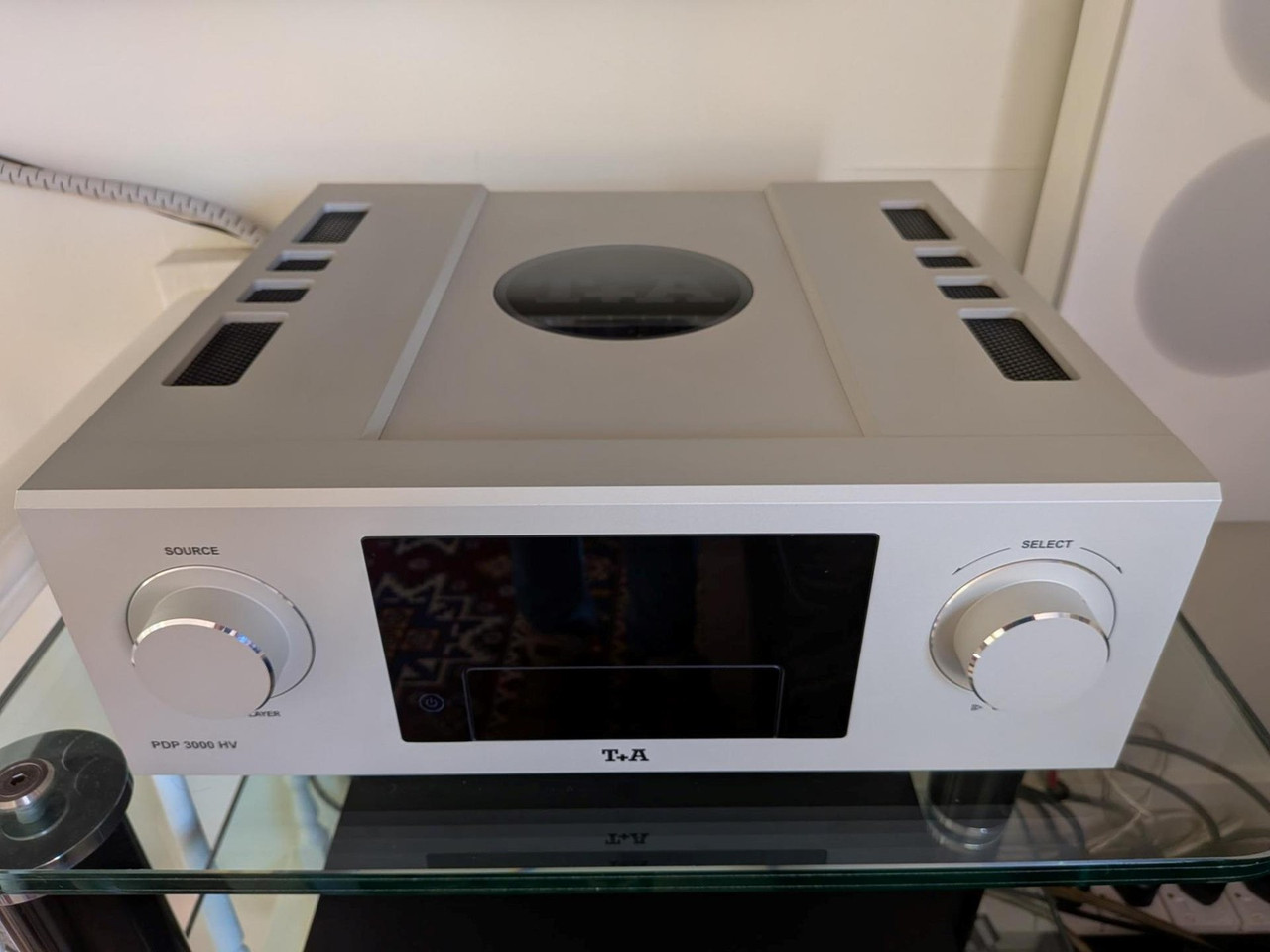
Excellent. T+A PDP 3000 HV CD/SACD Player and DACReview by Robert Harley Feb 16, 2017A A ATheory + Application Elektroakustik (T+A) may be the biggest and most technically innovative high-end audio company you’ve heard little or nothing about. The Germany company has been on a long-term growth trajectory but has intentionally kept a low profile in the U.S. so that it could focus on the European and Asian markets. That’s unfortunate for those of us in North America because T+A makes an extensive range of technically innovative, beautifully built, forward-looking, great-sounding products that are fairly priced.Founded in 1978 by Siegfried Amft, T+A began life as a loudspeaker company with just two employees. Amft still heads the company, which has grown to a staff of more than a hundred. Fourteen of the employees are graduate-level engineers, many of them specialists in fields such as circuit-board layout, software development, and mechanical engineering. The company’s history is one of fundamental technical research driving product development. T+A is as far from a marketing-driven “me-too” company as you’ll find. For example, the company designs and builds its own disc-transport mechanisms from metal rather than buying off-the-shelf plastic mass-market drives. T+A also writes its own software, including the filters in its digital products. I was astonished to discover that T+A was creating its own software-based digital filters way back in 1989, a time when I thought that only Wadia and Theta Digital possessed that capability.The PDP 3000 HV CD/SACD player and DAC reviewed here exemplifies T+A’s engineering-driven approach. The company’s flagship digital product is packed with sophisticated design and lavish execution. I got an inside look at the PDP 3000 HV during the Munich show where I sat down with T+A’s lead designer, Lothar Wiemann. A physicist by education, Wiemann has been with T+A for more than 30 years. The 57-pound player’s top panel features a round see-through window that shows off the internals. The massive chassis is made from aluminum, with isolated compartments for the digital and analog power supplies, and separate compartments for the digital and analog circuits. The transport is housed in its own aluminum chamber. This construction isolates the subsections magnetically and mechanically, and prevents coupling via RF. The exterior metalwork, which is available in dark grey or silver, is exemplary, as is the feel of the controls and the sophistication of their operation. Press the drawer-open button and the tray glides out with a smoothness and solidity that is unmatched in my experience. I would not have been surprised to learn that the PDP 3000 HV was priced at twice its U.S. retail of $22,500 (alas, up from $19,500 before the Euro-Dollar valuation swing this summer).The front panel is dominated by two large knobs that select inputs and access the player’s extensive menu. Those inputs include USB, AES/EBU, three SPDIF on RCA, two SPDIF on BNC jacks, and two TosLink optical. All these inputs can be named via the remote control’s keypad. The remote control is a large, heavy unit machined from metal. The markings are a bit cryptic; you must refer to the table in the owner’s manual to decipher their meanings. The disc drawer sits beneath a large display that shows the selected input, track number or time, and the set-up functions. The rear panel has a couple of unusual twists. First, the PDP 3000 HV requires two AC cords, one for the player’s digital power supply and another for the analog supply. The second twist is two sets of analog outputs, one for PCM sources and the other for DSD sources. Dual outputs are offered because the PDP 3000 HV employs completely separate signal paths for PCM and DSD decoding, all the way through the analog output stages and output jacks. Most DSD-capable DACs simply convert DSD to PCM for conversion to analog. T+A wanted to build a statement product without the compromise of designing a single DAC and analog output stage that would work for both DSD and PCM. This arrangement, however, requires two pairs of interconnects between the PDP 3000 HV and your preamplifier if you plan on listening to DSD downloads or SACDs. If you’re not that hardcore, a menu setting will route all signals through the PCM output stage with a small penalty in DSD sound quality.Much effort went into optimizing the performance with SACD and DSD sources. In addition to separate signal paths for PCM and DSD, the DSD DAC is a T+A custom design realized with discrete components rather than an off-the-shelf chip. In addition, the PDP 3000 HV allows you to select between two SACD and three DSD filters and noise-shaping algorithms to optimize the sound quality for different systems and DSD sample rates (see sidebar). I’m not aware of any other DSD DAC with either a discrete custom DSD DAC or selectable DSD filters.I describe the PDP 3000 HV’s technical details in the sidebar, but here’s a synopsis: custom digital filters, completely separate signal paths for DSD and PCM, an all-discrete signal path including the current-to-voltage converter, dual-differential PCM DACs, custom discrete DSD DAC, isolated digital and analog power supplies including dual power cords, custom metal transport mechanism, an elaborate power supply, massive aluminum chassis, no op-amps in the signal path, and extensive jitter reduction. That’s an impressive list of design features.I should mention that if you find the PDP 3000 HV appealing but it’s beyond your budget, and you don’t need disc playback, consider T+A’s $3995 DAC 8. It is based on the same design concepts as the PDP 3000 HV but in a less elaborate implementation. It still offers the discrete 1-bit DSD converter, selectable DSD filters, and many other T+A technologies. I haven’t heard the DAC 8 but based on my experience with the PDP 3000 HV, I expect it to be outstanding.ListeningIn assessing the sound of the various inputs before beginning the evaluation, I discovered that I couldn’t get the AES/EBU input to lock to the Aurender W20. Fortunately, the PDP 3000 HV offers coaxial inputs on BNC jacks, which don’t suffer the technical and sonic compromises of RCA digital inputs. I slightly preferred the sound via the BNC inputs compared with USB, although the best-sounding configuration was with a Berkeley Alpha USB between the Aurender and the PDP 3000 HV. Note that you must use the USB input for decoding DSD files.Starting with CD playback and PCM files of various resolutions, the PDP 3000 HV revealed itself to be a first-rate CD player and DAC. The player had certain qualities that were exceptional, particularly the sense of musical flow, rhythmic expression, and visceral involvement in the music. It’s endlessly interesting to hear familiar music through a new playback device; the new product under evaluation sometimes pushes different musical buttons. That is, the way in which I engage with music is a little different with some products. With the PDP 3000 HV I found myself more immersed in music’s rhythmic power and dynamic expression. Although the PDP 3000 HV hit all the critical listening checkmarks, it had something extra—a visceral energy that connected me with music on its most fundamental level.Perhaps part of this character is due to the PDP 3000 HV’s powerful, robust, and dynamically “tight” presentation that conveyed the physicality of music. It wasn’t just that the bottom end was weighty and dynamic; there was more to why the player had such an energetic and upbeat quality that was deeply engaging. I think that the PDP 3000 HV more accurately reproduces the timing information in music, contributing to the sense of live music making. The PDP 3000 HV has a powerful rhythmic pull that connects on a deeper level than, for example, encouraging a dissection of the soundstage. This quality was evident on the 96/24 download of Talking Heads’ Speaking in Tongues. The PDP 3000 HV nailed the precise timing and transient pop of the exquisitely intricate percussion and James-Brown-esque rhythm guitar (and the way that they worked together), conveying this album’s remarkable whole-body propulsive feel. Many DACs, by contrast, dilute this aspect of the music. The PDP 3000 HV had an uncanny ability to convey a sense of upbeat energy, as though the musicians were not just technically better but also more engaged in the performance. Of course, a music-reproduction component can’t make musicians sound “better”; it can only more accurately convey their musicianship, which is what the PDP 3000 HV did consistently. (Incidentally, two days after listening to this album I cued it up again through the Aurender’s iPad app and after about 30 seconds thought that something had gone wrong in my system. The sound was hard, bright, spitty in the treble, flat, and generally unpleasant by comparison. Three or four songs in I realized that I was listening to an old CD rip I had made, not to the 96/24 download, both of which were on the Aurender server.)This rhythmic energy and involvement extended to all kinds of music. The great Freddie Hubbard-penned track “Byrdlike” from George Cables’ 1979 album Cables’ Vision, an album I’ve been listening to for decades, was rendered by the T+A with freshness, the be-bop melody and extended virtuoso solos coming alive, all driven by Peter Erskine’s powerful drumming. The music just had an urgency and flow that were remarkable. The overall spatial perspective was on the immediate and upfront side rather than relaxed. It was like sitting a few rows closer to the orchestra rather than mid-hall. This quality conveyed startling palpability and presence, yet the sound never crossed the line into sounding forward or dry. Moreover, the immediacy was accompanied by good soundstage depth, fine layering of images within that depth, and a wonderful bloom and air around image outlines.The differences in sound between the four digital filters for PCM reproduction were greater than those of filter choices I’ve heard in other DACs. The outstanding dynamic alacrity, immediacy, and front-of-the-hall perspective described are in part the result of filter I chose for most of my daily listening (T+A calls the filter “Bezier”). Choose a different filter and the sound becomes a bit more relaxed. The precise sense of timing described is diluted somewhat with the other filters, but those filters have their own merits, including a bit smoother treble. Fortunately, it’s easy to switch filters on the fly from the remote control.With most CD/SACD players, the improvement in SACD over CD or CD-quality files is significant. But in the PDP 3000 HV, SACD and DSD files sounded massively better than CD-quality PCM. The T+A produced what was, by a wide margin, the best SACD and DSD sound I’ve ever heard. The clarity, transparency, dynamics, and resolution were simply stunning. On the terrific Chesky hybrid SACD Jazz in the Key of Blue by drummer Jimmy Cobb (the drummer on Kind of Blue, incidentally), the T+A player produced a stunningly realistic sound on Roy Hargrove’s trumpet, in timbre, dynamics, resolution of fine detail, and that ineffable impression of the instrument being in the room with you. Cobb’s gentle brush work was portrayed with tremendous resolution; this delicate sound was imbued with a dense filigreed texture that was utterly realistic. The background vocals on the track “Gaia” from James Taylor’s Hourglass were also superbly rendered; I could hear the individual voices like never before, and the soprano sax floated in three-dimensional space. In addition to enjoying and evaluating the sound of well-worn SACDs, I played some sample tracks from Blue Coast Music, an audiophile label that records exclusively in high-speed DSD, and makes those recordings available for download. Note that unlike many DSD recordings, Blue Coast’s titles remain in the DSD format with no intermediate conversions to PCM. This approach, along with their purist recording techniques, result in some spectacular-sounding recordings. I’m not big on singer-songwriters, a staple of the Blue Coast catalog, but I found some music to enjoy. Guitarist Alex de Grassi performing “St. James Infirmary” on solo acoustic guitar, decoded by the PDP 3000 HV, wasn’t just the most realistic guitar recording I’ve heard, but also one of the most realistic recordings of any instrument in my experience. So great was the PDP 3000 HV’s transparency to sources that the sound had an almost “fool-you” realism.Another wonderful DSD recording is the recently released album of James Matheson’s compositions on Yarlung Records, downloaded in double-DSD from the website nativedsd.com. The album includes Matheson’s String Quartet, recorded late last year at Samueli Theater, part of the Segerstrom Center for the Arts in Costa Mesa, California. I was fortunate to have attended a later Yarlung recording session in this hall. The recording was made in quad-DSD (DSD256) and is available for download in that format, but I was able to listen only to the DSD128 version because the Aurender W20 doesn’t currently support DSD256. In DSD128, the string quartet was rendered by the PDP 3000 HV with exceptional vitality and timbral realism. The PDP 3000 HV’s dynamic alacrity and visceral quality described earlier beautifully conveyed this music’s unusual rhythmic flow. The album includes a piece for piano and soprano called Times Alone that was stunning in every way: the timbre and dynamics of the piano, the palpability and purity of the soprano, and the way that the instruments were presented spatially within the acoustic. It was all well served by the PDP 3000 HV.As great as SACD and DSD sounded in the standard modes, the PDP 3000 HV has a trick up its sleeve that takes the sound quality to another level. The SACD and DSD filter options, mentioned earlier and described in detail in the sidebar, proved their worth. With Mode 1 engaged (what would be the only filter on other DSD DACs), DSD sound is as I’ve described—stunningly transparent, immediate, detailed, and present. Even if this setting represented the PDP 3000 HV’s DSD performance, I would have still thought it the best DSD I’ve heard. But switch to Mode 2 (a filter with a higher cutoff frequency and gentler slope) and all those qualities stepped up a notch. The sense of air and detail increased, and with it the timbral, dynamic, and spatial realism. The final step is to remove any filtering (Mode 4, or what T+A calls “True DSD”) and listen to the raw 1-bit datastream. The combination of no filter, T+A’s custom DSD DAC built from discrete components, and an analog output stage that has been optimized for DSD playback elevated the performance to new heights. The wider filters allowed more very fine detail to be resolved and stripped away that last scrim between you and the instruments. On the Alex de Grassi track with Mode 1, you can sometimes hear him breathe or shift in his chair, but it’s not very distinct. In Mode 2 these sounds are more clearly heard as what they are. But Mode 4 renders them so clearly that you get a goosebump-inducing impression of a person in front of you. In Mode 4, the illusion of hearing live music-making on the James Matheson album was absolutely startling. In fact, the third movement of the String Quartet was almost overwhelming in its intensity.These filter modes are for decoding DSD files via the USB input. SACD playback also offers two filters, with the wider-bandwidth filter (Filter 2) offering a greater sense of palpability, fine detail, and sense of an instrument hanging in space surrounded by the recorded acoustic.There’s one big caveat, however; the wider filters won’t work in all systems, and engaging those wider filters (or running with no filter, as in Mode 4) has the potential to damage tweeters. See the sidebar for more detail for why these filters are necessary and how the wider filters have the potential to damage your system.ConclusionThe T+A PDP 3000 HV is an extremely sophisticated, versatile, and highly musical disc player. When playing CDs and decoding PCM files, the PDP 3000 HV was among the best DACs I’ve heard, particularly in its ability to convey the music’s dynamic expression and rhythmic flow. It offers the kind of presentation that draws attention to the music rather than to the sound.Had this been all there was to the PDP 3000 HV, it would have earned an enthusiastic recommendation. But the machine also offers what is far and away the best SACD and DSD playback I’ve heard. The various SACD and DSD filter options, unique to T+A, vault the performance to new levels of transparency, resolution, and realism. The PDP 3000 HV is an SACD and DSD lover’s dream.Although $22,500 is a lot of money for a disc player, the PDP 3000 HV nonetheless represents high value considering the performance, sophisticated technology, and battleship build-quality. Many companies charge this much or more for less. It took a long time for North American audiophiles (myself included) to discover this 38-year-old German company, but the PDP 3000 HV proves it was worth the wait.Specs & PricingType: CD/SACD player and DACDigital inputs: AES/EBU (x1), SPDIF on RCA (x3), SPDIF on BNC (x2), TosLink optical (x2), USB (x1)Digital output: PCM on RCA jack (x1)Formats supported: CD, SACD, DSD (up to DSD512), PCM up to 384/24Analog outputs: Decoded PCM on RCA and XLR jacks, decoded DSD on RCA and XLR jacksConversion: Double-differential quadruple converter with four 32-bit sigma-delta DACs per channel (PCM); T+A True-1Bit DSD conveter (DSD)Filtering and upsampling: Custom T+A PCM upsampling filter with four filter options; custom SACD filter with two filter options; custom DSD filter with three filter optionsDisc mechanism: Custom T+A linear-tracking drivePower: Dual IEC AC input jacksDimensions: 18″ x 6.7″ x 18″Weight: 57.2 lbs.
Ausgezeichnet.
T+A PDP 3000 HV CD/SACD-Player und DAC
Testbericht von Robert Harley, 16. Februar 2017
A A A
Theorie + Anwendung: Elektroakustik (T+A) ist womöglich das größte und technisch innovativste High-End-Audio-Unternehmen, von dem Sie bisher wenig bis gar nichts gehört haben. Das deutsche Unternehmen befindet sich seit Langem auf Wachstumskurs, hat sich in den USA aber bewusst zurückgehalten, um sich auf die europäischen und asiatischen Märkte zu konzentrieren. Das ist schade für uns in Nordamerika, denn T+A bietet eine breite Palette an technisch innovativen, hochwertig verarbeiteten, zukunftsweisenden und klanglich hervorragenden Produkten zu fairen Preisen.
T+A wurde 1978 von Siegfried Amft gegründet und begann als Lautsprecherhersteller mit nur zwei Mitarbeitern. Amft leitet das Unternehmen noch heute, das mittlerweile über hundert Mitarbeiter beschäftigt. Vierzehn der Mitarbeiter sind Ingenieure mit Hochschulabschluss, viele von ihnen Spezialisten in Bereichen wie Leiterplattenlayout, Softwareentwicklung und Maschinenbau. Die Geschichte des Unternehmens ist geprägt von grundlegender technischer Forschung, die die Produktentwicklung vorantreibt. T+A ist so weit entfernt von einem marketingorientierten Nachahmerunternehmen, wie man es sich nur vorstellen kann. Beispielsweise entwickelt und fertigt das Unternehmen seine eigenen Disc-Laufwerke aus Metall, anstatt handelsübliche Kunststofflaufwerke zu kaufen. T+A entwickelt auch seine eigene Software, einschließlich der Filter für seine digitalen Produkte. Ich war erstaunt, zu erfahren, dass T+A bereits 1989 eigene softwarebasierte Digitalfilter entwickelte – zu einer Zeit, als ich dachte, nur Wadia und Theta Digital besäßen diese Fähigkeit.
Der hier getestete PDP 3000 HV CD/SACD-Player und DAC ist ein Paradebeispiel für den ingenieurgetriebenen Ansatz von T+A. Das digitale Flaggschiffprodukt des Unternehmens besticht durch anspruchsvolles Design und hochwertige Verarbeitung. Auf der Musikmesse in München hatte ich die Gelegenheit, den PDP 3000 HV genauer unter die Lupe zu nehmen und mich mit Lothar Wiemann, dem leitenden Designer von T+A, zu unterhalten. Der studierte Physiker arbeitet seit über 30 Jahren für T+A. Die Oberseite des 26 kg schweren Players verfügt über ein rundes Sichtfenster, das den Blick auf das Innenleben freigibt. Das massive Gehäuse besteht aus Aluminium und ist mit separaten Kammern für die digitalen und analogen Netzteile sowie für die digitalen und analogen Schaltungen ausgestattet. Das Laufwerk ist in einer eigenen Aluminiumkammer untergebracht. Diese Konstruktion isoliert die einzelnen Komponenten magnetisch und mechanisch und verhindert HF-Kopplung. Die Verarbeitung des Metallgehäuses, erhältlich in Dunkelgrau oder Silber, ist vorbildlich, ebenso wie die Haptik und die ausgefeilte Bedienung. Drückt man den Knopf zum Öffnen der Schublade, gleitet diese mit einer in meiner Erfahrung unerreichten Sanftheit und Stabilität heraus. Es hätte mich nicht überrascht, zu erfahren, dass der PDP 3000 HV zum doppelten Preis des US-amerikanischen Verkaufspreises von 22.500 US-Dollar angeboten wurde (leider ein Anstieg von 19.500 US-Dollar vor der Euro-Dollar-Kursänderung im Sommer).
Die Vorderseite wird von zwei großen Drehreglern dominiert, mit denen die Eingänge ausgewählt und das umfangreiche Menü des Players aufgerufen werden. Zu den Eingängen gehören USB, AES/EBU, drei SPDIF-Eingänge (Cinch), zwei SPDIF-Eingänge (BNC) und zwei optische TosLink-Eingänge. Alle Eingänge lassen sich über die Tastatur der Fernbedienung benennen. Die Fernbedienung ist ein großes, schweres Gerät aus Metall. Die Beschriftung ist etwas kryptisch; man muss die Tabelle in der Bedienungsanleitung konsultieren, um ihre Bedeutung zu entschlüsseln. Das CD-Fach befindet sich unter einem großen Display, das den ausgewählten Eingang, die Titelnummer oder die Laufzeit sowie die Setup-Funktionen anzeigt.
Die Rückseite weist einige ungewöhnliche Besonderheiten auf. Zunächst benötigt der PDP 3000 HV zwei Netzkabel: eines für die digitale und eines für die analoge Stromversorgung. Die zweite Besonderheit sind die zwei Sätze analoger Ausgänge: einer für PCM- und einer für DSD-Quellen. Diese zwei Ausgänge sind notwendig, da der PDP 3000 HV für die PCM- und DSD-Decodierung komplett getrennte Signalwege verwendet, die sich durch die gesamten analogen Ausgangsstufen und -buchsen ziehen. Die meisten DSD-fähigen DACs wandeln DSD einfach in PCM um, um es dann analog zu wandeln. T+A wollte ein Produkt entwickeln, das Maßstäbe setzt, ohne Kompromisse einzugehen und einen einzigen DAC und eine analoge Ausgangsstufe zu verwenden, die sowohl DSD als auch PCM verarbeiten können. Diese Anordnung erfordert jedoch zwei Paar Verbindungskabel zwischen dem PDP 3000 HV und Ihrem Vorverstärker, wenn Sie DSD-Downloads oder SACDs abspielen möchten. Für weniger anspruchsvolle Nutzer gibt es eine Menüeinstellung, die alle Signale über die PCM-Ausgangsstufe leitet, was allerdings zu geringfügigen Einbußen bei der DSD-Klangqualität führt.
Es wurde viel Aufwand betrieben, um die Leistung mit SACD- und DSD-Quellen zu optimieren. Neben separaten Signalwegen für PCM und DSD ist der DSD-DAC eine T+A-Spezialanfertigung, die mit diskreten Bauteilen anstelle eines Standardchips realisiert wurde. Darüber hinaus ermöglicht der PDP 3000 HV die Auswahl zwischen zwei SACD- und drei DSD-Filtern sowie Noise-Shaping-Algorithmen, um die Klangqualität für verschiedene Systeme und DSD-Abtastraten zu optimieren (siehe Randspalte). Mir ist kein anderer DSD-DAC bekannt, der entweder über einen diskreten, kundenspezifischen DSD-DAC oder über auswählbare DSD-Filter verfügt.
Die technischen Details des PDP 3000 HV beschreibe ich in der Seitenleiste, hier aber eine kurze Zusammenfassung: Spezielle Digitalfilter, komplett getrennte Signalwege für DSD und PCM, ein vollständig diskreter Signalweg inklusive Strom-Spannungs-Wandler, duale differentielle PCM-DACs, ein spezieller diskreter DSD-DAC, isolierte digitale und analoge Netzteile mit zwei Netzkabeln, ein speziell angefertigtes Metall-Laufwerk, ein aufwendiges Netzteil, ein massives Aluminiumgehäuse, keine Operationsverstärker im Signalweg und eine umfassende Jitterreduzierung. Eine beeindruckende Liste an Designmerkmalen.
Falls Ihnen der PDP 3000 HV zusagt, er aber Ihr Budget übersteigt und Sie keine Disc-Wiedergabe benötigen, empfehle ich Ihnen den T+A DAC 8 für 3995 US-Dollar. Er basiert auf denselben Designkonzepten wie der PDP 3000 HV, ist aber weniger aufwendig implementiert. Auch er bietet den diskreten 1-Bit-DSD-Wandler, wählbare DSD-Filter und viele weitere T+A-Technologien. Ich habe den DAC 8 noch nicht gehört, aber aufgrund meiner Erfahrung mit dem PDP 3000 HV erwarte ich hervorragende Leistungen.
Beim Testen der verschiedenen Eingänge vor Beginn der eigentlichen Bewertung stellte ich fest, dass ich den AES/EBU-Eingang nicht mit dem Aurender W20 verbinden konnte. Glücklicherweise bietet der PDP 3000 HV koaxiale Eingänge an BNC-Buchsen, die nicht die technischen und klanglichen Nachteile digitaler RCA-Eingänge aufweisen. Mir gefiel der Klang über die BNC-Eingänge etwas besser als über USB, obwohl die beste Klangqualität mit einem Berkeley Alpha USB zwischen dem Aurender und dem PDP 3000 HV erzielt wurde. Beachten Sie, dass Sie für die Dekodierung von DSD-Dateien den USB-Eingang verwenden müssen.
Beim Abspielen von CDs und PCM-Dateien verschiedener Auflösungen erwies sich der PDP 3000 HV als erstklassiger CD-Player und DAC. Der Player besaß außergewöhnliche Qualitäten, insbesondere den musikalischen Fluss, den rhythmischen Ausdruck und die unmittelbare Einbindung in die Musik. Es ist immer wieder faszinierend, vertraute Musik über ein neues Wiedergabegerät zu hören; das neue Produkt, das wir testen, spricht manchmal ganz andere musikalische Geschmäcker an. Das heißt, meine Art, Musik zu erleben, ist bei manchen Produkten etwas anders. Mit dem PDP 3000 HV tauchte ich tiefer in die rhythmische Kraft und die Dynamik der Musik ein. Obwohl der PDP 3000 HV alle wichtigen Hörkriterien erfüllte, hatte er noch etwas Besonderes – eine unmittelbare Energie, die mich auf einer tiefen Ebene mit der Musik verband.
Vielleicht liegt dieser Charakter auch an der kraftvollen, robusten und dynamisch präzisen Wiedergabe des PDP 3000 HV, die die Körperlichkeit der Musik spürbar machte. Es war nicht nur der satte und dynamische Bass; es gab noch weitere Gründe für die energiegeladene und mitreißende Qualität des Players, die mich tief berührte. Ich denke, der PDP 3000 HV gibt die Timing-Informationen in der Musik präziser wieder und trägt so zum Gefühl eines Live-Konzerts bei. Der PDP 3000 HV besitzt eine kraftvolle rhythmische Dynamik, die tiefer berührt, als es beispielsweise eine bloße Analyse der Klangbühne ermöglicht. Diese Qualität zeigte sich deutlich beim 96/24-Download von Talking Heads' „Speaking in Tongues“. Der PDP 3000 HV traf das präzise Timing und die knackigen Transienten der exquisit komplexen Perkussion und der an James Brown erinnernden Rhythmusgitarre (sowie deren Zusammenspiel) perfekt und vermittelte so die bemerkenswerte, mitreißende Wirkung des Albums. Viele DACs hingegen schwächen diesen Aspekt der Musik ab. Der PDP 3000 HV hatte die außergewöhnliche Fähigkeit, eine mitreißende Energie zu vermitteln, als wären die Musiker nicht nur technisch versierter, sondern auch viel engagierter in der Performance. Natürlich kann ein Musikwiedergabegerät Musiker nicht „besser“ klingen lassen; Es kann ihre Musikalität nur präziser wiedergeben, was der PDP 3000 HV durchweg tat. (Übrigens: Zwei Tage nach dem Hören dieses Albums spielte ich es erneut über die iPad-App von Aurender ab und dachte nach etwa 30 Sekunden, dass etwas mit meiner Anlage nicht stimmte. Der Klang war hart, schrill, in den Höhen spritzig, flach und im Vergleich einfach unangenehm. Nach drei oder vier Liedern wurde mir klar, dass ich einen alten CD-Rip hörte, den ich erstellt hatte, und nicht den 96/24-Download, die beide auf dem Aurender-Server lagen.)
Diese rhythmische Energie und Leidenschaft erstreckte sich auf alle Musikrichtungen. Der großartige, von Freddie Hubbard komponierte Titel „Byrdlike“ aus George Cables’ Album „Cables’ Vision“ von 1979, das ich seit Jahrzehnten höre, wurde vom T+A mit Frische wiedergegeben. Die Bebop-Melodie und die ausgedehnten virtuosen Soli erwachten zum Leben, angetrieben von Peter Erskines kraftvollem Schlagzeugspiel. Die Musik hatte einfach eine Dringlichkeit und einen Fluss, die bemerkenswert waren.
Die räumliche Perspektive war insgesamt direkt und unmittelbar, nicht etwa entspannt. Es fühlte sich an, als säße man ein paar Reihen näher am Orchester als mitten im Saal. Diese Qualität vermittelte eine verblüffende Präsenz und Greifbarkeit, ohne dass der Klang jemals aufdringlich oder trocken wirkte. Die Unmittelbarkeit ging einher mit einer guten Tiefenstaffelung, feiner Abstufung der Klangbilder und einer wunderbaren Fülle und Luftigkeit um die Konturen der Klangbilder.
Die Klangunterschiede zwischen den vier digitalen Filtern für die PCM-Wiedergabe waren größer als bei Filtern, die ich in anderen DACs gehört habe. Die herausragende Dynamik, die Unmittelbarkeit und die beschriebene räumliche Präsenz sind zum Teil auf den Filter zurückzuführen, den ich für den Großteil meines täglichen Hörkonsums verwende (T+A nennt ihn „Bezier“). Wählt man einen anderen Filter, wird der Klang etwas entspannter. Das beschriebene präzise Timing geht bei den anderen Filtern etwas verloren, aber auch diese haben ihre Vorzüge, darunter etwas sanftere Höhen. Glücklicherweise lassen sich die Filter bequem per Fernbedienung wechseln.
Bei den meisten CD/SACD-Playern ist die Verbesserung von SACD gegenüber CD oder Dateien in CD-Qualität deutlich. Doch beim PDP 3000 HV klangen SACD- und DSD-Dateien um ein Vielfaches besser als PCM in CD-Qualität. Der T+A lieferte mit Abstand den besten SACD- und DSD-Klang, den ich je gehört habe. Klarheit, Transparenz, Dynamik und Auflösung waren schlichtweg atemberaubend. Auf der großartigen Chesky-Hybrid-SACD „Jazz in the Key of Blue“ von Schlagzeuger Jimmy Cobb (übrigens auch der Schlagzeuger auf „Kind of Blue“) erzeugte der T+A-Player einen verblüffend realistischen Klang von Roy Hargroves Trompete – in Klangfarbe, Dynamik, Detailauflösung und dem unbeschreiblichen Eindruck, das Instrument stünde im selben Raum. Cobbs sanftes Besenspiel wurde mit enormer Auflösung wiedergegeben; dieser zarte Klang war von einer dichten, filigranen Textur durchdrungen, die absolut realistisch wirkte. Auch der Hintergrundgesang auf dem Titel „Gaia“ von James Taylors „Hourglass“ wurde hervorragend wiedergegeben. Ich konnte die einzelnen Stimmen so klar wie nie zuvor hören, und das Sopransaxophon schwebte im Raum.
Neben dem Genuss und der Bewertung des Klangs abgenutzter SACDs hörte ich mir einige Hörbeispiele von Blue Coast Music an, einem audiophilen Label, das ausschließlich in High-Speed-DSD aufnimmt und diese Aufnahmen zum Download anbietet. Im Gegensatz zu vielen anderen DSD-Aufnahmen bleiben die Titel von Blue Coast im DSD-Format erhalten, ohne Zwischenkonvertierung zu PCM. Dieser Ansatz, zusammen mit ihren puristischen Aufnahmetechniken, führt zu einigen klanglich spektakulären Aufnahmen. Ich bin kein großer Fan von Singer-Songwritern, die einen Großteil des Blue-Coast-Katalogs ausmachen, aber ich fand dennoch einige Musikstücke, die mir gefielen. Gitarrist Alex de Grassi, der „St. James Infirmary“ solo auf der Akustikgitarre spielte und vom PDP 3000 HV dekodiert wurde, war nicht nur die realistischste Gitarrenaufnahme, die ich je gehört habe, sondern auch eine der realistischsten Aufnahmen überhaupt, die ich je erlebt habe. Die Transparenz des PDP 3000 HV gegenüber den Klangquellen war so beeindruckend, dass der Klang eine beinahe täuschend realistische Wirkung hatte.
Eine weitere hervorragende DSD-Aufnahme ist das kürzlich erschienene Album mit Kompositionen von James Matheson bei Yarlung Records, das als Double-DSD von der Website nativedsd.com heruntergeladen werden konnte. Das Album enthält Mathesons Streichquartett, das Ende letzten Jahres im Samueli Theater, einem Teil des Segerstrom Center for the Arts in Costa Mesa, Kalifornien, aufgenommen wurde. Ich hatte das Glück, einer späteren Aufnahmesession von Yarlung in diesem Saal beizuwohnen. Die Aufnahme entstand in Quad-DSD (DSD256) und ist in diesem Format zum Download verfügbar. Ich konnte mir jedoch nur die DSD128-Version anhören, da der Aurender W20 DSD256 derzeit nicht unterstützt. In DSD128 wurde das Streichquartett vom PDP 3000 HV mit außergewöhnlicher Lebendigkeit und klanglicher Realitätsnähe wiedergegeben. Die bereits beschriebene dynamische Lebendigkeit und die unmittelbare Klangqualität des PDP 3000 HV brachten den ungewöhnlichen rhythmischen Fluss dieser Musik wunderbar zur Geltung. Das Album enthält ein Stück für Klavier und Sopran mit dem Titel „Times Alone“, das in jeder Hinsicht beeindruckte: Klangfarbe und Dynamik des Klaviers, die Ausdruckskraft und Reinheit des Soprans und die räumliche Anordnung der Instrumente im Klangraum. All dies wurde vom PDP 3000 HV hervorragend wiedergegeben.
SACD ve DSD'nin standart modlardaki ses kalitesi ne kadar harika olsa da, PDP 3000 HV'nin ses kalitesini bir üst seviyeye taşıyan bir özelliği daha var. Daha önce bahsedilen ve yan kutuda detaylı olarak açıklanan SACD ve DSD filtre seçenekleri, değerlerini kanıtladı. Mod 1 etkinleştirildiğinde (diğer DSD DAC'larda tek filtre olacak olan), DSD sesi tarif ettiğim gibi inanılmaz derecede şeffaf, anlık, detaylı ve mevcut. Bu ayar PDP 3000 HV'nin DSD performansını temsil etse bile, yine de duyduğum en iyi DSD olduğunu düşünürdüm. Ancak Mod 2'ye (daha yüksek kesme frekansına ve daha yumuşak eğime sahip bir filtre) geçildiğinde, tüm bu özellikler bir adım daha yukarı çıktı. Hava ve detay hissi arttı ve bununla birlikte tınısal, dinamik ve mekansal gerçekçilik de arttı. Son adım, herhangi bir filtrelemeyi kaldırmak (Mod 4 veya T+A'nın "Gerçek DSD" dediği şey) ve ham 1 bitlik veri akışını dinlemektir. Filtre kullanılmaması, T+A'nın ayrı bileşenlerden özel olarak üretilmiş DSD DAC'ı ve DSD çalma için optimize edilmiş analog çıkış aşamasının birleşimi, performansı yeni zirvelere taşıdı. Daha geniş filtreler, çok ince ayrıntıların daha iyi çözümlenmesini sağladı ve sizinle enstrümanlar arasındaki son perdeyi kaldırdı. Alex de Grassi parçasında, 1. Modda bazen nefes alışını veya sandalyesinde kıpırdanmasını duyabiliyorsunuz, ancak çok belirgin değil. 2. Modda bu sesler daha net bir şekilde duyuluyor. Ancak 4. Mod, onları o kadar net bir şekilde işliyor ki, karşınızda bir insan varmış gibi tüyler ürpertici bir izlenim ediniyorsunuz. 4. Modda, James Matheson albümünde canlı müzik yapma illüzyonu kesinlikle şaşırtıcıydı. Aslında, Yaylı Dörtlüsünün üçüncü bölümü yoğunluğuyla neredeyse eziciydi.
Bu filtre modları, USB girişi üzerinden DSD dosyalarının çözümlenmesi içindir. SACD çalma özelliği ayrıca iki filtre sunar; daha geniş bant genişliğine sahip filtre (Filtre 2), daha fazla dokunsallık, ince detay ve kaydedilen akustikle çevrili bir enstrümanın uzayda asılı kalma hissini sunar.
Ancak büyük bir uyarı var; daha geniş filtreler tüm sistemlerde çalışmaz ve bu daha geniş filtreleri etkinleştirmek (veya Mod 4'te olduğu gibi filtresiz çalıştırmak) tiz hoparlörlere zarar verme potansiyeline sahiptir. Bu filtrelerin neden gerekli olduğu ve daha geniş filtrelerin sisteminize nasıl zarar verebileceği hakkında daha fazla bilgi için yan kutuya bakın.
Sonuç
T+A PDP 3000 HV, son derece gelişmiş, çok yönlü ve oldukça müzikal bir disk oynatıcıdır. CD çalarken ve PCM dosyalarını çözerken, PDP 3000 HV, özellikle müziğin dinamik ifadesini ve ritmik akışını iletme yeteneği açısından, duyduğum en iyi DAC'lar arasındaydı. Sese değil, müziğe dikkat çeken bir sunum sunuyor.
PDP 3000 HV'nin tek özelliği bu olsaydı bile, coşkulu bir tavsiye alırdı. Ancak cihaz, duyduğum en iyi SACD ve DSD çalma performansını da sunuyor. T+A'ya özgü çeşitli SACD ve DSD filtre seçenekleri, performansı yeni bir şeffaflık, çözünürlük ve gerçekçilik seviyesine taşıyor. PDP 3000 HV, SACD ve DSD severlerin hayali.
22.500 dolar bir disk çalar için çok para olsa da, PDP 3000 HV, performansı, gelişmiş teknolojisi ve sağlam yapısı göz önüne alındığında yine de yüksek bir değer sunuyor. Birçok şirket daha az özellik için bu kadar veya daha fazla para talep ediyor. Kuzey Amerikalı odyofillerin (ben de dahil) bu 38 yıllık Alman şirketini keşfetmesi uzun zaman aldı, ancak PDP 3000 HV beklemeye değer olduğunu kanıtlıyor.
Teknik Özellikler ve Fiyatlandırma
Tür: CD/SACD çalar ve DAC
Dijital girişler: AES/EBU (x1), RCA üzerinden SPDIF (x3), BNC üzerinden SPDIF (x2), TosLink optik (x2), USB (x1)
Dijital çıkış: RCA jak üzerinden PCM (x1)
Desteklenen formatlar: CD, SACD, DSD (DSD512'ye kadar), 384/24'e kadar PCM
Analog çıkışlar: RCA ve XLR jaklarında kod çözülmüş PCM, RCA ve XLR jaklarında kod çözülmüş DSD
Dönüştürme: Kanal başına dört adet 32 bit sigma-delta DAC'lı çift diferansiyel dörtlü dönüştürücü (PCM); T+A True-1Bit DSD dönüştürücü (DSD)
Filtreleme ve örnekleme yükseltme: Dört filtre seçeneğiyle özel T+A PCM örnekleme yükseltme filtresi; iki filtre seçeneğiyle özel SACD filtresi; Üç filtre seçeneğiyle özel DSD filtresi
Disk mekanizması: Özel T+A doğrusal izleme sürücüsü
Güç: Çift IEC AC giriş jakı
Boyutlar: 18″ x 6,7″ x 18″
Ağırlık: 57,2 lbs.
Excelente.
Reproductor de CD/SACD y DAC T+A PDP 3000 HV
Reseña de Robert Harley, 16 de febrero de 2017
A A A
Theory + Application Elektroakustik (T+A) podría ser la empresa de audio de alta gama más grande y tecnológicamente innovadora de la que poco o nada hayas oído hablar. Esta empresa alemana ha mantenido una trayectoria de crecimiento a largo plazo, pero ha optado por mantener un perfil bajo en Estados Unidos para centrarse en los mercados europeo y asiático. Esto es una lástima para quienes vivimos en Norteamérica, ya que T+A fabrica una amplia gama de productos tecnológicamente innovadores, de excelente construcción, vanguardistas y con un sonido excepcional a precios justos.
Fundada en 1978 por Siegfried Amft, T+A comenzó como una empresa de altavoces con tan solo dos empleados. Amft sigue al frente de la compañía, que ahora cuenta con una plantilla de más de cien personas. Catorce de los empleados son ingenieros titulados, muchos de ellos especialistas en campos como el diseño de circuitos impresos, el desarrollo de software y la ingeniería mecánica. La historia de la empresa se caracteriza por una sólida base en la investigación técnica fundamental que impulsa el desarrollo de productos. T+A está muy lejos de ser una empresa que imita a la competencia y se centra únicamente en el marketing. Por ejemplo, la empresa diseña y fabrica sus propios mecanismos de transporte de discos en metal, en lugar de comprar unidades de plástico estándar para el mercado masivo. T+A también desarrolla su propio software, incluidos los filtros de sus productos digitales. Me sorprendió descubrir que T+A ya creaba sus propios filtros digitales basados en software en 1989, una época en la que creía que solo Wadia y Theta Digital poseían esa capacidad.
El reproductor de CD/SACD y DAC PDP 3000 HV, que analizamos aquí, ejemplifica el enfoque de T+A centrado en la ingeniería. El producto digital estrella de la compañía destaca por su diseño sofisticado y su impecable ejecución. Tuve la oportunidad de ver de cerca el PDP 3000 HV durante la feria de Múnich, donde me reuní con el diseñador principal de T+A, Lothar Wiemann. Físico de formación, Wiemann lleva más de 30 años en T+A. El panel superior del reproductor, de 26 kg, cuenta con una ventana redonda transparente que permite ver los componentes internos. El robusto chasis está fabricado en aluminio, con compartimentos aislados para las fuentes de alimentación digitales y analógicas, y compartimentos separados para los circuitos digitales y analógicos. El mecanismo de transporte se aloja en su propia cámara de aluminio. Esta construcción aísla las subsecciones magnética y mecánicamente, y evita el acoplamiento por radiofrecuencia. El acabado exterior metálico, disponible en gris oscuro o plata, es impecable, al igual que el tacto de los controles y la sofisticación de su funcionamiento. Al pulsar el botón de apertura de la bandeja, esta se desliza con una suavidad y solidez inigualables. No me habría sorprendido saber que el PDP 3000 HV tenía un precio que duplicaba su precio de venta al público en EE. UU. de 22.500 dólares (aunque, lamentablemente, había subido desde los 19.500 dólares antes de la fluctuación del euro frente al dólar este verano).
El panel frontal está dominado por dos grandes perillas que seleccionan las entradas y permiten acceder al extenso menú del reproductor. Estas entradas incluyen USB, AES/EBU, tres SPDIF en RCA, dos SPDIF en conectores BNC y dos ópticas TosLink. Todas estas entradas se pueden nombrar mediante el teclado del control remoto. El control remoto es una unidad grande y pesada, mecanizada en metal. Las marcas son algo crípticas; es necesario consultar la tabla del manual del usuario para descifrar su significado. La bandeja de discos se encuentra debajo de una gran pantalla que muestra la entrada seleccionada, el número de pista o el tiempo, y las funciones de configuración.
El panel trasero presenta un par de detalles inusuales. En primer lugar, el PDP 3000 HV requiere dos cables de alimentación de CA: uno para la alimentación digital del reproductor y otro para la analógica. La segunda particularidad reside en sus dos conjuntos de salidas analógicas: uno para fuentes PCM y otro para fuentes DSD. Estas salidas duales se ofrecen porque el PDP 3000 HV emplea rutas de señal completamente independientes para la decodificación de PCM y DSD, a través de las etapas de salida analógicas y los conectores de salida. La mayoría de los DAC compatibles con DSD simplemente convierten DSD a PCM para su posterior conversión a analógico. T+A buscaba crear un producto excepcional sin comprometer la calidad, diseñando un único DAC y una única etapa de salida analógica que funcionara tanto para DSD como para PCM. Sin embargo, esta configuración requiere dos pares de cables de interconexión entre el PDP 3000 HV y el preamplificador si se desea escuchar descargas DSD o SACD. Si no se requiere tanta precisión, una opción del menú permite enrutar todas las señales a través de la etapa de salida PCM, con una ligera pérdida de calidad de sonido DSD.
Se dedicó un gran esfuerzo a optimizar el rendimiento con fuentes SACD y DSD. Además de contar con rutas de señal independientes para PCM y DSD, el DAC DSD es un diseño personalizado de T+A, implementado con componentes discretos en lugar de un chip comercial. Asimismo, el PDP 3000 HV permite seleccionar entre dos filtros SACD y tres DSD, así como algoritmos de conformación de ruido para optimizar la calidad del sonido en diferentes sistemas y frecuencias de muestreo DSD (véase el recuadro). No conozco ningún otro DAC DSD con un DAC DSD personalizado con componentes discretos ni con filtros DSD seleccionables.
Describo los detalles técnicos del PDP 3000 HV en la barra lateral, pero aquí les presento un resumen: filtros digitales personalizados, rutas de señal completamente separadas para DSD y PCM, una ruta de señal totalmente discreta que incluye el convertidor de corriente a voltaje, DAC PCM diferenciales duales, DAC DSD discreto personalizado, fuentes de alimentación digitales y analógicas aisladas con cables de alimentación dobles, mecanismo de transporte metálico personalizado, una fuente de alimentación sofisticada, chasis de aluminio macizo, ausencia de amplificadores operacionales en la ruta de señal y una amplia reducción de fluctuación (jitter). Sin duda, una impresionante lista de características de diseño.
Si el PDP 3000 HV les resulta atractivo pero supera su presupuesto y no necesitan reproducción de discos, consideren el DAC 8 de T+A, con un precio de 3995 dólares. Se basa en los mismos conceptos de diseño que el PDP 3000 HV, pero con una implementación menos compleja. Aun así, ofrece el convertidor DSD discreto de 1 bit, filtros DSD seleccionables y muchas otras tecnologías de T+A. No he escuchado el DAC 8, pero basándome en mi experiencia con el PDP 3000 HV, espero que sea excepcional.
Al evaluar el sonido de las distintas entradas antes de comenzar la evaluación, descubrí que no lograba sincronizar la entrada AES/EBU con el Aurender W20. Afortunadamente, el PDP 3000 HV ofrece entradas coaxiales con conectores BNC, que no presentan las limitaciones técnicas ni sonoras de las entradas digitales RCA. Preferí ligeramente el sonido a través de las entradas BNC en comparación con USB, aunque la mejor configuración se obtuvo con un Berkeley Alpha USB entre el Aurender y el PDP 3000 HV. Cabe destacar que es necesario usar la entrada USB para decodificar archivos DSD.
Comenzando con la reproducción de CD y archivos PCM de diversas resoluciones, el PDP 3000 HV demostró ser un reproductor de CD y DAC de primera categoría. El reproductor poseía cualidades excepcionales, en particular la fluidez musical, la expresión rítmica y la profunda conexión con la música. Es fascinante escuchar música conocida a través de un nuevo dispositivo; el nuevo producto que se está evaluando a veces despierta sensaciones musicales diferentes. Es decir, mi interacción con la música varía ligeramente con algunos productos. Con el PDP 3000 HV, me sentí más inmerso en la potencia rítmica y la expresión dinámica de la música. Si bien el PDP 3000 HV cumplía con todos los requisitos de una escucha crítica, tenía algo más: una energía visceral que me conectaba con la música en su esencia más profunda.
Quizás parte de este carácter se deba a la presentación potente, robusta y dinámicamente precisa del PDP 3000 HV, que transmitía la fisicalidad de la música. No se trataba solo de unos graves potentes y dinámicos; había algo más que explicaba la energía y el dinamismo del reproductor, que resultaba profundamente cautivador. Creo que el PDP 3000 HV reproduce con mayor precisión la información temporal en la música, contribuyendo a la sensación de interpretación en vivo. El PDP 3000 HV tiene una poderosa atracción rítmica que conecta a un nivel más profundo que, por ejemplo, fomentar una disección del escenario sonoro. Esta cualidad fue evidente en la descarga 96/24 de Speaking in Tongues de Talking Heads. El PDP 3000 HV captó con precisión el ritmo y el pop transitorio de la percusión exquisitamente intrincada y la guitarra rítmica al estilo de James Brown (y la forma en que trabajaban juntas), transmitiendo la notable sensación propulsora de cuerpo entero de este álbum. Muchos DAC, por el contrario, diluyen este aspecto de la música. El PDP 3000 HV tenía una extraña capacidad para transmitir una sensación de energía optimista, como si los músicos no solo fueran técnicamente mejores, sino también más involucrados en la interpretación. Por supuesto, un componente de reproducción musical no puede hacer que los músicos suenen "mejor"; Solo puede transmitir con mayor precisión su maestría musical, algo que el PDP 3000 HV logró de forma consistente. (Por cierto, dos días después de escuchar este álbum, lo volví a reproducir a través de la aplicación de Aurender para iPad y, tras unos 30 segundos, pensé que algo fallaba en mi sistema. El sonido era duro, brillante, con agudos estridentes, plano y, en general, desagradable en comparación. Tras tres o cuatro canciones, me di cuenta de que estaba escuchando una antigua copia de CD que había hecho, no la descarga de 96/24, ambas disponibles en el servidor de Aurender).
Esta energía rítmica y entrega se extendía a todo tipo de música. El magnífico tema «Byrdlike», compuesto por Freddie Hubbard e incluido en el álbum «Cables' Vision» de George Cables (1979), un disco que llevo décadas escuchando, fue reproducido por el T+A con frescura; la melodía bebop y los extensos solos virtuosos cobraron vida, todo ello impulsado por la potente batería de Peter Erskine. La música tenía una urgencia y una fluidez extraordinarias.
La perspectiva espacial general era inmediata y directa, en lugar de relajada. Era como sentarse unas filas más cerca de la orquesta que en el centro de la sala. Esta cualidad transmitía una palpabilidad y presencia iniciales, pero el sonido nunca llegó a ser estridente ni seco. Además, la inmediatez se complementaba con una buena profundidad de escena sonora, una fina estratificación de las imágenes dentro de esa profundidad y una maravillosa sensación de amplitud y aire alrededor de los contornos de la imagen.
Las diferencias de sonido entre los cuatro filtros digitales para la reproducción PCM eran mayores que las que he escuchado en otros DAC. La excepcional agilidad dinámica, la inmediatez y la perspectiva frontal de la sala se deben en parte al filtro que elegí para la mayor parte de mi escucha diaria (T+A lo denomina «Bézier»). Al elegir otro filtro, el sonido se vuelve un poco más relajado. La precisión temporal descrita se diluye ligeramente con los otros filtros, pero estos tienen sus propias ventajas, incluyendo unos agudos un poco más suaves. Afortunadamente, es fácil cambiar de filtro sobre la marcha con el mando a distancia.
Con la mayoría de los reproductores de CD/SACD, la mejora en SACD sobre CD o archivos con calidad de CD es significativa. Pero en el PDP 3000 HV, los archivos SACD y DSD sonaban muchísimo mejor que los PCM con calidad de CD. El T+A produjo lo que fue, por un amplio margen, el mejor sonido SACD y DSD que jamás haya escuchado. La claridad, transparencia, dinámica y resolución eran simplemente impresionantes. En el magnífico SACD híbrido de Chesky Jazz in the Key of Blue del baterista Jimmy Cobb (el baterista de Kind of Blue, por cierto), el reproductor T+A produjo un sonido asombrosamente realista en la trompeta de Roy Hargrove, en timbre, dinámica, resolución de detalles finos y esa inefable impresión de que el instrumento está en la habitación contigo. El delicado trabajo de escobillas de Cobb fue representado con tremenda resolución; este sonido delicado estaba imbuido de una densa textura de filigrana que era extremadamente realista. Las voces de fondo en la pista "Gaia" de Hourglass de James Taylor también fueron magníficamente reproducidas; Pude escuchar las voces individuales como nunca antes, y el saxofón soprano flotaba en un espacio tridimensional.
Además de disfrutar y evaluar el sonido de SACDs usados, reproduje algunas pistas de muestra de Blue Coast Music, un sello audiófilo que graba exclusivamente en DSD de alta velocidad y ofrece esas grabaciones para su descarga. Cabe destacar que, a diferencia de muchas grabaciones DSD, los títulos de Blue Coast se mantienen en formato DSD sin conversiones intermedias a PCM. Este enfoque, junto con sus técnicas de grabación puristas, da como resultado grabaciones con un sonido espectacular. No soy muy aficionado a los cantautores, un género recurrente en el catálogo de Blue Coast, pero encontré música que disfruté. La interpretación de «St. James Infirmary» del guitarrista Alex de Grassi con guitarra acústica solista, decodificada por el PDP 3000 HV, no solo fue la grabación de guitarra más realista que he escuchado, sino también una de las grabaciones de cualquier instrumento más realistas que he tenido la experiencia. La transparencia del PDP 3000 HV a las fuentes de sonido era tan extraordinaria que el sonido presentaba un realismo casi asombroso.
Otra magnífica grabación DSD es el álbum de composiciones de James Matheson, publicado recientemente por Yarlung Records, descargado en doble DSD desde el sitio web nativedsd.com. El álbum incluye el Cuarteto de Cuerdas de Matheson, grabado a finales del año pasado en el Teatro Samueli, parte del Centro de Artes Segerstrom en Costa Mesa, California. Tuve la suerte de asistir a una sesión de grabación posterior de Yarlung en esta sala. La grabación se realizó en cuádruple DSD (DSD256) y está disponible para su descarga en ese formato, pero solo pude escuchar la versión DSD128, ya que el Aurender W20 no es compatible con DSD256. En DSD128, el cuarteto de cuerdas fue reproducido por el PDP 3000 HV con una vitalidad y un realismo tímbrico excepcionales. La agilidad dinámica y la calidad visceral del PDP 3000 HV, descritas anteriormente, transmitieron a la perfección el singular ritmo de esta música. El álbum incluye una pieza para piano y soprano titulada Times Alone, que resultó impresionante en todos los sentidos: el timbre y la dinámica del piano, la expresividad y pureza de la soprano, y la forma en que los instrumentos se presentaban espacialmente dentro de la acústica. El PDP 3000 HV realzó todo ello de manera excepcional.
Por muy bien que sonaran SACD y DSD en los modos estándar, el PDP 3000 HV tiene un as bajo la manga que lleva la calidad de sonido a otro nivel. Las opciones de filtro SACD y DSD, mencionadas anteriormente y descritas en detalle en la barra lateral, demostraron su valía. Con el Modo 1 activado (el único filtro que encontrarían otros DAC DSD), el sonido DSD es tal como lo he descrito: asombrosamente transparente, inmediato, detallado y presente. Incluso si esta configuración representara el rendimiento DSD del PDP 3000 HV, seguiría considerándolo el mejor DSD que he escuchado. Pero al cambiar al Modo 2 (un filtro con una frecuencia de corte más alta y una pendiente más suave), todas esas cualidades mejoraron aún más. La sensación de amplitud y detalle aumentó, y con ella el realismo tímbrico, dinámico y espacial. El último paso es eliminar cualquier filtro (Modo 4, o lo que T+A llama "DSD verdadero") y escuchar el flujo de datos de 1 bit sin procesar. La combinación de ausencia de filtro, el DAC DSD personalizado de T+A, construido con componentes discretos, y una etapa de salida analógica optimizada para la reproducción DSD, elevó el rendimiento a nuevas cotas. Los filtros más amplios permitieron resolver detalles muy sutiles y eliminaron la última barrera entre el oyente y los instrumentos. En la pista de Alex de Grassi con el Modo 1, a veces se puede oír su respiración o moverse en su silla, pero no con mucha nitidez. En el Modo 2, estos sonidos se perciben con mayor claridad. Pero el Modo 4 los reproduce con tal nitidez que se experimenta la emocionante sensación de tener a la persona frente a ti. En el Modo 4, la ilusión de escuchar música en directo en el álbum de James Matheson comenzaba a hacerse realidad. De hecho, el tercer movimiento del Cuarteto de Cuerdas resultaba casi abrumador por su intensidad.
Estos modos de filtro se utilizan para decodificar archivos DSD a través de la entrada USB. La reproducción de SACD también ofrece dos filtros. El filtro de mayor ancho de banda (Filtro 2) proporciona una mayor sensación de realismo, detalle y la sensación de que el instrumento flota en el espacio, rodeado por la acústica grabada.
Sin embargo, hay una advertencia importante: los filtros de mayor ancho de banda no funcionan en todos los sistemas, y activarlos (o reproducir sin filtro, como en el Modo 4) puede dañar los tweeters. Consulte la barra lateral para obtener más detalles sobre la necesidad de estos filtros y cómo los filtros de mayor ancho de banda pueden dañar su sistema.
Conclusión
El T+A PDP 3000 HV es un reproductor de discos extremadamente sofisticado, versátil y con una gran musicalidad. Al reproducir CD y decodificar archivos PCM, el PDP 3000 HV se encuentra entre los mejores DAC que he escuchado, especialmente por su capacidad para transmitir la expresión dinámica y el ritmo de la música. Ofrece una presentación que centra la atención en la música, más que en el sonido.
Si el PDP 3000 HV solo tuviera estas características, merecería una recomendación entusiasta. Pero además, ofrece la que es, sin duda, la mejor reproducción de SACD y DSD que he escuchado. Las diversas opciones de filtro para SACD y DSD, exclusivas de T+A, elevan el rendimiento a nuevos niveles de transparencia, resolución y realismo. El PDP 3000 HV es el sueño de todo amante del SACD y el DSD.
Aunque 22.500 dólares es una suma considerable para un reproductor de discos, el PDP 3000 HV representa una excelente relación calidad-precio si se tiene en cuenta su rendimiento, su sofisticada tecnología y su robusta construcción. Muchas empresas cobran lo mismo o más por productos de menor calidad. Los audiófilos norteamericanos (entre los que me incluyo) tardamos en descubrir esta empresa alemana con 38 años de historia, pero el PDP 3000 HV demuestra que la espera valió la pena.
Especificaciones y precios
Tipo: Reproductor de CD/SACD y DAC
Entradas digitales: AES/EBU (x1), SPDIF en RCA (x3), SPDIF en BNC (x2), óptica TosLink (x2), USB (x1)
Salida digital: PCM en conector RCA (x1)
Formatos compatibles: CD, SACD, DSD (hasta DSD512), PCM hasta 384/24
Salidas analógicas: PCM decodificado en conectores RCA y XLR, DSD decodificado en conectores RCA y XLR
Conversión: Convertidor cuádruple diferencial doble con cuatro DAC sigma-delta de 32 bits por canal (PCM); convertidor DSD T+A True-1Bit (DSD)
Filtrado y sobremuestreo: Filtro de sobremuestreo PCM T+A personalizado con cuatro opciones de filtro; filtro SACD personalizado con dos opciones de filtro; Filtro DSD personalizado con tres opciones de filtrado
Mecanismo de disco: Sistema de seguimiento lineal T+A personalizado
Alimentación: Dos tomas de entrada de CA IEC
Dimensiones: 45,7 cm x 17 cm x 45,7 cm
Peso: 26 kg
Mükemmel.
T+A PDP 3000 HV CD/SACD Çalar ve DAC
Robert Harley tarafından 16 Şubat 2017 tarihinde yapılan inceleme
A A A
Teori + Uygulama Elektroakustik (T+A), hakkında çok az şey duyduğunuz veya hiç duymadığınız en büyük ve teknik olarak en yenilikçi üst düzey ses şirketlerinden biri olabilir. Almanya merkezli şirket uzun vadeli bir büyüme yörüngesinde ilerliyor, ancak Avrupa ve Asya pazarlarına odaklanabilmek için ABD'de kasıtlı olarak düşük profilli kalmayı tercih etti. Bu, Kuzey Amerika'daki bizler için talihsiz bir durum çünkü T+A, teknik olarak yenilikçi, güzel tasarlanmış, geleceğe dönük, harika ses veren ve uygun fiyatlı geniş bir ürün yelpazesi sunuyor.
1978 yılında Siegfried Amft tarafından kurulan T+A, sadece iki çalışanı olan bir hoparlör şirketi olarak hayata başladı. Amft hala şirketin başında ve şirket yüzü aşkın bir çalışana ulaştı. Çalışanların on dördü yüksek lisans düzeyinde mühendis olup, birçoğu devre kartı tasarımı, yazılım geliştirme ve makine mühendisliği gibi alanlarda uzmanlaşmıştır. Şirketin tarihi, ürün geliştirmeyi yönlendiren temel teknik araştırmalarla şekillenmiştir. T+A, pazarlama odaklı bir "taklitçi" şirketten olabildiğince uzaktır. Örneğin, şirket, hazır plastik seri üretim sürücüler satın almak yerine, metalden kendi disk taşıma mekanizmalarını tasarlayıp üretmektedir. T+A ayrıca, dijital ürünlerindeki filtreler de dahil olmak üzere kendi yazılımını yazmaktadır. 1989 yılında, sadece Wadia ve Theta Digital'in bu yeteneğe sahip olduğunu düşündüğüm bir dönemde, T+A'nın kendi yazılım tabanlı dijital filtrelerini geliştirdiğini keşfetmek beni şaşırttı.
Burada incelenen PDP 3000 HV CD/SACD oynatıcı ve DAC, T+A'nın mühendislik odaklı yaklaşımının bir örneğidir. Şirketin amiral gemisi dijital ürünü, sofistike tasarım ve gösterişli bir uygulama ile doludur. Münih fuarında T+A'nın baş tasarımcısı Lothar Wiemann ile bir araya gelerek PDP 3000 HV'ye yakından bakma fırsatı buldum. Fizik eğitimi almış olan Wiemann, 30 yılı aşkın süredir T+A'da çalışıyor. 26 kilogram ağırlığındaki oynatıcının üst panelinde, iç bileşenleri gösteren yuvarlak, şeffaf bir pencere bulunuyor. Devasa şasi alüminyumdan yapılmış olup, dijital ve analog güç kaynakları için ayrı bölmeler ve dijital ve analog devreler için ayrı bölmeler içeriyor. Taşıyıcı kendi alüminyum bölmesinde yer alıyor. Bu yapı, alt bölümleri manyetik ve mekanik olarak izole ediyor ve RF yoluyla eşleşmeyi önlüyor. Koyu gri veya gümüş renk seçenekleriyle sunulan dış metal işçiliği, kontrollerin hissiyatı ve çalışma inceliği gibi örnek niteliğinde. Çekmece açma düğmesine bastığınızda, tepsi, deneyimimde eşi benzeri olmayan bir pürüzsüzlük ve sağlamlıkla dışarı kayıyor. PDP 3000 HV'nin ABD'deki perakende fiyatının iki katı olan 22.500 dolara (maalesef bu yaz Euro-Dolar değerlemesindeki dalgalanmadan önce 19.500 dolardan yükselmişti) satıldığını öğrenseydim şaşırmazdım.
Ön panelde, girişleri seçen ve oynatıcının kapsamlı menüsüne erişen iki büyük düğme hakim. Bu girişler arasında USB, AES/EBU, RCA üzerinde üç SPDIF, BNC jaklarında iki SPDIF ve iki TosLink optik girişi bulunuyor. Tüm bu girişler, uzaktan kumandanın tuş takımı aracılığıyla adlandırılabiliyor. Uzaktan kumanda, metalden işlenmiş büyük ve ağır bir ünite. İşaretler biraz şifreli; anlamlarını çözmek için kullanım kılavuzundaki tabloya bakmanız gerekiyor. Disk çekmecesi, seçilen girişi, parça numarasını veya süreyi ve kurulum işlevlerini gösteren büyük bir ekranın altında yer alıyor.
Arka panelde birkaç sıra dışı özellik bulunuyor. Öncelikle, PDP 3000 HV iki AC kablosu gerektirir; biri oynatıcının dijital güç kaynağı için, diğeri analog güç kaynağı için. İkinci özellik ise iki set analog çıkışa sahip olmasıdır; biri PCM kaynakları için, diğeri DSD kaynakları için. Çift çıkış sunulmasının nedeni, PDP 3000 HV'nin analog çıkış aşamaları ve çıkış jaklarına kadar PCM ve DSD kod çözme için tamamen ayrı sinyal yolları kullanmasıdır. Çoğu DSD özellikli DAC, analoga dönüştürmek için DSD'yi PCM'ye dönüştürür. T+A, hem DSD hem de PCM için çalışacak tek bir DAC ve analog çıkış aşaması tasarlamanın ödününü vermeden iddialı bir ürün üretmek istedi. Ancak bu düzenleme, DSD indirmelerini veya SACD'leri dinlemeyi planlıyorsanız, PDP 3000 HV ile ön amplifikatörünüz arasında iki çift ara bağlantı kablosu gerektirir. Eğer bu kadar katı değilseniz, bir menü ayarı tüm sinyalleri DSD ses kalitesinde küçük bir kayıpla PCM çıkış aşamasından geçirecektir.
SACD ve DSD kaynaklarıyla performansı optimize etmek için çok çaba sarf edildi. PCM ve DSD için ayrı sinyal yollarına ek olarak, DSD DAC, hazır bir çip yerine ayrı bileşenlerle gerçekleştirilen özel bir T+A tasarımıdır. Ayrıca, PDP 3000 HV, farklı sistemler ve DSD örnekleme hızları için ses kalitesini optimize etmek üzere iki SACD ve üç DSD filtresi ve gürültü şekillendirme algoritması arasında seçim yapmanıza olanak tanır (yan kutuya bakınız). Ayrı bir özel DSD DAC'ye veya seçilebilir DSD filtrelerine sahip başka bir DSD DAC bilmiyorum.
PDP 3000 HV'nin teknik detaylarını yan taraftaki bölümde açıklıyorum, ancak özet olarak şöyle: özel dijital filtreler, DSD ve PCM için tamamen ayrı sinyal yolları, akım-gerilim dönüştürücüsü de dahil olmak üzere tamamen ayrık bir sinyal yolu, çift diferansiyel PCM DAC'lar, özel ayrık DSD DAC, çift güç kablosu da dahil olmak üzere izole edilmiş dijital ve analog güç kaynakları, özel metal taşıma mekanizması, ayrıntılı bir güç kaynağı, büyük alüminyum kasa, sinyal yolunda op-amp bulunmaması ve kapsamlı titreşim azaltma. Bu, etkileyici bir tasarım özellikleri listesi.
Şunu da belirtmeliyim ki, PDP 3000 HV'yi çekici buluyorsanız ancak bütçenizi aşıyorsa ve disk çalmaya ihtiyacınız yoksa, T+A'nın 3995 dolarlık DAC 8'ini düşünebilirsiniz. Bu, PDP 3000 HV ile aynı tasarım konseptlerine dayanıyor ancak daha az ayrıntılı bir uygulamaya sahip. Yine de ayrık 1-bit DSD dönüştürücü, seçilebilir DSD filtreleri ve diğer birçok T+A teknolojisini sunuyor. DAC 8'i henüz dinlemedim ancak PDP 3000 HV ile olan deneyimime dayanarak, olağanüstü olmasını bekliyorum.
Dinleme
Değerlendirmeye başlamadan önce çeşitli girişlerin sesini değerlendirirken, AES/EBU girişinin Aurender W20'ye kilitlenmediğini keşfettim. Neyse ki, PDP 3000 HV, RCA dijital girişlerinin teknik ve ses kalitesindeki dezavantajlarından etkilenmeyen BNC jaklarında koaksiyel girişler sunuyor. USB'ye kıyasla BNC girişleri üzerinden gelen sesi biraz daha beğendim, ancak en iyi ses veren yapılandırma, Aurender ve PDP 3000 HV arasına bir Berkeley Alpha USB ile yapıldı. DSD dosyalarını çözmek için USB girişini kullanmanız gerektiğini unutmayın.
CD çalma ve çeşitli çözünürlüklerdeki PCM dosyalarıyla başlayarak, PDP 3000 HV birinci sınıf bir CD çalar ve DAC olduğunu ortaya koydu. Oynatıcının özellikle müzikal akış, ritmik ifade ve müziğe olan derin bağlılık hissi gibi olağanüstü nitelikleri vardı. Tanıdık müzikleri yeni bir oynatma cihazıyla dinlemek sonsuz derecede ilgi çekicidir; değerlendirilen yeni ürün bazen farklı müzikal düğmelere basar. Yani, müzikle etkileşim kurma şeklim bazı ürünlerde biraz farklıdır. PDP 3000 HV ile kendimi müziğin ritmik gücüne ve dinamik ifadesine daha fazla kaptırmış buldum. PDP 3000 HV tüm kritik dinleme kriterlerini karşılasa da, beni müzikle en temel düzeyde bağlayan ekstra bir şeye, derin bir enerjiye sahipti.
Belki de bu karakterin bir kısmı, PDP 3000 HV'nin müziğin fizikselliğini ileten güçlü, sağlam ve dinamik olarak "sıkı" sunumundan kaynaklanıyordu. Sadece basların ağırlıklı ve dinamik olması değildi; oynatıcının bu kadar enerjik ve neşeli bir kaliteye sahip olmasının ve derinden etkileyici olmasının daha fazlası vardı. Bence PDP 3000 HV, müzikteki zamanlama bilgilerini daha doğru bir şekilde yeniden üretiyor ve canlı müzik yapma hissine katkıda bulunuyor. PDP 3000 HV, örneğin ses sahnesinin incelenmesini teşvik etmekten daha derin bir seviyede bağlantı kuran güçlü bir ritmik çekime sahip. Bu özellik, Talking Heads'in Speaking in Tongues albümünün 96/24 indirmesinde açıkça görüldü. PDP 3000 HV, son derece karmaşık perküsyonun ve James Brown tarzı ritim gitarının (ve bunların birlikte çalışma biçiminin) hassas zamanlamasını ve geçici patlamasını yakalayarak, bu albümün olağanüstü tüm vücudu saran itici hissini aktardı. Buna karşılık, birçok DAC bu müzik yönünü sulandırıyor. PDP 3000 HV, müzisyenlerin sadece teknik olarak daha iyi değil, aynı zamanda performansa daha fazla dahil olmuş gibi görünmelerini sağlayan, neşeli bir enerji hissi aktarma konusunda inanılmaz bir yeteneğe sahipti. Elbette, bir müzik yeniden üretim bileşeni müzisyenlerin "daha iyi" ses çıkarmasını sağlayamaz; Bu, müzisyenliklerini daha doğru bir şekilde aktarabiliyor ki, PDP 3000 HV bunu sürekli olarak başardı. (Bu arada, bu albümü dinledikten iki gün sonra Aurender'ın iPad uygulaması üzerinden tekrar açtım ve yaklaşık 30 saniye sonra sistemimde bir sorun olduğunu düşündüm. Ses sert, parlak, tizlerde cızırtılı, düz ve genel olarak karşılaştırma yapıldığında hoş olmayan bir haldeydi. Üç veya dört şarkı sonra, Aurender sunucusunda bulunan 96/24 indirmesini değil, yaptığım eski bir CD kopyasını dinlediğimi fark ettim.)
Bu ritmik enerji ve katılım her türlü müziğe uzanıyor. George Cables'ın 1979 tarihli Cables' Vision albümünden, Freddie Hubbard tarafından yazılan harika "Byrdlike" parçası, T+A tarafından taze bir şekilde sunuldu; be-bop melodisi ve uzun virtüöz sololar canlandı, hepsi Peter Erskine'nin güçlü davul performansı ile desteklendi. Müziğin kendine has bir aciliyeti ve akışı vardı ki bu olağanüstüydü.
Genel mekansal perspektif, rahat olmaktan ziyade, anlık ve ön plandaydı. Sanki salonun ortasında değil de orkestraya birkaç sıra daha yakın oturuyormuşsunuz gibiydi. Bu özellik, şaşırtıcı bir somutluk ve varlık hissi veriyordu, ancak ses asla öne doğru veya kuru bir tona bürünmüyordu. Dahası, anlık etki, iyi bir ses sahnesi derinliği, bu derinlik içindeki görüntülerin ince katmanlanması ve görüntü hatlarının etrafında harika bir canlılık ve ferahlık ile birlikte geliyordu.
PCM üretimi için dört dijital filtre arasındaki ses farklılıkları, diğer DAC'lerde duyduğum filtre seçimlerinden daha büyüktü. Açıklanan olağanüstü dinamik çeviklik, anlık etki ve salonun önünde olma perspektifi, kısmen günlük dinlemelerimin çoğunda seçtiğim filtrenin (T+A bu filtreye "Bezier" diyor) sonucudur. Farklı bir filtre seçerseniz, ses biraz daha rahat hale gelir. Açıklanan hassas zamanlama hissi diğer filtrelerle biraz seyreltilir, ancak bu filtrelerin de kendi avantajları vardır, bunlar arasında biraz daha yumuşak tizler de bulunur. Neyse ki, uzaktan kumandadan filtreleri anında değiştirmek kolaydır.
Çoğu CD/SACD oynatıcısında, SACD'nin CD veya CD kalitesindeki dosyalara göre sağladığı iyileşme oldukça belirgindir. Ancak PDP 3000 HV'de, SACD ve DSD dosyaları CD kalitesindeki PCM'den çok daha iyi ses veriyordu. T+A, şimdiye kadar duyduğum en iyi SACD ve DSD sesini, açık ara farkla, üretti. Netlik, şeffaflık, dinamikler ve çözünürlük tek kelimeyle büyüleyiciydi. Davulcu Jimmy Cobb'un (bu arada Kind of Blue'nun davulcusu) harika Chesky hibrit SACD'si Jazz in the Key of Blue'da, T+A oynatıcısı Roy Hargrove'un trompetinde tını, dinamikler, ince detayların çözünürlüğü ve enstrümanın odada sizinle birlikte olduğu o tarifsiz izlenim açısından inanılmaz derecede gerçekçi bir ses üretti. Cobb'un nazik fırça çalışması muazzam bir çözünürlükle tasvir edildi; bu hassas ses, tamamen gerçekçi olan yoğun, ince işlenmiş bir dokuyla doluydu. James Taylor'ın Hourglass albümündeki "Gaia" parçasındaki arka vokaller de mükemmel bir şekilde işlendi; Daha önce hiç olmadığı kadar net bir şekilde bireysel sesleri duyabiliyordum ve soprano saksafon üç boyutlu bir uzayda süzülüyormuş gibiydi.
Eski SACD'lerin sesinin tadını çıkarmanın ve değerlendirmenin yanı sıra, yalnızca yüksek hızlı DSD formatında kayıt yapan ve bu kayıtları indirmeye sunan bir audiophile plak şirketi olan Blue Coast Music'ten bazı örnek parçalar da dinledim. Birçok DSD kaydının aksine, Blue Coast'un kayıtlarının PCM'ye ara dönüştürme yapılmadan DSD formatında kaldığını belirtmekte fayda var. Bu yaklaşım, saf kayıt teknikleriyle birlikte, muhteşem ses kalitesine sahip kayıtlar ortaya çıkarıyor. Blue Coast kataloğunun temel taşlarından olan şarkıcı-şarkı yazarlarına çok düşkün değilim, ancak keyif alabileceğim bazı müzikler buldum. Gitarist Alex de Grassi'nin PDP 3000 HV tarafından çözümlenen solo akustik gitar performansı olan "St. James Infirmary", duyduğum en gerçekçi gitar kaydı olmakla kalmadı, aynı zamanda deneyimimdeki herhangi bir enstrümanın en gerçekçi kayıtlarından biriydi. PDP 3000 HV'nin kaynaklara olan şeffaflığı o kadar harikaydı ki, ses neredeyse "insanı kandıracak" bir gerçekçiliğe sahipti.
Bir diğer harika DSD kaydı ise, James Matheson'ın Yarlung Records'tan yeni çıkan ve nativedsd.com web sitesinden çift DSD olarak indirilebilen bestelerinden oluşan albümüdür. Albüm, Matheson'ın geçen yılın sonlarında Kaliforniya, Costa Mesa'daki Segerstrom Sanat Merkezi'nin bir parçası olan Samueli Tiyatrosu'nda kaydedilen Yaylı Dörtlüsü'nü içeriyor. Bu salonda daha sonraki bir Yarlung kayıt seansına katılma şansım oldu. Kayıt dörtlü DSD (DSD256) olarak yapıldı ve bu formatta indirilebilir, ancak Aurender W20 şu anda DSD256'yı desteklemediği için yalnızca DSD128 sürümünü dinleyebildim. DSD128'de, yaylı dörtlüsü PDP 3000 HV tarafından olağanüstü bir canlılık ve tınısal gerçekçilikle işlendi. Daha önce bahsedilen PDP 3000 HV'nin dinamik çevikliği ve içgüdüsel kalitesi, bu müziğin alışılmadık ritmik akışını mükemmel bir şekilde aktardı. Albümde, piyano ve soprano için yazılmış, her açıdan büyüleyici olan "Times Alone" adlı bir eser de yer alıyor: piyanonun tınısı ve dinamikleri, sopranonun hissedilebilirliği ve saflığı ve enstrümanların akustik ortamda mekânsal olarak sunulma biçimi. Tüm bunlar PDP 3000 HV tarafından mükemmel bir şekilde sunuldu.
SACD ve DSD'nin standart modlardaki ses kalitesi ne kadar harika olsa da, PDP 3000 HV'nin ses kalitesini bir üst seviyeye taşıyan bir özelliği daha var. Daha önce bahsedilen ve yan kutuda detaylı olarak açıklanan SACD ve DSD filtre seçenekleri, değerlerini kanıtladı. Mod 1 etkinleştirildiğinde (diğer DSD DAC'larda tek filtre olacak olan), DSD sesi tarif ettiğim gibi inanılmaz derecede şeffaf, anlık, detaylı ve mevcut. Bu ayar PDP 3000 HV'nin DSD performansını temsil etse bile, yine de duyduğum en iyi DSD olduğunu düşünürdüm. Ancak Mod 2'ye (daha yüksek kesme frekansına ve daha yumuşak eğime sahip bir filtre) geçildiğinde, tüm bu özellikler bir adım daha yukarı çıktı. Hava ve detay hissi arttı ve bununla birlikte tınısal, dinamik ve mekansal gerçekçilik de arttı. Son adım, herhangi bir filtrelemeyi kaldırmak (Mod 4 veya T+A'nın "Gerçek DSD" dediği şey) ve ham 1 bitlik veri akışını dinlemektir. Filtre kullanılmaması, T+A'nın ayrı bileşenlerden özel olarak üretilmiş DSD DAC'ı ve DSD çalma için optimize edilmiş analog çıkış aşamasının birleşimi, performansı yeni zirvelere taşıdı. Daha geniş filtreler, çok ince ayrıntıların daha iyi çözümlenmesini sağladı ve sizinle enstrümanlar arasındaki son perdeyi kaldırdı. Alex de Grassi parçasında, 1. Modda bazen nefes alışını veya sandalyesinde kıpırdanmasını duyabiliyorsunuz, ancak çok belirgin değil. 2. Modda bu sesler daha net bir şekilde duyuluyor. Ancak 4. Mod, onları o kadar net bir şekilde işliyor ki, karşınızda bir insan varmış gibi tüyler ürpertici bir izlenim ediniyorsunuz. 4. Modda, James Matheson albümünde canlı müzik yapma illüzyonu kesinlikle şaşırtıcıydı. Aslında, Yaylı Dörtlüsünün üçüncü bölümü yoğunluğuyla neredeyse eziciydi.
Bu filtre modları, USB girişi üzerinden DSD dosyalarının çözümlenmesi içindir. SACD çalma özelliği ayrıca iki filtre sunar; daha geniş bant genişliğine sahip filtre (Filtre 2), daha fazla dokunsallık, ince detay ve kaydedilen akustikle çevrili bir enstrümanın uzayda asılı kalma hissini sunar.
Ancak büyük bir uyarı var; daha geniş filtreler tüm sistemlerde çalışmaz ve bu daha geniş filtreleri etkinleştirmek (veya Mod 4'te olduğu gibi filtresiz çalıştırmak) tiz hoparlörlere zarar verme potansiyeline sahiptir. Bu filtrelerin neden gerekli olduğu ve daha geniş filtrelerin sisteminize nasıl zarar verebileceği hakkında daha fazla bilgi için yan kutuya bakın.
Sonuç
T+A PDP 3000 HV, son derece gelişmiş, çok yönlü ve oldukça müzikal bir disk oynatıcıdır. CD çalarken ve PCM dosyalarını çözerken, PDP 3000 HV, özellikle müziğin dinamik ifadesini ve ritmik akışını iletme yeteneği açısından, duyduğum en iyi DAC'lar arasındaydı. Sese değil, müziğe dikkat çeken bir sunum sunuyor.
PDP 3000 HV'nin tek özelliği bu olsaydı bile, coşkulu bir tavsiye alırdı. Ancak cihaz, duyduğum en iyi SACD ve DSD çalma performansını da sunuyor. T+A'ya özgü çeşitli SACD ve DSD filtre seçenekleri, performansı yeni bir şeffaflık, çözünürlük ve gerçekçilik seviyesine taşıyor. PDP 3000 HV, SACD ve DSD severlerin hayali.
22.500 dolar bir disk çalar için çok para olsa da, PDP 3000 HV, performansı, gelişmiş teknolojisi ve sağlam yapısı göz önüne alındığında yine de yüksek bir değer sunuyor. Birçok şirket daha az özellik için bu kadar veya daha fazla para talep ediyor. Kuzey Amerikalı odyofillerin (ben de dahil) bu 38 yıllık Alman şirketini keşfetmesi uzun zaman aldı, ancak PDP 3000 HV beklemeye değer olduğunu kanıtlıyor.
Teknik Özellikler ve Fiyatlandırma
Tür: CD/SACD çalar ve DAC
Dijital girişler: AES/EBU (x1), RCA üzerinden SPDIF (x3), BNC üzerinden SPDIF (x2), TosLink optik (x2), USB (x1)
Dijital çıkış: RCA jak üzerinden PCM (x1)
Desteklenen formatlar: CD, SACD, DSD (DSD512'ye kadar), 384/24'e kadar PCM
Analog çıkışlar: RCA ve XLR jaklarında kod çözülmüş PCM, RCA ve XLR jaklarında kod çözülmüş DSD
Dönüştürme: Kanal başına dört adet 32 bit sigma-delta DAC'lı çift diferansiyel dörtlü dönüştürücü (PCM); T+A True-1Bit DSD dönüştürücü (DSD)
Filtreleme ve örnekleme yükseltme: Dört filtre seçeneğiyle özel T+A PCM örnekleme yükseltme filtresi; iki filtre seçeneğiyle özel SACD filtresi; Üç filtre seçeneğiyle özel DSD filtresi
Disk mekanizması: Özel T+A doğrusal izleme sürücüsü
Güç: Çift IEC AC giriş jakı
Boyutlar: 18″ x 6,7″ x 18″
Ağırlık: 57,2 lbs.