Plinius 9200 Stereo Integrated Amp with Phonostage
Plinius 9200
 120 views last month, 108
 views this month
Last Update On
28.07.2026
 Description
Original Description is in
English, other language texts are translations and can contain errors.
EnglishDeutschSpanishTurkish
Excellent with remote and original packaging.
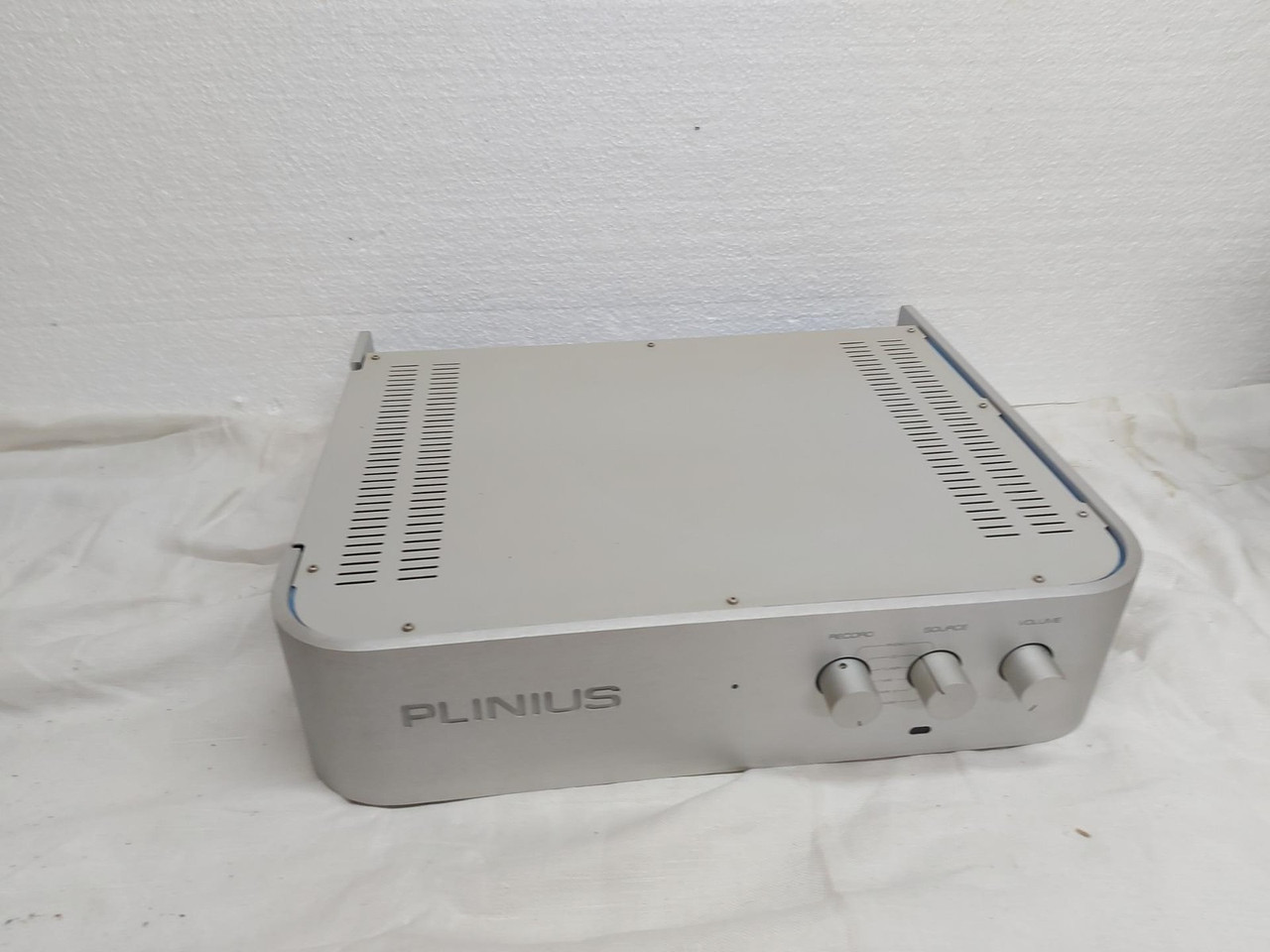
The 9200 is Plinius’s top-of-the-line integrated amplifier with a really nice phono stage. It is very powerful for an integrated amplifier that’s not digital- or chip-based. It has a power rating of over 200 watts per channel and uses large toroidal transformers, so it can easily deliver its 200 watts and even more into 8 ohms, and over 300 watts into 4 ohms. The power supply has supposedly been designed to deliver power to very difficult speaker loads with ease, control, and finesse. The 9200 operates in high bias class A/B, but Plinius says they have designed and voice it to preserve as much of the Plinius class A sound as possible. I want to commend the folks at Plinius for including a very nice mc/mm phono stage, in addition to the expected line inputs. It also has one set of balanced line inputs. The 9200 Integrated has a stylish, but simple, brushed silver front panel with rounded edges. As stylish as the 9200 is, the three rather clunky knobs on the front panel look a little out of place and time; just a hint guys, they would have looked great if they were set in and popped out when you pushed on them. They control the RECORD INPUT SELECTOR, SOURCE INPUT SELECTOR, and VOLUME. The power switch is in the rear, but the source selector can be set to standby when you’re not listening. The back panel is very blue! It has handles on the back which come in very handy with an amp this heavy. The back panel has two sets of binding post, presumably for bi-wiring or subs. There are also the above mentioned balanced inputs, plus five sets of single-ended inputs, a set of preamp outputs, and record outputs. Also, the 9200 is built from the ground up to withstand vibration. It has a double chassis and internal parts which are well isolated to reduce resonance and vibration. You will either love, hate, or die laughing at the remote control. When unpacking the amp I reached into the large cut out in the foam packing and almost dropped the large, very heavy remote. It’s nearly 11 inches long, and is as heavy as lead. It only has three buttons, two for VOLUME, and one for MUTE. It’s made of the same heavy duty aluminum as the amp’s chassis. I just don’t get it though; why do high-end companies think they have to make such extravagant and, to me, ridiculous remotes. I don’t want one of those credit card remotes, but this just seems a little overdone to me. My son loved it though, he said, “it’s simple, you won’t lose it, and if someone breaks in you can hit them with it,” then he dropped it on his toe and changed his mind (just kidding). Setup I used the Plinius 9200 in two completely different systems, and I also used it with several different speaker systems. I started upstairs in a system that is used both for music and video. The sources are all digital in this system. They are an Oppo DVD player, a Sony PS3, and a Direct TV high-definition receiver. Speakers used in this system were the B&W805S, the Genesis 7.1p Petite, and the Raidho Ayra C1. Downstairs in the reference system, the vinyl source was the Clearaudio Wood Anniversary turntable with a Benz TR mounted in a Clearaudio Satisfy Carbon Fiber tonearm. The digital source downstairs was a hard drive into an Audio Note DAC5 Special. Speakers downstairs were the Teresonic Ingenium Silver, the Ikonoklast 3, and the Raidho Ayra C1. For cables I used the Shindo cables, the special Shindo power cords, Audience au24 cables, and the Teresonic Clarison Gold cables. I thought it was interesting that the Plinius 9200 was very versatile. You could use it in a system where it was matched with speakers around the same price or slightly lower and feel like the Plinius integrated was helping you get the best out of your speakers. I also found out when I mated it with the Raidho speakers that you could put it with a much more expensive speaker and still feel like nothing was being compromised by using an integrated amp. Sound The Plinius 9200 retains many of the things it predecessors were loved for, such as low noise, low distortion, the J-FET input circuitry, and application of the very best of discrete components. This has resulted in a level of refinement that is hard to miss. It shows up particularly in the top-end, both in extension and quality. I found it to have surprisingly good harmonic structure for a transistor amp. It sounds very pure, and maybe even a little bit on the warm side of the spectrum. The 9200 speaks enough with one voice to work well on both single-driver speakers, and the two-ways I used for much of the review. Scale, dynamics, power These are areas where you get more from the Plinius 9200 than I expected from an integrated or transistor amp. To put it simply, like a good tube amp the Plinius was big, dynamic, and powerful in its presentation of music. Instruments had a near life-like size. Part of why it can do this is the excellent dynamic range that allows the music to come to life. There’s no two ways about it, my system is bigger, a little faster, and a little more dynamic with the Shindo and Wavac, and the Plinius has better scale than either the little Roksan Caspian M-1 ($2,595) or the Oracle SI1000 ($9,250). The power of the Plinius 9200 is rather intoxicating. As much as I like the Roksan Caspian, and I really do find it quite musical, the extra 120 or so watts of the Plinius 9200 can easily be heard. It takes control of a speaker, it gets loud with less effort and it produces very musical bass. With a speaker like the Raidho (89dB/6Ω), the Roksan just doesn’t have the power for the job while the Plinius plays them effortlessly. The Top-End The top-end is nicely textured and extended, but compared to my reference Shindo and Wavac combo, I do detect an ever so slight amount of graininess. This is a rather unfair comparison considering the Shindo and Wavac combo sells for a cool $35,000 more. The Plinius’ top-end is a little more relaxed and warmer than the Oracle Integrated I had in for review at the same time. For some, this will make the Plinius the more musically enjoyable of the two integrated amps. I rather liked the top-end of the Plinius 9200: It didn’t draw attention to itself which is a worthwhile goal for the top-end of any component. The Midrange The other thing I would say about the Plinius is that it has great attack and definition in the midrange without sounding aggressive or the least bit “transistory”. It is noticeably smoother throughout its frequency range than earlier Plinius amps that I have heard. It also seems more tonally accurate than earlier versions. Voices had a very natural timbre and ease, but do not have as much presence as voice were with the Oracle, and not nearly as much as with the Shindo/Wavac reference combo. Guitars played over the Plinius 9200 had more body and weight than they did with the Oracle or the Roksan integrateds. Again, I think some of this is due to the sheer power of the Plinius 9200. The Plinius 9200 has a bit of the bloom in the midrange that I most often associate with tubes. It lets you hear some of the layering of music like the Shindo gear. Now don’t get me wrong, the Plinius 9200 will never be mistaken for tubes, but it does give you just a touch of their magic. I was rather surprised by this by the way. Overall, I found the midrange of the Plinius 9200 to be more to my liking than I would have ever thought from a solid-state device. The Bass There’s one thing even a tube lover like me has to admit: This kind of power and current can surely take hold and control the bass of a speaker. Upright basses came through with plenty of texture and very solid, by comparison to the Oracle, the Plinius 9200 did not play the attack quite as fast, but was better with the decay and air of the instrument. Drums sounded very solid and full on the Plinius. Simply put, the Plinius had terrific bass and dynamics. Soundstage and Imaging Images are focused, clear and sharp. The soundstage reached beyond the B&W 805S speakers and even further beyond the Raidho Ayra C1.0 speakers. Speaking of those speakers leads me to want to talk about something very special indeed. A Very Special Combination I did a lot of this review using the excellent Raidho Ayra C1.0 speakers, they sell for $15,800 with their stands. Combine this with the cost of the Plinius 9200 and you have an amp/speaker system that costs $20,000. This may be a combination that doesn’t seem likely when you look at the prices of the speakers and amp, but I challenge you to find a preamp with this quality of a phono stage, an amp with this kind of power, and speaker that comes close to giving you the kind of sound you get from the Plinius integrated and the Raidho speakers. For those of our readers who love a ‘reach out and touch you’ soundstage, you need to hear this combo. You will not believe the bass either; it was just mind blowing. This was really a very special combo. Phono The 9200 has a very nice sounding phono stage. It’s as good as most thousand to fifteen hundred dollar phono preamps; the only thing is, it’s not as versatile. The phono stage was not labeled either for MM or MC; instead, it can be set to HIGH (61dB) or LOW (54dB) gain for MM or MC cartridges by means of jumpers inside the amp. This is a little trouble, but not complicated. Interestingly, I found its MM performance to be extremely good in the lower output setting with the use of a good external step-up transformer. Conclusion The $4,835 Plinius 9200 is a very musically satisfying amp. I enjoyed every minute with it. Combined with the Raidho speakers it produced a sound that defied its cost. It is very versatile and the power is always nice to have. For many music lovers this will be all the high-end amplification they will ever need.
Exzellenter Zustand mit Fernbedienung und Originalverpackung.
Der 9200 ist Plinius' Spitzenmodell unter den Vollverstärkern und verfügt über eine hervorragende Phono-Vorstufe. Für einen nicht-digitalen oder chipbasierten Vollverstärker ist er sehr leistungsstark. Mit einer Leistung von über 200 Watt pro Kanal und großen Ringkerntransformatoren liefert er problemlos 200 Watt und mehr an 8 Ohm sowie über 300 Watt an 4 Ohm. Das Netzteil wurde angeblich so konzipiert, dass es selbst anspruchsvolle Lautsprecherlasten mühelos, kontrolliert und präzise bewältigt. Der 9200 arbeitet im High-Bias-Class-A/B-Betrieb, wobei Plinius betont, dass der typische Plinius-Class-A-Klang weitestgehend erhalten bleibt. Besonders hervorzuheben ist die hochwertige MC/MM-Phono-Vorstufe, die zusätzlich zu den üblichen Line-Eingängen integriert wurde. Außerdem verfügt der Verstärker über einen symmetrischen Line-Eingang. Der 9200 Integrated besticht durch sein stilvolles, schlichtes Frontpanel in gebürstetem Silber mit abgerundeten Kanten. So elegant der 9200 auch ist, wirken die drei etwas klobigen Drehregler auf der Vorderseite etwas deplatziert und altmodisch. Ein kleiner Tipp: Sie sähen viel besser aus, wenn sie versenkt wären und beim Drücken herausspringen würden. Mit ihnen werden Aufnahmeeingang, Quelleneingang und Lautstärke gesteuert. Der Netzschalter befindet sich auf der Rückseite, der Quellenschalter kann jedoch in den Standby-Modus versetzt werden, wenn man nicht Musik hört. Die Rückseite ist in einem kräftigen Blau gehalten! Sie verfügt über Griffe, die bei einem so schweren Verstärker sehr praktisch sind. Auf der Rückseite befinden sich zwei Paar Anschlussklemmen, vermutlich für Bi-Wiring oder Subwoofer. Zusätzlich gibt es die bereits erwähnten symmetrischen Eingänge, fünf Paar unsymmetrische Eingänge, einen Satz Vorverstärkerausgänge und Aufnahmeausgänge. Der 9200 ist zudem von Grund auf vibrationsfest konstruiert. Es hat ein doppeltes Chassis und gut isolierte Innenteile, um Resonanzen und Vibrationen zu reduzieren. Die Fernbedienung wird man entweder lieben, hassen oder sich totlachen. Beim Auspacken des Verstärkers griff ich in die große Aussparung in der Schaumstoffverpackung und hätte beinahe die große, sehr schwere Fernbedienung fallen lassen. Sie ist fast 28 cm lang und so schwer wie Blei. Sie hat nur drei Tasten: zwei für Lautstärke und eine für Stummschaltung. Sie ist aus dem gleichen robusten Aluminium gefertigt wie das Chassis des Verstärkers. Ich verstehe es einfach nicht: Warum glauben High-End-Hersteller, dass sie so extravagante und, meiner Meinung nach, lächerliche Fernbedienungen herstellen müssen? Ich will ja keine Fernbedienung im Kreditkartenformat, aber das hier ist einfach übertrieben. Mein Sohn hingegen war begeistert. Er sagte: „Sie ist einfach, man kann sie nicht verlieren, und wenn jemand einbricht, kann man ihn damit schlagen.“ Dann ließ er sie sich auf den Zeh fallen und änderte seine Meinung (nur ein Scherz). Ich habe den Plinius 9200 in zwei völlig unterschiedlichen Systemen und mit verschiedenen Lautsprechersystemen getestet. Im Obergeschoss verwendete ich ein System, das sowohl für Musik als auch für Videos genutzt wird. Die Quellen dieses Systems sind alle digital: ein Oppo DVD-Player, eine Sony PS3 und ein Direct TV HD-Receiver. Als Lautsprecher kamen die B&W 805S, die Genesis 7.1p Petite und die Raidho Ayra C1 zum Einsatz. Im Referenzsystem im Erdgeschoss diente der Clearaudio Wood Anniversary Plattenspieler mit einem Benz TR, montiert auf einem Clearaudio Satisfy Carbon Fiber Tonarm, als Vinylquelle. Die digitale Quelle war eine Festplatte, die an einen Audio Note DAC5 Special angeschlossen war. Hier kamen die Teresonic Ingenium Silver, die Ikonoklast 3 und die Raidho Ayra C1 zum Einsatz. Für die Verkabelung verwendete ich Shindo-Kabel, die speziellen Shindo-Netzkabel, Audience AU24-Kabel und Teresonic Clarison Gold-Kabel. Ich fand es interessant, dass der Plinius 9200 so vielseitig ist. Man kann ihn in einem System mit Lautsprechern ähnlicher oder etwas niedrigerer Preisklasse einsetzen und hat trotzdem das Gefühl, dass der Plinius-Vollverstärker das Beste aus den Lautsprechern herausholt. Beim Zusammenspiel mit den Raidho-Lautsprechern stellte ich außerdem fest, dass man ihn auch mit deutlich teureren Lautsprechern verwenden kann, ohne dass die Verwendung eines Vollverstärkers Kompromisse beim Klang eingeht. Klanglich behält der Plinius 9200 viele der Vorzüge seiner Vorgänger bei, wie geringes Rauschen, geringe Verzerrung, die J-FET-Eingangsschaltung und die Verwendung hochwertigster diskreter Bauteile. Das Ergebnis ist ein unüberhörbarer Grad an Klangreinheit. Besonders im Hochtonbereich zeigt sich dies in deren Ausdehnung und Qualität. Ich empfand die harmonische Struktur für einen Transistorverstärker als überraschend gut. Der Klang ist sehr rein und vielleicht sogar etwas warm. Der 9200 überzeugt mit einem so klaren Klangbild, dass er sowohl mit Einzeltreiberlautsprechern als auch mit den Zwei-Wege-Lautsprechern, die ich für den Großteil des Tests verwendet habe, hervorragend harmoniert. Klangfülle, Dynamik, Leistung – in diesen Bereichen bietet der Plinius 9200 mehr, als ich von einem Vollverstärker oder Transistorverstärker erwartet hätte.Einfach ausgedrückt: Wie ein guter Röhrenverstärker präsentierte der Plinius Musik groß, dynamisch und kraftvoll. Instrumente wirkten fast lebensecht. Das liegt unter anderem an seinem exzellenten Dynamikumfang, der die Musik zum Leben erweckt. Mein System mit Shindo und Wavac ist zweifellos größer, etwas schneller und dynamischer, und der Plinius bietet eine bessere Klangfülle als der kleine Roksan Caspian M-1 (2.595 US-Dollar) oder der Oracle SI1000 (9.250 US-Dollar). Die Leistung des Plinius 9200 ist geradezu berauschend. So sehr ich den Roksan Caspian auch schätze – und ich finde ihn wirklich sehr musikalisch –, die zusätzlichen 120 Watt des Plinius 9200 sind deutlich hörbar. Er beherrscht die Lautsprecher, erreicht mühelos hohe Lautstärken und erzeugt einen sehr musikalischen Bass. Mit einem Lautsprecher wie dem Raidho (89 dB/6 Ω) fehlt dem Roksan schlicht die Leistung, während der Plinius ihn mühelos wiedergibt. Die Höhen sind schön strukturiert und ausgedehnt, doch im Vergleich zu meiner Referenzkombination aus Shindo und Wavac nehme ich eine minimale Körnigkeit wahr. Dieser Vergleich ist allerdings etwas unfair, da die Shindo-Wavac-Kombination satte 35.000 Dollar mehr kostet. Die Höhen des Plinius klingen etwas entspannter und wärmer als die des Oracle Integrated, den ich gleichzeitig getestet habe. Für manche mag der Plinius daher der musikalisch angenehmere der beiden Vollverstärker sein. Mir gefielen die Höhen des Plinius 9200 sehr gut: Sie drängten sich nicht auf, was ein erstrebenswertes Ziel für die Höhen jedes Geräts ist. Die Mitten: Der Plinius zeichnet sich außerdem durch einen präzisen und definierten Mitteltonbereich aus, ohne dabei aggressiv oder auch nur im Geringsten „transistorisch“ zu klingen. Der Plinius 9200 klingt über den gesamten Frequenzbereich deutlich gleichmäßiger als frühere Plinius-Verstärker, die ich gehört habe. Auch die Klangwiedergabe wirkt präziser. Stimmen klingen sehr natürlich und mühelos, aber nicht so präsent wie beim Oracle und auch nicht annähernd so präsent wie bei der Shindo/Wavac-Referenzkombination. Gitarren klingen über den Plinius 9200 voller und kräftiger als über den Oracle oder die Roksan-Vollverstärker. Ich denke, das liegt zum Teil an der enormen Leistung des Plinius 9200. Er hat etwas von der Fülle im Mitteltonbereich, die ich sonst eher mit Röhrenverstärkern verbinde. Man kann die musikalischen Ebenen ähnlich wie bei Shindo-Geräten besser wahrnehmen. Verstehen Sie mich nicht falsch: Der Plinius 9200 ist natürlich kein Röhrenverstärker, aber er vermittelt einen Hauch ihres Zaubers. Das hat mich übrigens ziemlich überrascht. Insgesamt gefiel mir der Mitteltonbereich des Plinius 9200 besser, als ich es von einem Transistorverstärker erwartet hätte. Der Bass: Selbst ein Röhrenfan wie ich muss zugeben: Diese Leistung und dieser Stromfluss können den Bass eines Lautsprechers wirklich kontrollieren und ihm Struktur verleihen. Kontrabässe klangen sehr voluminös und druckvoll. Im Vergleich zum Oracle reagierte der Plinius 9200 im Attack nicht ganz so schnell, bot aber einen besseren Ausklang und mehr Luftigkeit. Schlagzeuge klangen auf dem Plinius sehr druckvoll und voll. Kurz gesagt: Der Plinius hatte einen fantastischen Bass und eine hervorragende Dynamik. Klangbühne und Abbildung: Die Abbildung ist fokussiert, klar und präzise. Die Klangbühne reichte über die B&W 805S und sogar noch weiter über die Raidho Ayra C1.0 hinaus. Apropos Raidho Ayra C1.0: Ich möchte über etwas ganz Besonderes sprechen. Eine ganz besondere Kombination. Ich habe diesen Test größtenteils mit den exzellenten Raidho Ayra C1.0 Lautsprechern durchgeführt, die inklusive Ständern 15.800 US-Dollar kosten. Zusammen mit dem Plinius 9200 ergibt sich ein Verstärker-/Lautsprechersystem für 20.000 US-Dollar. Angesichts der Preise von Lautsprechern und Verstärker mag diese Kombination unwahrscheinlich erscheinen, aber ich fordere Sie heraus, einen Vorverstärker mit einer so hochwertigen Phono-Vorstufe, einen Verstärker mit dieser Leistung und Lautsprecher zu finden, die auch nur annähernd den Klang des Plinius-Vollverstärkers und der Raidho-Lautsprecher bieten. Für alle Leser, die ein räumliches Klangerlebnis lieben, ist diese Kombination ein absolutes Muss. Auch der Bass wird Sie umhauen.Das war wirklich eine ganz besondere Kombination. Phono: Der 9200 verfügt über eine sehr gut klingende Phono-Vorstufe. Sie ist so gut wie die meisten Phono-Vorverstärker im Preissegment von 1.000 bis 1.500 Dollar; nur ist sie nicht ganz so vielseitig. Die Phono-Vorstufe war weder für MM- noch für MC-Tonabnehmer gekennzeichnet; stattdessen kann die Verstärkung für MM- oder MC-Tonabnehmer über Jumper im Verstärker auf HOCH (61 dB) oder NIEDRIG (54 dB) eingestellt werden. Das ist etwas umständlich, aber nicht kompliziert. Interessanterweise empfand ich die MM-Wiedergabe in der niedrigeren Ausgangseinstellung mit einem guten externen Übertrager als extrem gut. Fazit: Der 4.835 Dollar teure Plinius 9200 ist ein musikalisch sehr überzeugender Verstärker. Ich habe jede Minute mit ihm genossen. In Kombination mit den Raidho-Lautsprechern erzeugte er einen Klang, der seinen Preis weit übertraf. Er ist sehr vielseitig, und die Leistung ist immer willkommen. Für viele Musikliebhaber wird dies die einzige High-End-Verstärkung sein, die sie jemals benötigen werden.
Excelente estado, con control remoto y embalaje original.
El 9200 es el amplificador integrado de gama alta de Plinius, con una etapa de fono realmente excepcional. Es muy potente para ser un amplificador integrado que no utiliza tecnología digital ni chips. Tiene una potencia nominal de más de 200 vatios por canal y utiliza transformadores toroidales de gran tamaño, por lo que puede entregar fácilmente sus 200 vatios e incluso más a 8 ohmios, y más de 300 vatios a 4 ohmios. Se supone que la fuente de alimentación ha sido diseñada para suministrar potencia a cargas de altavoces muy exigentes con facilidad, control y precisión. El 9200 funciona en clase A/B de alta polarización, pero Plinius afirma que lo han diseñado y calibrado para preservar al máximo el sonido característico de la clase A de Plinius. Quiero felicitar a Plinius por incluir una excelente etapa de fono MC/MM, además de las entradas de línea habituales. También cuenta con un juego de entradas de línea balanceadas. El 9200 Integrated tiene un panel frontal elegante, pero sencillo, de plata cepillada con bordes redondeados. A pesar de su estilo, los tres mandos del panel frontal, algo toscos, desentonan un poco; un pequeño consejo: habrían quedado genial si estuvieran empotrados y se desplegaran al pulsarlos. Controlan el selector de entrada de grabación, el selector de entrada de fuente y el volumen. El interruptor de encendido está en la parte trasera, pero el selector de fuente se puede poner en modo de espera cuando no se está escuchando. ¡El panel trasero es de un azul intenso! Tiene asas que resultan muy prácticas con un amplificador tan pesado. El panel trasero tiene dos pares de bornes de conexión, presumiblemente para bicableado o subwoofers. También incluye las entradas balanceadas mencionadas anteriormente, además de cinco pares de entradas no balanceadas, un par de salidas de preamplificador y salidas de grabación. Además, el 9200 está diseñado para resistir vibraciones. Tiene un chasis doble y componentes internos bien aislados para reducir la resonancia y la vibración. El control remoto te encantará, lo odiarás o te hará reír a carcajadas. Al desempaquetar el amplificador, metí la mano en el gran hueco del embalaje de espuma y casi se me cae el control remoto, que es grande y muy pesado. Mide casi 28 centímetros de largo y pesa como el plomo. Solo tiene tres botones: dos para el volumen y uno para el silencio. Está hecho del mismo aluminio resistente que el chasis del amplificador. No lo entiendo; ¿por qué las empresas de alta gama creen que tienen que hacer controles remotos tan extravagantes y, para mí, ridículos? No quiero uno de esos controles remotos con forma de tarjeta de crédito, pero este me parece un poco exagerado. A mi hijo le encantó, dijo: "Es sencillo, no lo perderás, y si alguien entra a robar, puedes golpearlo con él". Luego se le cayó en el pie y cambió de opinión (es broma). Configuración Utilicé el Plinius 9200 en dos sistemas completamente diferentes, y también lo usé con varios sistemas de altavoces distintos. Comencé en la planta superior con un sistema que se usa tanto para música como para vídeo. Las fuentes son todas digitales en este sistema: un reproductor de DVD Oppo, una PS3 Sony y un receptor de alta definición Direct TV. Los altavoces utilizados en este sistema fueron los B&W805S, los Genesis 7.1p Petite y los Raidho Ayra C1. En la planta baja, en el sistema de referencia, la fuente de vinilo fue el tocadiscos Clearaudio Wood Anniversary con un Benz TR montado en un brazo de lectura Clearaudio Satisfy Carbon Fiber. La fuente digital en la planta baja fue un disco duro conectado a un DAC Audio Note DAC5 Special. Los altavoces en la planta baja fueron los Teresonic Ingenium Silver, los Ikonoklast 3 y los Raidho Ayra C1. Para los cables utilicé cables Shindo, cables de alimentación especiales Shindo, cables Audience au24 y cables Teresonic Clarison Gold. Me pareció interesante la gran versatilidad del Plinius 9200. Se podía usar en un sistema con altavoces de precio similar o ligeramente inferior, y sentir que el amplificador integrado Plinius ayudaba a sacar el máximo partido a los altavoces. También descubrí, al combinarlo con los altavoces Raidho, que se podía usar con altavoces mucho más caros sin que el uso de un amplificador integrado comprometiera la calidad del sonido. Sonido: El Plinius 9200 conserva muchas de las características que hicieron famosos a sus predecesores, como el bajo nivel de ruido, la baja distorsión, el circuito de entrada J-FET y la aplicación de los mejores componentes discretos. Esto ha dado como resultado un nivel de refinamiento inconfundible. Se aprecia especialmente en las frecuencias altas, tanto en extensión como en calidad. Me sorprendió su buena estructura armónica para un amplificador de transistores. Suena muy puro, e incluso con un ligero toque cálido. El 9200 ofrece un sonido lo suficientemente uniforme como para funcionar bien tanto con altavoces de un solo transductor como con los de dos vías que utilicé durante gran parte de la reseña. Escala, dinámica y potencia: en estos aspectos, el Plinius 9200 ofrece más de lo que esperaba de un amplificador integrado o de transistores.En pocas palabras, como un buen amplificador de válvulas, el Plinius era grande, dinámico y potente en su presentación musical. Los instrumentos tenían un tamaño casi realista. Parte de la razón por la que puede hacer esto es el excelente rango dinámico que permite que la música cobre vida. No hay duda, mi sistema es más grande, un poco más rápido y un poco más dinámico con el Shindo y el Wavac, y el Plinius tiene una mejor escala que el pequeño Roksan Caspian M-1 ($2,595) o el Oracle SI1000 ($9,250). La potencia del Plinius 9200 es bastante embriagadora. Por mucho que me guste el Roksan Caspian, y realmente lo encuentro bastante musical, los 120 vatios adicionales del Plinius 9200 se notan fácilmente. Toma el control del altavoz, alcanza un volumen alto con menos esfuerzo y produce unos graves muy musicales. Con un altavoz como el Raidho (89 dB/6 Ω), el Roksan simplemente no tiene la potencia necesaria mientras que el Plinius los reproduce sin esfuerzo. El extremo superior El extremo superior tiene una textura agradable y extendida, pero comparado con mi combinación de referencia Shindo y Wavac, detecto una cantidad muy leve de grano. Esta es una comparación bastante injusta considerando que la combinación Shindo y Wavac se vende por la friolera de $35,000 más. El extremo superior del Plinius es un poco más relajado y cálido que el Oracle Integrated que tenía para revisión al mismo tiempo. Para algunos, esto hará que el Plinius sea el amplificador integrado más agradable musicalmente de los dos. Me gustó bastante el extremo superior del Plinius 9200: no llamaba la atención sobre sí mismo, lo cual es un objetivo valioso para el extremo superior de cualquier componente. El rango medio Otra cosa que diría sobre el Plinius es que tiene un gran ataque y definición en el rango medio sin sonar agresivo ni para nada "transitorio". Es notablemente más suave en todo su rango de frecuencia que los amplificadores Plinius anteriores que he escuchado. También parece más preciso tonalmente que las versiones anteriores. Las voces tenían un timbre y una facilidad muy naturales, pero no tienen tanta presencia como las voces con el Oracle, y ni de lejos tanta como con el combo de referencia Shindo/Wavac. Las guitarras tocadas con el Plinius 9200 tenían más cuerpo y peso que con el Oracle o los integrados Roksan. De nuevo, creo que parte de esto se debe a la pura potencia del Plinius 9200. El Plinius 9200 tiene un poco de la floración en el rango medio que más asocio con las válvulas. Te permite escuchar algunas de las capas de la música como el equipo Shindo. Ahora no me malinterpreten, el Plinius 9200 nunca se confundirá con válvulas, pero sí te da un toque de su magia. Por cierto, esto me sorprendió bastante. En general, encontré que el rango medio del Plinius 9200 era más de mi agrado de lo que jamás hubiera esperado de un dispositivo de estado sólido. Los graves Hay algo que incluso un amante de las válvulas como yo tiene que admitir: este tipo de potencia y corriente sin duda puede controlar los graves de un altavoz. Los contrabajos sonaron con mucha textura y muy sólidos, en comparación con el Oracle, el Plinius 9200 no reprodujo el ataque tan rápido, pero fue mejor con la caída y el aire del instrumento. La batería sonó muy sólida y completa en el Plinius. En pocas palabras, el Plinius tenía unos graves y una dinámica magníficos. Escenario sonoro e imagen Las imágenes son enfocadas, claras y nítidas. El escenario sonoro se extendió más allá de los altavoces B&W 805S e incluso más allá de los altavoces Raidho Ayra C1.0. Hablando de esos altavoces, quiero hablarles de algo realmente especial. Una combinación muy especial. Gran parte de esta reseña la hice con los excelentes altavoces Raidho Ayra C1.0, que cuestan 15.800 dólares con sus soportes. Si a esto le sumamos el precio del Plinius 9200, tenemos un sistema de amplificador y altavoces que cuesta 20.000 dólares. Puede que esta combinación parezca improbable si se tienen en cuenta los precios de los altavoces y el amplificador, pero les reto a encontrar un preamplificador con esta calidad de etapa de fono, un amplificador con esta potencia y unos altavoces que se acerquen al sonido que se obtiene con el integrado Plinius y los altavoces Raidho. Para aquellos lectores que disfrutan de un sonido envolvente, tienen que escuchar esta combinación. Tampoco creerán los graves; son simplemente impresionantes.Esta fue una combinación realmente muy especial. Phono El 9200 tiene una etapa de fono con un sonido muy agradable. Es tan buena como la mayoría de los preamplificadores de fono de mil a mil quinientos dólares; lo único es que no es tan versátil. La etapa de fono no estaba etiquetada ni para MM ni para MC; en cambio, se puede configurar a ganancia ALTA (61 dB) o BAJA (54 dB) para cápsulas MM o MC mediante puentes dentro del amplificador. Esto es un poco engorroso, pero no complicado. Curiosamente, encontré que su rendimiento MM era extremadamente bueno en la configuración de salida más baja con el uso de un buen transformador elevador externo. Conclusión El Plinius 9200 de $4,835 es un amplificador muy satisfactorio musicalmente. Disfruté cada minuto con él. Combinado con los altavoces Raidho, produjo un sonido que desafió su costo. Es muy versátil y la potencia siempre es agradable tenerla. Para muchos amantes de la música, esta será toda la amplificación de alta gama que jamás necesitarán.
Uzaktan kumandası ve orijinal ambalajıyla mükemmel durumda.
9200, Plinius'un en üst düzey entegre amplifikatörüdür ve gerçekten güzel bir fono aşamasına sahiptir. Dijital veya çip tabanlı olmayan bir entegre amplifikatör için oldukça güçlüdür. Kanal başına 200 watt'ın üzerinde güç derecesine sahiptir ve büyük toroidal transformatörler kullanır, bu nedenle 8 ohm'a 200 watt ve hatta daha fazlasını, 4 ohm'a ise 300 watt'ın üzerinde güç sağlayabilir. Güç kaynağının, çok zorlu hoparlör yüklerine kolaylıkla, kontrolle ve incelikle güç sağlamak üzere tasarlandığı söyleniyor. 9200, yüksek biaslı A/B sınıfında çalışır, ancak Plinius, Plinius A sınıfı sesini mümkün olduğunca koruyacak şekilde tasarladığını ve seslendirdiğini söylüyor. Beklenen hat girişlerine ek olarak çok güzel bir mc/mm fono aşaması ekledikleri için Plinius ekibini tebrik etmek istiyorum. Ayrıca bir set dengeli hat girişi de bulunmaktadır. 9200 Entegre amplifikatör, şık ama sade, yuvarlak kenarlı fırçalanmış gümüş bir ön panele sahip. 9200 ne kadar şık olsa da, ön paneldeki üç oldukça hantal düğme biraz yersiz ve çağ dışı görünüyor; küçük bir ipucu: bunlar içeri yerleştirilmiş ve basıldığında dışarı fırlayan şekilde olsaydı harika görünürlerdi. Bunlar KAYIT GİRİŞ SEÇİCİSİ, KAYNAK GİRİŞ SEÇİCİSİ ve SES SEVİYESİNİ kontrol ediyor. Güç düğmesi arkada, ancak dinlemediğiniz zamanlarda kaynak seçici bekleme moduna alınabiliyor. Arka panel çok mavi! Arkasında, bu kadar ağır bir amplifikatör için çok kullanışlı olan tutamaklar var. Arka panelde, muhtemelen çift kablolama veya subwoofer'lar için iki set bağlantı terminali bulunuyor. Ayrıca yukarıda bahsedilen dengeli girişlere ek olarak beş set tek uçlu giriş, bir set ön amplifikatör çıkışı ve kayıt çıkışları da mevcut. Ayrıca, 9200 titreşime dayanacak şekilde sıfırdan inşa edilmiştir. Çift şasili ve titreşimi ve rezonansı azaltmak için iyi yalıtılmış iç parçalara sahip. Uzaktan kumandaya ya bayılacaksınız, ya nefret edeceksiniz ya da gülmekten öleceksiniz. Amfiyi kutusundan çıkarırken, köpük ambalajdaki büyük boşluğa uzandım ve büyük, çok ağır uzaktan kumandayı neredeyse düşürüyordum. Yaklaşık 28 cm uzunluğunda ve kurşun kadar ağır. Sadece üç düğmesi var, ikisi SES SEVİYESİ için, biri SESSİZ için. Amfinin şasisiyle aynı ağır hizmet tipi alüminyumdan yapılmış. Ama anlamıyorum; neden üst düzey şirketler bu kadar abartılı ve bana göre gülünç uzaktan kumandalar yapmak zorunda olduklarını düşünüyorlar? Kredi kartı boyutundaki uzaktan kumandalardan istemiyorum, ama bu bana biraz fazla abartılı geliyor. Oğlum ise bayıldı, "basit, kaybetmezsin ve biri eve girerse onunla vurabilirsin" dedi, sonra ayağına düşürdü ve fikrini değiştirdi (şaka yapıyorum). Kurulum: Plinius 9200'ü tamamen farklı iki sistemde ve ayrıca birkaç farklı hoparlör sistemiyle kullandım. Üst katta, hem müzik hem de video için kullanılan bir sistemle başladım. Bu sistemdeki kaynakların tamamı dijital. Bunlar bir Oppo DVD oynatıcı, bir Sony PS3 ve bir Direct TV yüksek çözünürlüklü alıcı. Bu sistemde kullanılan hoparlörler B&W805S, Genesis 7.1p Petite ve Raidho Ayra C1 idi. Alt kattaki referans sistemde, plak kaynağı Clearaudio Wood Anniversary pikap ve Clearaudio Satisfy Karbon Fiber ton koluna monte edilmiş bir Benz TR idi. Alt kattaki dijital kaynak ise Audio Note DAC5 Special'a bağlı bir sabit diskti. Alt kattaki hoparlörler Teresonic Ingenium Silver, Ikonoklast 3 ve Raidho Ayra C1 idi. Kablo olarak Shindo kablolarını, özel Shindo güç kablolarını, Audience au24 kablolarını ve Teresonic Clarison Gold kablolarını kullandım. Plinius 9200'ün çok yönlü olması ilginç geldi bana. Aynı fiyat aralığında veya biraz daha düşük fiyatlı hoparlörlerle eşleştirildiğinde, Plinius entegre amplifikatörün hoparlörlerinizden en iyi performansı almanıza yardımcı olduğunu hissedebiliyorsunuz. Ayrıca Raidho hoparlörlerle eşleştirdiğimde, çok daha pahalı bir hoparlörle bile entegre bir amplifikatör kullanmanın hiçbir şeyden ödün vermediğini hissettiğinizi fark ettim. Ses Plinius 9200, düşük gürültü, düşük bozulma, J-FET giriş devresi ve en iyi ayrık bileşenlerin kullanımı gibi seleflerinin sevilen birçok özelliğini koruyor. Bu, gözden kaçması zor bir incelik seviyesiyle sonuçlandı. Özellikle üst frekanslarda, hem uzantı hem de kalite açısından kendini gösteriyor. Bir transistör amplifikatör için şaşırtıcı derecede iyi bir harmonik yapıya sahip olduğunu gördüm. Ses çok saf ve belki de spektrumun biraz daha sıcak tarafında yer alıyor. 9200, hem tek sürücülü hoparlörlerde hem de incelemenin büyük bölümünde kullandığım iki yollu hoparlörlerde iyi çalışacak kadar güçlü bir ses veriyor. Ölçek, dinamikler, güç: Bunlar, Plinius 9200'den entegre veya transistörlü bir amplifikatörden beklediğimden daha fazlasını elde ettiğiniz alanlar.Basitçe söylemek gerekirse, iyi bir lambalı amfi gibi Plinius, müziği sunarken büyük, dinamik ve güçlüydü. Enstrümanlar neredeyse gerçek boyutlarındaydı. Bunu başarabilmesinin nedenlerinden biri de müziğin canlanmasını sağlayan mükemmel dinamik aralığıdır. Hiç şüphe yok ki, Shindo ve Wavac ile sistemim daha büyük, biraz daha hızlı ve biraz daha dinamik; Plinius ise küçük Roksan Caspian M-1 (2.595 $) veya Oracle SI1000'den (9.250 $) daha iyi bir ölçeğe sahip. Plinius 9200'ün gücü oldukça baş döndürücü. Roksan Caspian'ı ne kadar sevsem de ve gerçekten de oldukça müzikal bulsam da, Plinius 9200'ün yaklaşık 120 watt'lık ekstra gücü kolayca duyulabiliyor. Hoparlörün kontrolünü ele alıyor, daha az çabayla yüksek ses çıkarıyor ve çok müzikal bir bas üretiyor. Raidho (89dB/6Ω) gibi bir hoparlörle, Roksan bu iş için yeterli güce sahip değilken, Plinius bunları zahmetsizce çalıyor. Üst Frekanslar Üst frekanslar güzel dokulu ve genişletilmiş, ancak referans Shindo ve Wavac kombinasyonumla karşılaştırıldığında, çok hafif bir pürüzlülük algılıyorum. Shindo ve Wavac kombinasyonunun 35.000 dolar daha pahalıya satıldığını düşünürsek, bu oldukça haksız bir karşılaştırma. Plinius'un üst frekansları, aynı anda inceleme için elimde bulunan Oracle Entegre'den biraz daha rahat ve sıcak. Bazıları için bu, Plinius'u iki entegre amplifikatörden müzikal olarak daha keyifli hale getirecektir. Plinius 9200'ün üst frekanslarını oldukça beğendim: Kendine dikkat çekmiyor, ki bu herhangi bir bileşenin üst frekansları için değerli bir hedeftir. Orta Frekanslar Plinius hakkında söyleyebileceğim diğer şey ise, agresif veya en ufak bir "geçişli" ses çıkarmadan orta frekanslarda harika bir atak ve tanımlama sunmasıdır. Daha önce duyduğum Plinius amfilerine kıyasla frekans aralığı boyunca belirgin şekilde daha pürüzsüz. Ayrıca önceki versiyonlara göre ton olarak daha doğru görünüyor. Sesler çok doğal bir tınıya ve rahatlığa sahipti, ancak Oracle'daki kadar belirgin bir varlık hissi vermiyordu ve Shindo/Wavac referans kombinasyonuna kıyasla da neredeyse hiç belirgin değildi. Plinius 9200 ile çalınan gitarlar, Oracle veya Roksan entegre amfilere göre daha dolgun ve ağırlıklıydı. Yine, bunun bir kısmının Plinius 9200'ün saf gücünden kaynaklandığını düşünüyorum. Plinius 9200, genellikle lambalı amfilerle ilişkilendirdiğim orta frekanslarda biraz dolgunluğa sahip. Shindo ekipmanı gibi müziğin katmanlarını duymanızı sağlıyor. Yanlış anlamayın, Plinius 9200 asla lambalı amfilerle karıştırılamaz, ancak size onların büyüsünden bir dokunuş veriyor. Bu arada, buna oldukça şaşırdım. Genel olarak, Plinius 9200'ün orta frekanslarının, katı hal bir cihazdan beklediğimden çok daha fazla hoşuma gittiğini gördüm. Baslar: Benim gibi bir tüplü amfi aşığı bile bir şeyi kabul etmek zorunda: Bu tür bir güç ve akım, bir hoparlörün basını kesinlikle kontrol altına alabiliyor. Kontrbaslar bolca doku ve çok sağlam bir şekilde duyuldu; Oracle ile karşılaştırıldığında, Plinius 9200 atakları o kadar hızlı çalmadı, ancak enstrümanın sönümlenmesi ve havası daha iyiydi. Davullar Plinius'ta çok sağlam ve dolgun duyuldu. Basitçe söylemek gerekirse, Plinius'un müthiş bir bası ve dinamikleri vardı. Ses Sahnesi ve Görüntüleme: Görüntüler odaklı, net ve keskin. Ses sahnesi, B&W 805S hoparlörlerinin ve hatta Raidho Ayra C1.0 hoparlörlerinin çok ötesine ulaştı. Bu hoparlörlerden bahsetmişken, gerçekten çok özel bir şeyden bahsetmek istiyorum. Çok Özel Bir Kombinasyon Bu incelemenin büyük bir bölümünü, standlarıyla birlikte 15.800 dolara satılan mükemmel Raidho Ayra C1.0 hoparlörleri kullanarak yaptım. Bunu Plinius 9200'ün maliyetiyle birleştirirseniz, 20.000 dolara mal olan bir amfi/hoparlör sistemine sahip olursunuz. Hoparlörlerin ve amfinin fiyatlarına baktığınızda bu kombinasyon pek olası görünmeyebilir, ancak bu kalitede bir fono aşamasına, bu tür bir güce sahip bir amfiye ve Plinius entegre amfi ve Raidho hoparlörlerinden aldığınız sese yaklaşan bir hoparlöre sahip bir preamplifikatör bulmanızı zorluyorum. 'Size dokunacak' bir ses sahnesini seven okurlarımız için bu kombinasyonu mutlaka dinlemelisiniz. Baslara da inanamayacaksınız; akıl almazdı.Bu gerçekten çok özel bir kombinasyondu. 9200'ün fono preamplifikatörü çok güzel bir sese sahip. Bin ila bin beş yüz dolarlık fono preamplifikatörlerinin çoğu kadar iyi; tek farkı, o kadar çok yönlü olmaması. Fono preamplifikatörü MM veya MC için etiketlenmemiş; bunun yerine, amplifikatörün içindeki jumper'lar aracılığıyla MM veya MC kartuşlar için YÜKSEK (61dB) veya DÜŞÜK (54dB) kazanç ayarına getirilebiliyor. Bu biraz zahmetli, ancak karmaşık değil. İlginç bir şekilde, iyi bir harici yükseltici transformatör kullanarak düşük çıkış ayarında MM performansının son derece iyi olduğunu gördüm. Sonuç olarak, 4.835 dolarlık Plinius 9200, müzikal olarak çok tatmin edici bir amplifikatör. Onunla geçirdiğim her dakikadan keyif aldım. Raidho hoparlörlerle birleştiğinde, maliyetine meydan okuyan bir ses üretti. Çok yönlü ve güce sahip olmak her zaman güzel. Birçok müziksever için bu, ihtiyaç duyacakları tüm üst düzey amplifikasyon olacaktır.