Alpha2delta Audio PS1 Valve MM/MC Phonostage & PSU
Alpha2delta Audio PS1
 89 görüntüleme geçen ay, 13
 görüntüleme bu ay
Son Güncelleme
13.02.2026
 Açıklama
Orjinal Açıklama
İngilizce, diğer lisan metinleri çeviridir ve hata içerebilir.
İngilizceAlmancaİspanyolcaTürkçe
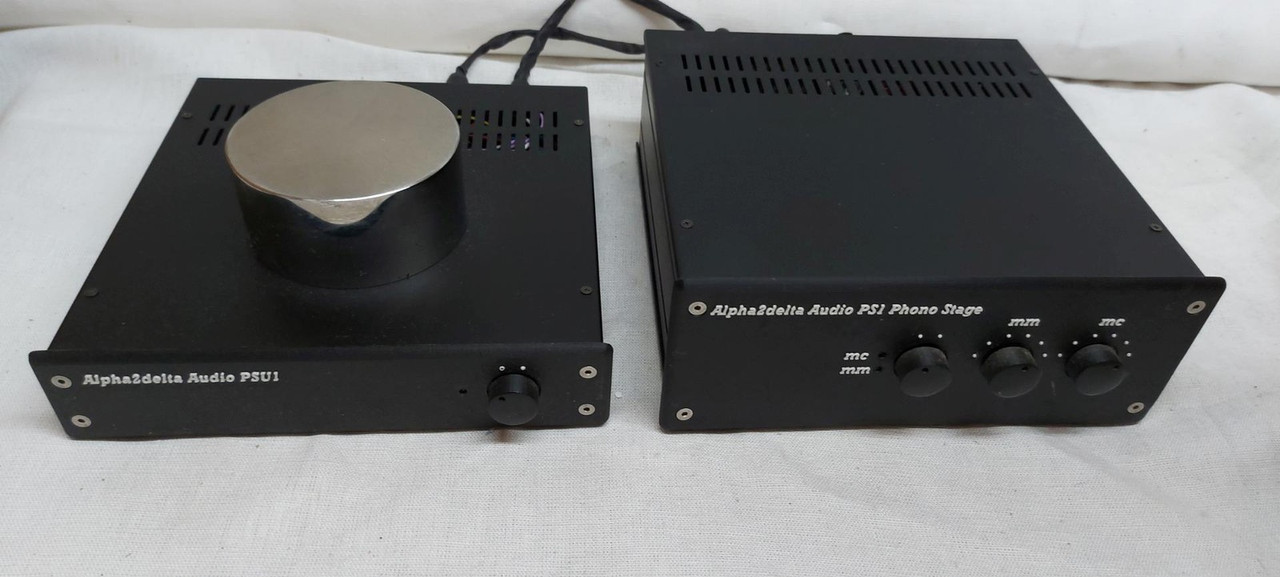
A nice valve phonostage with Lundahl 1931 step up transformers.If like me, (when not listening to music) you enjoy passing these long lockdown nights with TV of a technical slant and seeing people solve problems while pitting their skills against one another, you probably end up watching TV and programs like Forged in Fire, Last Man Out, Masterchef or British Bake Off (the current Lockdown go-to for my wife and I) – if not bear with me! What becomes evident to me in each of these shows is that to get it right you need two things to work in perfect harmony – great skills (often born out of years of experience) and great ingredients. Have one but not the other and you get the dreaded soggy bottom! It’s the same in HiFi – you can have great engineering skills but poor components, or even great components but lack the skills to implement them well – but when you get both – well that’s when the magic happens. Enter the Alpha2Delta PS1 Phone stage and partnering PSU1 power supply.Based in Hungerford (in the UK), A2D’s chief designer and founder, Jessica Kinchin, comes from a long career in design and advanced electronics, including formerly owning a company that provided ultra-sensitive test equipment for BT, the military and for medical research – not areas known for tolerance of anything but the very best equipment. With a childhood love of valves and analogue (Jessica built her first valve amp at 13!), A2D’s design ethic is about great materials, designing for the very best sound (but not budget) and aiming for ultra-low distortion and high-quality analogue reproduction – that shows in the choices made in the PS1. So, the relevant skills seem to be in evidence, but what of the “ingredients”?CONSTRUCTIONAs a 2 box design, the PS1 and PSU1 are connected by a pair of satisfyingly well-constructed screw down umbilical power cables that are terminated in DIN plugs. The PS1 itself is a fairly plain black metal box with plastic front and rear plates (however, that front plate will be metal in the upper models). On the front, you have a rotary Moving Magnet (MM) /Moving Coil (MC) selector (two inputs can be connected at the same time) and two 6 point rotary selectors for each cartridge type to adjust capacitance (MM) and load (MC). It’s great to see capacitance adjustment for MM as it’s not so common these days. Round the back we find the power connections, silver-plated RCA inputs and output as well as a dip switch selector for balanced or unbalanced output (MC only). There is also a gain step-up selection for Low Output MC’s courtesy of the internal step up transformer. XLR connection is available as an option if desired.The partnering PSU1 power supply immediately makes a visual impact with its large silver toroidal case sitting atop a square base box that is shiny enough to see yourself in! Power goes in via the usual IEC and 2 separate DIN umbilical lines pass power to PS1. The PSU also has a ground binding post employing a star point approach to eliminate ground loops.The PS1 is a full valve, passive RIAA design employing specially selected 12Ax7 valves. These are renowned for high gain and ultra low distortion and hence a perfect choice for audio. A 6072A/12AU7 provides the amplification, with an ECC81 (12AT7) handling the load within a specifically chosen circuit architecture – all this adds up to a 32dB gain. That 6027A adding final amplification takes gain to a robust 42dB, with a rated capability to drive loads down to 10Kohms. The SUT offers additional gain for low output MC’s.RIAA capacitors are courtesy of Charcroft (silver mica in this case) and the 6072A tube is a carefully selected balanced, gold-pin, ultra-low noise variant from TAD. The ECC81/12AT7’s are either military-grade NOS or NOS from GE in the USA, offering both high quality and coming fully balanced. A true dual-mono design, both channels in the PS1 are fully separated in a 6 layer PCB, with each channel completely isolated and getting its own HT power supply tracks and 0V planes.The internal SUT is no afterthought either! Its unique design is said to offer a fixed 280V for the amp stage, but without feedback. It has a carefully selected smorgasbord of audio grade and military spec’ components from some of the best manufacturers in the business, including signal capacitors from Mundorf’s Silver and Gold range.SOUND QUALITYI have been listening to the PS1/PSU1 over the last 3 weeks or so as I’ve had some downtime and so I have been able to explore it without time pressure. This week I got down to some real critical listening!With “Monks Dream” (Columbia / Impex 2016), Thelonious’ free form and at times seemingly off-kilter keying is so resolved and present you can almost see the Ivory beneath his hands. Dunlop’s drums snap and thwack with pace letting John Ore somehow keep us all sympatico on his bass. Rims and cymbals (often where things can be disappointing) are crisp and tight. Originally recorded in 1963, the separation and attack is wonderful – decay on the recording rooms natural reverb only brings us closer to the source. The PS1 gets out the way to let us get at that tight bass with no sickly sweetness and leaning towards precision that in lesser offerings could drift into sterility. This allows Monk to cut loose. I’m taken aback at the clarity and attack – there is incredible speed that is all wrapped up in a wonderfully impressive wide and deep sound stage. The PS1 also displays an extremely low noise floor, providing that inky black backdrop we all seek.A quick change over and we have Herbie Hancock giving us “Direct Step” (Mastersound DirektDisk /Columbia RSD 2020). Here the PS1 offers a wonderful deftness balanced with a real subtly of delivery on the bass drum – it’s full, but never bloaty heartbeat cutting through the creeping inertia of “Butterfly”. Timbre and transients are again handled eminently well due, it seems, to the very high (more than 1.5V) input headroom. Time and time again the sound stage caught me off guard and I found it just wonderful to engage with. Those rippling key strokes of Hancock dancing across that bed of funky delight were like a dancer light footing across a lake of honey. The balance between detail and fulness here is very impressive with Hancock’s groovy yet frenetic pace being delivered without restriction or impedance that allowed the music just to carry you – superbly done and I find myself with a renewed appreciation of Hancock’s work that is now presented in even more glory. The use of Polypropylene capacitors instead of electrolytes is evident in the clarity and transient delivery. There is nothing holding the music back or clouding the presentation – it’s all here. Frankly, it’s wonderful!Throughout the weeks of listening, I flipped between my Townshend Avalon turntable equipped with a fully restored Helius Designs Scorpio arm festooned with a bespoke wooden body modified AT95VM Shibata (courtesy of the increasingly well known Townshend/Rock guru Matt McNulty) and my heavily modified SL1210Mk3D running an upgraded Sumiko Blue Point Special Evo III on a lovely Origin Live Zephyr arm. Both the prior MM and latter MC performed well. The Sumiko I feel, being more forward, matched very well with the energy of the PS1 despite being an elliptical stylus. Placing my reference Vincent Pho700 stage back into my system only brought a sense of grief at what I had lost – the PS1 clearly outperforming it!CONCLUSIONAlpha2Delta have taken the best ingredients and worked from a clean sheet to produce a superbly performing phono-stage. Aesthetically its both simple and bold but I would like to have seen a full metal body as opposed plastic front/rear panelling, but A2D say this allows for custom requirements of the client. Customizable for needs and budget this offers fantastic performance at a fairly accessible price point. The internal material construction is of the highest order with a “sit up and pay attention” sonic delivery. With an expansive sound stage, great detail and resolution, speed and energy (but without fatiguing in the slightest), the PS1 draws you in and you find yourself wanting to stay for more. A hidden gem and “must audition” for me. The proof was indeed in the eating!AT A GLANCEBuild Quality: Carefully curated components, high quality design and execution. All path wiring in silver. All valve. Customisation options on loading and outputs. Strong aesthetics on the PSU1. Would prefer to see front and back plates finished to same high level.Sound Quality: In a word, wonderful. The detail, transparency, pace and resolution really left a mark that couldn’t be matched by my reference phono-stage. Sound stage is very wide and deep. Not over clinical, but just enough brightness to keep you highly engaged.Value For Money: With options for MM starting at around £800 and the full customised MM/MC combination between £4K and £5k (depending on requirements) it’s not small beer, but it is accessible to many and if you are seeking the very best out of your vinyl source then it’s a very worthy investment and not one you’d need to make again any time soon (if ever).Pros: All valve, build quality, components choice, sonic performance, wide range of load options, customization available.Cons: If I was ultra-critical I’d like to see the fascia finish improved to match the rest of the build. One for those with deeper pockets.
Eine schöne Röhren-Phonostufe mit Lundahl 1931 Übertragern.
Wenn Sie, wie ich, (wenn Sie nicht gerade Musik hören) die langen Lockdown-Abende gerne mit technisch orientierten Fernsehsendungen verbringen und anderen dabei zusehen, wie sie Probleme lösen und ihr Können unter Beweis stellen, dann schauen Sie wahrscheinlich Sendungen wie „Forged in Fire“, „Last Man Out“, „Masterchef“ oder „British Bake Off“ (derzeit unser Lockdown-Favorit) – falls nicht, haben Sie etwas Geduld mit mir! Was mir in all diesen Sendungen immer wieder auffällt, ist, dass für ein perfektes Ergebnis zwei Dinge in perfekter Harmonie zusammenwirken müssen: großartige Fähigkeiten (oftmals das Ergebnis jahrelanger Erfahrung) und hochwertige Komponenten. Fehlt das eine, aber das andere, erhält man den gefürchteten matschigen Boden! Dasselbe gilt für HiFi – man kann über hervorragende Ingenieurskenntnisse verfügen, aber minderwertige Komponenten verwenden, oder sogar über großartige Komponenten, aber nicht über das nötige Know-how, um sie optimal einzusetzen – doch wenn beides vorhanden ist, dann geschieht die Magie. Bühne frei für die Alpha2Delta PS1 Phonostufe und das passende Netzteil PSU1.
Jessica Kinchin, Chefdesignerin und Gründerin von A2D mit Sitz in Hungerford (Großbritannien), blickt auf eine lange Karriere im Design und in der fortgeschrittenen Elektronik zurück. Unter anderem besaß sie ein Unternehmen, das hochempfindliche Testgeräte für BT, das Militär und die medizinische Forschung herstellte – Bereiche, die nicht gerade für ihre Toleranz gegenüber Kompromissen bei der Qualität bekannt sind. Jessica Kinchin, die schon seit ihrer Kindheit eine Leidenschaft für Röhren und analoge Technik hegt (ihren ersten Röhrenverstärker baute sie mit 13 Jahren!), legt bei A2D Wert auf hochwertige Materialien, exzellenten Klang (ohne Kompromisse beim Budget) und extrem geringe Verzerrungen sowie eine hochwertige analoge Wiedergabe – was sich in den Entscheidungen für den PS1 widerspiegelt. Die nötigen Kompetenzen sind also vorhanden, doch wie sieht es mit den verwendeten Komponenten aus?
KONSTRUKTION
PS1 und PSU1 bestehen aus zwei Gehäusen und sind über zwei hochwertige, verschraubbare Netzkabel mit DIN-Steckern verbunden. Der PS1 selbst ist ein schlichtes schwarzes Metallgehäuse mit Kunststoff-Front- und Rückplatten (bei den höherwertigen Modellen ist die Frontplatte jedoch aus Metall). An der Vorderseite befindet sich ein Drehschalter zur Auswahl zwischen Moving Magnet (MM) und Moving Coil (MC) (zwei Eingänge können gleichzeitig angeschlossen werden) sowie zwei 6-stufige Drehregler für jeden Tonabnehmertyp zur Einstellung der Kapazität (MM) und der Last (MC). Die Kapazitätseinstellung für MM ist eine willkommene Ergänzung, da sie heutzutage nicht mehr so üblich ist. Auf der Rückseite befinden sich die Stromanschlüsse, versilberte Cinch-Ein- und Ausgänge sowie ein DIP-Schalter zur Auswahl zwischen symmetrischem und unsymmetrischem Ausgang (nur MC). Dank des internen Übertragers lässt sich die Verstärkung für MC-Tonabnehmer mit geringer Ausgangsleistung erhöhen. Ein XLR-Anschluss ist optional erhältlich.
Das dazugehörige Netzteil PSU1 besticht sofort durch sein großes, silbernes Ringkerngehäuse auf einem quadratischen Sockel, der so glänzend ist, dass man sich darin spiegeln könnte. Die Stromversorgung erfolgt über den üblichen IEC-Anschluss und zwei separate DIN-Leitungen zum Netzteil (PS1). Das Netzteil verfügt über eine Erdungsklemme mit Sternpunkt-Anordnung zur Vermeidung von Masseschleifen.
Das PS1 ist ein passives RIAA-Vollröhren-Netzteil mit speziell ausgewählten 12AX7-Röhren. Diese sind bekannt für ihre hohe Verstärkung und extrem geringe Verzerrung und daher ideal für Audioanwendungen. Eine 6072A/12AU7 übernimmt die Verstärkung, während eine ECC81 (12AT7) die Last in einer speziell gewählten Schaltungsarchitektur steuert – insgesamt ergibt dies eine Verstärkung von 32 dB. Die 6027A in der Endverstärkung erhöht die Verstärkung auf robuste 42 dB und ermöglicht den Betrieb mit Lasten bis hinunter zu 10 kΩ. Der Übertrager (SUT) bietet zusätzliche Verstärkung für MC-Verstärker mit geringer Ausgangsleistung.
Die RIAA-Kondensatoren stammen von Charcroft (in diesem Fall Silberglimmer), und die 6072A-Röhre ist eine sorgfältig ausgewählte, symmetrische Variante mit Goldkontakten und extrem niedrigem Rauschen von TAD. Die ECC81/12AT7-Röhren sind entweder NOS-Teile in Militärqualität oder NOS-Teile von GE aus den USA und bieten sowohl hohe Qualität als auch vollsymmetrische Schaltungen. Das PS1 ist ein echtes Dual-Mono-Design: Beide Kanäle sind auf einer sechslagigen Leiterplatte vollständig getrennt, wobei jeder Kanal komplett isoliert ist und über eigene Hochspannungs-Stromversorgungsleitungen und 0-V-Flächen verfügt.
Auch der interne Übertrager ist kein Zufallsprodukt! Sein einzigartiges Design soll eine feste Spannung von 280 V für die Verstärkerstufe liefern, jedoch ohne Rückkopplung. Er ist mit einer sorgfältig ausgewählten Mischung aus Audio- und Militärkomponenten von einigen der besten Hersteller der Branche bestückt, darunter Signalkondensatoren aus Mundorfs Silver- und Gold-Serie.
KLANGQUALITÄT
Ich habe das PS1/PSU1 in den letzten drei Wochen ausgiebig getestet, da ich etwas Zeit hatte und es daher ohne Zeitdruck erkunden konnte. Diese Woche habe ich es dann einem wirklich kritischen Hörtest unterzogen!
Mit „Monks Dream“ (Columbia/Impex 2016) ist Thelonious' freies und mitunter scheinbar unkonventionelles Keyboardspiel so ausgereift und präsent, dass man fast das Elfenbein unter seinen Händen sehen kann. Dunlops Schlagzeug knallt und hämmert im Tempo, sodass John Ore mit seinem Bass irgendwie alle im Einklang hält. Becken und Rimshots (oftmals ein Bereich, der enttäuschen kann) klingen knackig und präzise. Die Originalaufnahme stammt aus dem Jahr 1963.
Mit „Monks Dream“ (Columbia/Impex 2016) ist Thelonious Monks freies und mitunter scheinbar unkonventionelles Keyboardspiel so präzise und präsent, dass man fast das Elfenbein unter seinen Händen sehen kann. Dunlops Schlagzeug knallt und wummert mitreißend, sodass John Ore mit seinem Bass die Zuhörer auf wundersame Weise zusammenhält. Becken und Rimshots (oftmals ein Schwachpunkt) klingen knackig und präzise. Die Aufnahme stammt ursprünglich aus dem Jahr 1963, und die Trennung und der Attack sind wunderbar – der natürliche Hall des Aufnahmeraums lässt uns die Quelle noch näher erleben. Der PS1 hält sich im Hintergrund und lässt uns den straffen Bass ohne jegliche Süße und mit einer Präzision genießen, die bei weniger guten Geräten in Sterilität abgleiten könnte. Dadurch kann Monk sein ganzes Können entfalten. Ich bin überwältigt von der Klarheit und dem Attack – eine unglaubliche Geschwindigkeit, die sich in einer beeindruckend breiten und tiefen Klangbühne einfügt. Der PS1 zeichnet sich zudem durch ein extrem niedriges Grundrauschen aus und liefert so den tiefschwarzen Hintergrund, den wir alle suchen.
Ein kurzer Wechsel und schon hören wir Herbie Hancock mit „Direct Step“ (Mastersound DirektDisk / Columbia RSD 2020). Hier bietet der PS1 eine wunderbare Virtuosität, gepaart mit einer subtilen Wiedergabe der Bassdrum – ein voller, aber nie aufdringlicher Herzschlag, der die schleichende Trägheit von „Butterfly“ durchbricht. Klangfarbe und Transienten werden erneut exzellent wiedergegeben, was wohl dem sehr hohen Eingangspegel (über 1,5 V) zu verdanken ist. Immer wieder überraschte mich die Klangbühne, und ich fand es einfach wunderbar, mich in sie hineinzuversetzen. Hancocks fließende Keyboard-Anschläge, die über dieses funkige Klangbett tanzten, waren wie ein Tänzer, der leichtfüßig über einen Honigsee schwebt. Die Balance zwischen Detailreichtum und Fülle ist hier sehr beeindruckend. Hancocks grooviges und zugleich frenetisches Tempo wird ohne Einschränkungen oder Impedanz wiedergegeben, sodass die Musik einen einfach mitreißt – meisterhaft gemacht. Ich habe Hancocks Werk, das hier in noch größerer Pracht erstrahlt, neu schätzen gelernt. Der Einsatz von Polypropylen-Kondensatoren anstelle von Elektrolytkondensatoren macht sich deutlich in der Klarheit und Impulstreue bemerkbar. Nichts bremst die Musik aus oder trübt die Wiedergabe – alles ist da. Ehrlich gesagt: einfach wunderbar!
Während der Hörwochen wechselte ich zwischen meinem Townshend Avalon Plattenspieler mit einem vollständig restaurierten Helius Designs Scorpio Tonarm, der mit einem maßgefertigten, modifizierten AT95VM Shibata mit Holzkorpus (von dem immer bekannter werdenden Townshend/Rock-Guru Matt McNulty) bestückt war, und meinem stark modifizierten SL1210Mk3D mit einem aufgerüsteten Sumiko Blue Point Special Evo III auf einem exzellenten Origin Live Zephyr Tonarm. Sowohl der frühere MM- als auch der spätere MC-Tonabnehmer klangen hervorragend. Der Sumiko, der etwas präsenter wirkte, harmonierte meiner Meinung nach trotz seiner elliptischen Nadel sehr gut mit der Energie des PS1. Als ich meine Referenz-Vorstufe Vincent Pho700 wieder in meine Anlage integrierte, empfand ich den Verlust nur als schmerzlich – der PS1 übertraf sie deutlich!
FAZIT
Alpha2Delta hat die besten Komponenten verwendet und von Grund auf ein herausragendes Phono-Vorverstärkersystem entwickelt. Ästhetisch ist es schlicht und zugleich markant. Ich hätte mir ein Vollmetallgehäuse anstelle der Kunststoff-Front- und -Rückseite gewünscht, aber A2D argumentiert, dass dies individuelle Kundenwünsche ermöglicht. Anpassbar an Bedürfnisse und Budget bietet es fantastische Leistung zu einem erschwinglichen Preis. Die Verarbeitung der internen Materialien ist erstklassig und sorgt für einen beeindruckenden Klang. Mit einer weiten Klangbühne, hoher Detailtreue und Auflösung, Schnelligkeit und Energie (ohne dabei im Geringsten zu ermüden) zieht der PS1 den Hörer in seinen Bann und man möchte immer wieder zuhören. Ein echter Geheimtipp und für mich ein absolutes Muss! Der Klang hat mich vollends überzeugt!
AUF EINEN BLICK
Verarbeitungsqualität: Sorgfältig ausgewählte Komponenten, hochwertiges Design und Verarbeitung. Alle Leitungen sind versilbert. Vollröhrenbestückung. Anpassungsmöglichkeiten für Impedanz und Ausgänge. Ansprechendes Design des Netzteils. Ich würde mir wünschen, dass Vorder- und Rückseite die gleiche hochwertige Verarbeitung aufweisen.
Klangqualität: Kurz gesagt: wunderbar. Detailreichtum, Transparenz, Dynamik und Auflösung haben mich wirklich beeindruckt und konnten von meiner Referenz-Phonostufe nicht erreicht werden. Die Klangbühne ist sehr breit und tief. Nicht zu klinisch, aber mit genau der richtigen Brillanz, um den Hörer zu fesseln.
Preis-Leistungs-Verhältnis: Mit MM-Optionen ab ca. 800 £ und der vollständig individualisierten MM/MC-Kombination zwischen 4.000 £ und 5.000 £ (je nach Anforderungen) ist das kein Schnäppchen, aber für viele erschwinglich. Wer das Beste aus seiner Vinylquelle herausholen möchte, trifft damit eine lohnende Investition, die man so schnell (wenn überhaupt) nicht wiederholen muss.
Vorteile: Vollröhrenverstärker, Verarbeitungsqualität, Komponentenauswahl, Klangqualität, vielfältige Impedanzoptionen, Individualisierungsmöglichkeiten.
Nachteile: Wenn ich etwas ganz Kritisches bemängeln müsste, würde ich mir eine hochwertigere Frontblende wünschen, die besser zum Rest der Verarbeitung passt. Etwas für diejenigen mit dem nötigen Kleingeld.
Una buena etapa de fono a válvulas con transformadores elevadores Lundahl 1931.
Si, como yo (cuando no escuchas música), disfrutas de estas largas noches de confinamiento viendo la tele con un enfoque técnico y viendo a la gente resolver problemas mientras compiten entre sí, probablemente acabes viendo programas como Forged in Fire, Last Man Out, Masterchef o British Bake Off (el favorito de mi mujer y de mí durante el confinamiento). ¡Si no, ten paciencia! Lo que me resulta evidente en cada uno de estos programas es que para que todo salga bien se necesitan dos cosas que funcionen en perfecta armonía: grandes habilidades (a menudo fruto de años de experiencia) y excelentes ingredientes. Si tienes una pero no la otra, ¡obtienes el temido fondo empapado! Lo mismo ocurre en el Hi-Fi: puedes tener grandes habilidades de ingeniería pero componentes deficientes, o incluso excelentes componentes pero carecer de la habilidad para implementarlos bien; pero cuando tienes ambas cosas, ahí es cuando surge la magia. Presentamos la etapa de audio Alpha2Delta PS1 y la fuente de alimentación PSU1.
Con sede en Hungerford (Reino Unido), Jessica Kinchin, diseñadora jefe y fundadora de A2D, cuenta con una larga trayectoria en diseño y electrónica avanzada, incluyendo su anterior cargo como propietaria de una empresa que suministraba equipos de prueba ultrasensibles para BT, el ejército y la investigación médica, áreas que no se caracterizan por su tolerancia a nada que no sea el mejor equipo. Con una pasión infantil por las válvulas y lo analógico (¡Jessica construyó su primer amplificador de válvulas a los 13 años!), la ética de diseño de A2D se centra en materiales de alta calidad, en diseñar para obtener el mejor sonido (sin gastar demasiado) y en buscar una distorsión ultrabaja y una reproducción analógica de alta calidad. Esto se refleja en las decisiones tomadas para la PS1. Así pues, las habilidades relevantes parecen estar a la vista, pero ¿qué hay de los "ingredientes"?
CONSTRUCCIÓN
Con un diseño de dos cajas, la PS1 y la PSU1 están conectadas mediante un par de cables de alimentación umbilicales atornillados, de excelente construcción y con conectores DIN. La PS1 es una caja metálica negra bastante sencilla con placas frontal y trasera de plástico (sin embargo, la placa frontal será metálica en los modelos superiores). En la parte frontal, cuenta con un selector giratorio de imán móvil (MM)/bobina móvil (MC) (se pueden conectar dos entradas simultáneamente) y dos selectores giratorios de 6 puntos para cada tipo de cápsula para ajustar la capacitancia (MM) y la carga (MC). Es fantástico ver el ajuste de capacitancia para MM, ya que no es tan común hoy en día. En la parte trasera se encuentran las conexiones de alimentación, las entradas y salidas RCA plateadas, así como un selector de interruptor DIP para salida balanceada o no balanceada (solo MC). También hay una selección de aumento de ganancia para MC de baja salida, gracias al transformador elevador interno. La conexión XLR está disponible como opción.
La fuente de alimentación PSU1, que se complementa con la PSU1, impacta visualmente con su gran carcasa toroidal plateada sobre una base cuadrada tan brillante que te hará verte reflejado en ella. La alimentación se alimenta a través de la conexión IEC habitual y dos líneas umbilicales DIN independientes alimentan la PS1. La fuente de alimentación también cuenta con un borne de conexión a tierra con un sistema de punto de estrella para eliminar bucles de tierra.
La PS1 es un diseño RIAA pasivo, completamente valvular, que emplea válvulas 12Ax7 especialmente seleccionadas. Estas válvulas son reconocidas por su alta ganancia y su distorsión ultrabaja, lo que las convierte en la opción ideal para audio. Un 6072A/12AU7 proporciona la amplificación, mientras que un ECC81 (12AT7) gestiona la carga dentro de una arquitectura de circuito específicamente seleccionada. Todo esto suma una ganancia de 32 dB. El 6027A, que añade la amplificación final, eleva la ganancia a unos robustos 42 dB, con capacidad nominal para reducir cargas de hasta 10 Kohms. El SUT ofrece ganancia adicional para MC de baja salida.
Los condensadores RIAA son cortesía de Charcroft (en este caso, mica plateada) y la válvula 6072A es una variante balanceada, cuidadosamente seleccionada, con pines de oro y ultrabajo ruido de TAD. Las válvulas ECC81/12AT7 son de grado militar NOS o NOS de GE (EE. UU.), que ofrecen alta calidad y están totalmente balanceadas. Con un auténtico diseño dual-mono, ambos canales de la PS1 están completamente separados en una placa de circuito impreso de 6 capas, cada uno completamente aislado y con sus propias pistas de alimentación de alta tensión y planos de 0 V.
¡El SUT interno tampoco es una novedad! Su diseño único ofrece una tensión fija de 280 V para la etapa de amplificación, pero sin realimentación. Incorpora una cuidada selección de componentes de grado de audio y especificaciones militares de algunos de los mejores fabricantes del sector, incluyendo condensadores de señal de la gama Silver y Gold de Mundorf.
CALIDAD DE SONIDO
He estado escuchando la PS1/PSU1 durante las últimas 3 semanas aproximadamente, ya que he tenido tiempo libre y he podido explorarla sin prisas. ¡Esta semana me he dedicado a escucharla con mucha atención!
Con “Monks Dream” (Columbia / Impex 2016), la forma libre y, a veces, la distorsión de Thelonious, tan resuelta y presente que casi se puede ver el marfil bajo sus manos. La batería de Dunlop chasquea y golpea con ritmo, permitiendo que John Ore, de alguna manera, nos mantenga a todos en sintonía con su bajo. Los aros y los platillos (que a menudo pueden decepcionar) son nítidos y precisos. Grabado originalmente en 1963, el separador...
Con “Monks Dream” (Columbia / Impex 2016), la forma libre de Thelonious, con su a veces aparentemente desequilibrada incrustación, es tan resuelta y presente que casi se puede ver el marfil bajo sus manos. La batería de Dunlop chasquea y resuena con ritmo, permitiendo que John Ore, de alguna manera, nos mantenga a todos en sintonía con su bajo. Los aros y platillos (que a menudo pueden decepcionar) son nítidos y precisos. Grabado originalmente en 1963, la separación y el ataque son maravillosos: la caída en la reverberación natural de la sala de grabación nos acerca a la fuente. La PS1 se desvía para permitirnos alcanzar esos graves precisos sin dulzores empalagosos y con una precisión que en versiones inferiores podría resultar estéril. Esto permite a Monk soltarse. Me sorprende la claridad y el ataque: hay una velocidad increíble envuelta en una escena sonora amplia y profunda maravillosamente impresionante. La PS1 también muestra un fondo de ruido extremadamente bajo, proporcionando ese fondo negro intenso que todos buscamos. Un cambio rápido y tenemos a Herbie Hancock presentándonos "Direct Step" (Mastersound DirektDisk /Columbia RSD 2020). Aquí, el PS1 ofrece una destreza maravillosa, equilibrada con una entrega realmente sutil en el bombo: su ritmo pleno, pero nunca abultado, atraviesa la inercia progresiva de "Butterfly". El timbre y los transitorios se gestionan de nuevo de forma excelente gracias, al parecer, al altísimo margen de entrada (más de 1,5 V). Una y otra vez, la escena sonora me pilló desprevenido y me pareció una maravilla. Esas pulsaciones ondulantes de Hancock bailando sobre ese fondo de deleite funky eran como un bailarín que avanza con paso ligero sobre un lago de miel. El equilibrio entre detalle y plenitud es impresionante, con el ritmo frenético y a la vez maravilloso de Hancock, sin restricciones ni impedancias, que permite que la música te lleve. Magníficamente logrado, me reencuentro con una renovada apreciación del trabajo de Hancock, que ahora se presenta con aún mayor gloria. El uso de condensadores de polipropileno en lugar de electrolitos es evidente en la claridad y la entrega de transitorios. No hay nada que frene la música ni oscurezca la presentación; todo está aquí. Francamente, ¡es maravilloso!
Durante las semanas que lo escuché, alterné entre mi tocadiscos Townshend Avalon, equipado con un brazo Helius Designs Scorpio completamente restaurado y adornado con un Shibata AT95VM modificado con cuerpo de madera a medida (cortesía del cada vez más conocido gurú del rock y Townshend, Matt McNulty), y mi SL1210Mk3D, altamente modificado, con un Sumiko Blue Point Special Evo III mejorado en un magnífico brazo Origin Live Zephyr. Tanto el MM anterior como el MC posterior funcionaron bien. Creo que el Sumiko, al ser más avanzado, encajaba a la perfección con la energía del PS1 a pesar de ser una aguja elíptica. Volver a colocar mi preamplificador Vincent Pho700 de referencia en mi sistema solo me trajo una sensación de tristeza por lo que había perdido: ¡el PS1 lo superaba claramente!
CONCLUSIÓN
Alpha2Delta ha tomado los mejores ingredientes y ha trabajado desde cero para producir un preamplificador de phono de rendimiento magnífico. Estéticamente es simple y audaz, pero me hubiera gustado ver un cuerpo completamente metálico en lugar de paneles frontales y traseros de plástico. Sin embargo, en A2D, esto permite adaptarlo a las necesidades del cliente. Personalizable según las necesidades y el presupuesto, ofrece un rendimiento fantástico a un precio bastante accesible. La construcción interna es de primera calidad, con una entrega de sonido que te deja sin aliento. Con una amplia escena sonora, gran detalle y resolución, velocidad y energía (pero sin cansarte en lo más mínimo), el PS1 te atrapa y te deja con ganas de más. Una joya escondida y una prueba obligada para mí. ¡La prueba estaba en la experiencia!
DE UN VISTAZO
Calidad de construcción: Componentes cuidadosamente seleccionados, diseño y ejecución de alta calidad. Todo el cableado de la ruta es plateado. Todas las válvulas. Opciones de personalización de carga y salidas. La PSU1 tiene una estética impecable. Preferiría ver placas frontales y traseras con el mismo acabado.
Calidad de sonido: En una palabra, maravillosa. El detalle, la transparencia, la velocidad y la resolución realmente dejaron una huella imbatible en mi preamplificador de phono de referencia. La escena sonora es muy amplia y profunda. No es demasiado clínica, pero tiene el brillo justo para mantenerte enganchado.
Relación calidad-precio: Con opciones para MM desde unas 800 £ y la combinación MM/MC totalmente personalizada entre 4000 y 5000 £ (según las necesidades), no es poca cosa, pero es accesible para muchos. Si buscas lo mejor de tu fuente de vinilo, es una inversión que vale la pena y que no querrás repetir pronto (o nunca).
Ventajas: Todas las válvulas, calidad de construcción, selección de componentes, rendimiento sonoro, amplia gama de opciones de carga, personalización disponible.
Desventajas: Si fuera extremadamente crítico, me gustaría ver un mejor acabado de la fascia para que combine con el resto de la construcción. Ideal para quienes tienen más recursos.
Lundahl 1931 yükseltici transformatörlü güzel bir lambalı fono preamplifikatör.
Eğer benim gibi (müzik dinlemediğiniz zamanlarda) bu uzun karantina gecelerini teknik içerikli TV programları izleyerek ve insanların birbirleriyle becerilerini karşılaştırarak sorunları çözmelerini izleyerek geçirmekten hoşlanıyorsanız, muhtemelen Forged in Fire, Last Man Out, Masterchef veya British Bake Off (eşim ve benim için şu anki karantina favorisi) gibi programları izliyorsunuzdur – izlemiyorsanız da sabırlı olun! Bu programların her birinde bana açıkça görünen şey, doğru sonuç almak için iki şeyin mükemmel bir uyum içinde çalışması gerektiğidir – harika beceriler (çoğu zaman yılların deneyiminden doğar) ve harika malzemeler. Birine sahip olup diğerine sahip değilseniz, korkunç "ıslak taban" elde edersiniz! HiFi'da da durum aynıdır – harika mühendislik becerileriniz olabilir ancak kötü bileşenleriniz olabilir veya harika bileşenleriniz olabilir ancak bunları iyi bir şekilde uygulama becerileriniz eksik olabilir – ancak ikisine de sahip olduğunuzda – işte o zaman sihir gerçekleşir. İşte Alpha2Delta PS1 Fono preamplifikatörü ve ona eşlik eden PSU1 güç kaynağı devreye giriyor.
İngiltere'nin Hungerford şehrinde bulunan A2D'nin baş tasarımcısı ve kurucusu Jessica Kinchin, tasarım ve ileri elektronik alanlarında uzun bir kariyere sahip. Daha önce BT, ordu ve tıbbi araştırmalar için ultra hassas test ekipmanları sağlayan bir şirketin sahibiydi; bu alanlar en iyi ekipman dışında hiçbir şeye tolerans göstermemesiyle biliniyor. Çocukluktan beri lambalı amplifikatörlere ve analog seslere olan sevgisiyle (Jessica ilk lambalı amplifikatörünü 13 yaşında yapmıştı!), A2D'nin tasarım etiği, harika malzemeler, en iyi sesi (ancak bütçeyi değil) elde etmek ve ultra düşük bozulma ve yüksek kaliteli analog ses üretimi hedeflemek üzerine kurulu; bu da PS1'de yapılan seçimlerde kendini gösteriyor. Yani, ilgili beceriler ortada, peki ya "malzemeler"?
**YAPI**
2 kutulu bir tasarım olarak, PS1 ve PSU1, DIN fişleriyle sonlandırılmış, tatmin edici derecede iyi yapılmış bir çift vidalı güç kablosuyla bağlanır. PS1'in kendisi, ön ve arka plakaları plastik olan (ancak üst modellerde ön plaka metal olacak) oldukça sade siyah metal bir kutudur. Ön tarafta, döner bir Hareketli Mıknatıs (MM) / Hareketli Bobin (MC) seçici (aynı anda iki giriş bağlanabilir) ve her kartuş tipi için kapasitans (MM) ve yük (MC) ayarı için iki adet 6 noktalı döner seçici bulunur. Günümüzde pek yaygın olmadığı için MM için kapasitans ayarının olması harika. Arka tarafta güç bağlantıları, gümüş kaplama RCA giriş ve çıkışları ile dengeli veya dengesiz çıkış için (yalnızca MC) bir dip anahtarı seçici bulunur. Ayrıca, dahili yükseltici transformatör sayesinde Düşük Çıkışlı MC'ler için bir kazanç yükseltme seçeneği de mevcuttur. İstenirse XLR bağlantısı da seçenek olarak sunulmaktadır.
Eşlik eden PSU1 güç kaynağı, kendinizi görebileceğiniz kadar parlak kare bir taban kutusunun üzerinde duran büyük gümüş toroidal kasasıyla hemen görsel bir etki yaratır! Güç, standart IEC ve 2 ayrı DIN bağlantı hattı üzerinden PS1'e iletilir. Güç kaynağı ayrıca, topraklama döngülerini ortadan kaldırmak için yıldız noktası yaklaşımını kullanan bir topraklama bağlantı noktasına sahiptir.
PS1, özel olarak seçilmiş 12Ax7 lambaları kullanan, tamamen lambalı, pasif bir RIAA tasarımıdır. Bunlar yüksek kazanç ve ultra düşük bozulma ile ünlüdür ve bu nedenle ses için mükemmel bir seçimdir. 6072A/12AU7 amplifikasyonu sağlarken, ECC81 (12AT7) özel olarak seçilmiş bir devre mimarisi içinde yükü yönetir - tüm bunlar 32 dB kazanç sağlar. Son amplifikasyonu ekleyen 6027A, kazancı sağlam bir 42 dB'ye çıkarır ve 10 kOhm'a kadar yükleri sürme kapasitesine sahiptir. SUT, düşük çıkışlı MC'ler için ek kazanç sağlar.
RIAA kapasitörleri Charcroft'tan (bu durumda gümüş mika) temin edilmiştir ve 6072A tüpü, TAD'den özenle seçilmiş, dengeli, altın pimli, ultra düşük gürültülü bir varyanttır. ECC81/12AT7'ler ya askeri sınıf NOS ya da ABD'deki GE'den NOS olup, her ikisi de yüksek kalite ve tamamen dengeli bir yapı sunmaktadır. Gerçek bir çift mono tasarım olan PS1'deki her iki kanal da 6 katmanlı bir PCB'de tamamen ayrılmıştır; her kanal tamamen izole edilmiş olup kendi HT güç kaynağı hatlarına ve 0V düzlemlerine sahiptir.
İç SUT da sonradan düşünülmüş bir şey değil! Benzersiz tasarımının, amplifikatör aşaması için sabit 280V sağladığı, ancak geri besleme olmadan çalıştığı söyleniyor. Mundorf'un Silver ve Gold serisinden sinyal kapasitörleri de dahil olmak üzere, sektördeki en iyi üreticilerden özenle seçilmiş ses sınıfı ve askeri özellikli bileşenlerden oluşan bir yelpazeye sahiptir.
SES KALİTESİ
Son 3 haftadır boş zamanım olduğu için PS1/PSU1'i dinliyorum ve bu sayede zaman baskısı olmadan cihazı keşfetme fırsatı buldum. Bu hafta ise gerçekten eleştirel bir dinleme gerçekleştirdim!
"Monks Dream" (Columbia / Impex 2016) albümünde, Thelonious'un serbest formlu ve zaman zaman dengesiz görünen klavye kullanımı o kadar çözümlenmiş ve belirgin ki, ellerinin altındaki fildişini neredeyse görebiliyorsunuz. Dunlop'un davulları hızla vurup şakırdarken, John Ore bas gitarıyla hepimizi bir şekilde uyumlu tutuyor. Zil ve jantlar (genellikle hayal kırıklığı yaratabilecek yerlerde) net ve sıkı. Orijinal olarak 1963'te kaydedilen albümün ayrımı ve atakları harika; kayıt odasının doğal yankısının azalması bizi kaynağa daha da yaklaştırıyor. PS1, daha düşük kalitedeki albümlerde steriliteye kayabilecek olan, aşırı tatlılık içermeyen ve hassasiyete yönelen o sıkı bası yakalamamıza olanak tanıyor. Bu, Monk'un kendini serbest bırakmasına izin veriyor. Netlik ve atak beni şaşırttı; inanılmaz bir hız, harika derecede etkileyici geniş ve derin bir ses sahnesiyle birleşiyor. PS1 ayrıca son derece düşük bir gürültü seviyesi sergileyerek, hepimizin aradığı o simsiyah arka planı sağlıyor.
Hızlı bir geçişle Herbie Hancock'un "Direct Step" (Mastersound DirektDisk /Columbia RSD 2020) albümünü dinliyoruz. Burada PS1, bas davulundaki incelikle dengelenmiş harika bir ustalık sunuyor – dolu dolu ama asla şişkin olmayan bir kalp atışı, "Butterfly"ın yavaş yavaş ilerleyen ataletini kesiyor. Tını ve geçişler, çok yüksek (1,5V'den fazla) giriş boşluğu sayesinde yine son derece iyi işleniyor. Ses sahnesi beni defalarca şaşırttı ve onunla etkileşim kurmak harika bir deneyimdi. Hancock'un o funky zevk yatağında dans eden dalgalanan tuş vuruşları, bal gölü üzerinde hafif adımlarla dans eden bir dansçı gibiydi. Burada detay ve doluluk arasındaki denge çok etkileyici; Hancock'un ritmik ama çılgın temposu, müziğin sizi alıp götürmesine izin veren bir kısıtlama veya engel olmadan sunuluyor – mükemmel bir şekilde yapılmış ve Hancock'un çalışmalarına olan takdirim yeniden canlandı, şimdi daha da görkemli bir şekilde sunuluyor. Elektrolitler yerine polipropilen kapasitörlerin kullanılması, netlik ve geçici iletimde kendini gösteriyor. Müziği geride tutan veya sunumu bulanıklaştıran hiçbir şey yok – her şey burada. Açıkçası, harika!
Haftalarca süren dinleme boyunca, Townshend Avalon pikapım ile, giderek daha çok tanınan Townshend/Rock gurusu Matt McNulty'nin katkısıyla özel ahşap gövdeli modifiye edilmiş AT95VM Shibata iğnesiyle donatılmış, tamamen restore edilmiş bir Helius Designs Scorpio kolu ve ağır modifiye edilmiş SL1210Mk3D pikapım arasında geçiş yaptım. Hem önceki MM hem de sonraki MC iyi performans gösterdi. Sumiko'nun, daha öne çıkan yapısıyla, eliptik iğne olmasına rağmen PS1'in enerjisiyle çok iyi eşleştiğini düşünüyorum. Referans Vincent Pho700 preamplifikatörümü sisteme geri koymak, kaybettiğim şeyin üzüntüsünü getirdi – PS1 açıkça onu geride bıraktı!
SONUÇ
Alpha2Delta, en iyi malzemeleri alıp sıfırdan başlayarak mükemmel performans gösteren bir fono preamplifikatör üretti. Estetik olarak hem sade hem de cesur, ancak plastik ön/arka paneller yerine tamamen metal bir gövde görmeyi tercih ederdim, ancak A2D bunun müşterinin özel gereksinimlerine olanak sağladığını söylüyor. İhtiyaçlara ve bütçeye göre özelleştirilebilir olan bu ürün, oldukça erişilebilir bir fiyat noktasında harika bir performans sunuyor. İç malzeme yapısı en üst düzeyde ve "dikkat çekici" bir ses sunumu sağlıyor. Geniş bir ses sahnesi, harika detay ve çözünürlük, hız ve enerji (ancak en ufak bir yorgunluk hissi vermeden) ile PS1 sizi içine çekiyor ve daha fazlasını istemenizi sağlıyor. Benim için gizli bir mücevher ve "mutlaka denenmesi gereken" bir ürün. Gerçekten de tadına bakmakta fayda var!
ÖZETLE
Yapım Kalitesi: Özenle seçilmiş bileşenler, yüksek kaliteli tasarım ve uygulama. Tüm kablolama gümüş renkte. Tamamen lambalı. Yükleme ve çıkışlarda özelleştirme seçenekleri. PSU1'de güçlü estetik. Ön ve arka plakaların aynı yüksek seviyede işlenmiş olmasını tercih ederdim.
Ses Kalitesi: Tek kelimeyle harika. Detay, şeffaflık, tempo ve çözünürlük, referans fono preamplifikatörümün ulaşamadığı bir etki bıraktı. Ses sahnesi çok geniş ve derin. Aşırı klinik değil, ancak sizi son derece meşgul tutacak kadar parlaklık.
Fiyat Performansı: MM seçenekleri yaklaşık 800 £'dan başlarken, tamamen özelleştirilmiş MM/MC kombinasyonu (gereksinimlere bağlı olarak) 4.000 £ ile 5.000 £ arasında değişiyor. Bu küçük bir yatırım değil, ancak birçok kişi için erişilebilir ve eğer vinil kaynağınızdan en iyisini arıyorsanız, çok değerli bir yatırım ve yakın zamanda (hatta belki de hiç) tekrar yapmanız gerekmeyecek bir yatırım.
Artıları: Tamamen lambalı, yapım kalitesi, bileşen seçimi, ses performansı, geniş yük seçenekleri yelpazesi, özelleştirme imkanı.
Eksileri: Çok eleştirel olsaydım, ön panelin geri kalan yapım kalitesiyle uyumlu olacak şekilde daha iyi bir kaplamaya sahip olmasını isterdim. Daha zengin olanlar için bir seçenek.